The North’s got its share of wildlife icons, from the controversial polar bears and seals to the almost mythical narwhals and caribou. And then there are wolves and wolverines, the B-listers: not uniquely Northern, but also not identical to their southern cousins. They tend to fall under the radar, until they get mixed up in the affairs of their more charismatic prey, or when they show up in people’s backyards. Here’s why we should pay more attention to them—and then, probably, leave them alone:
WOLVES: Now you see ‘em
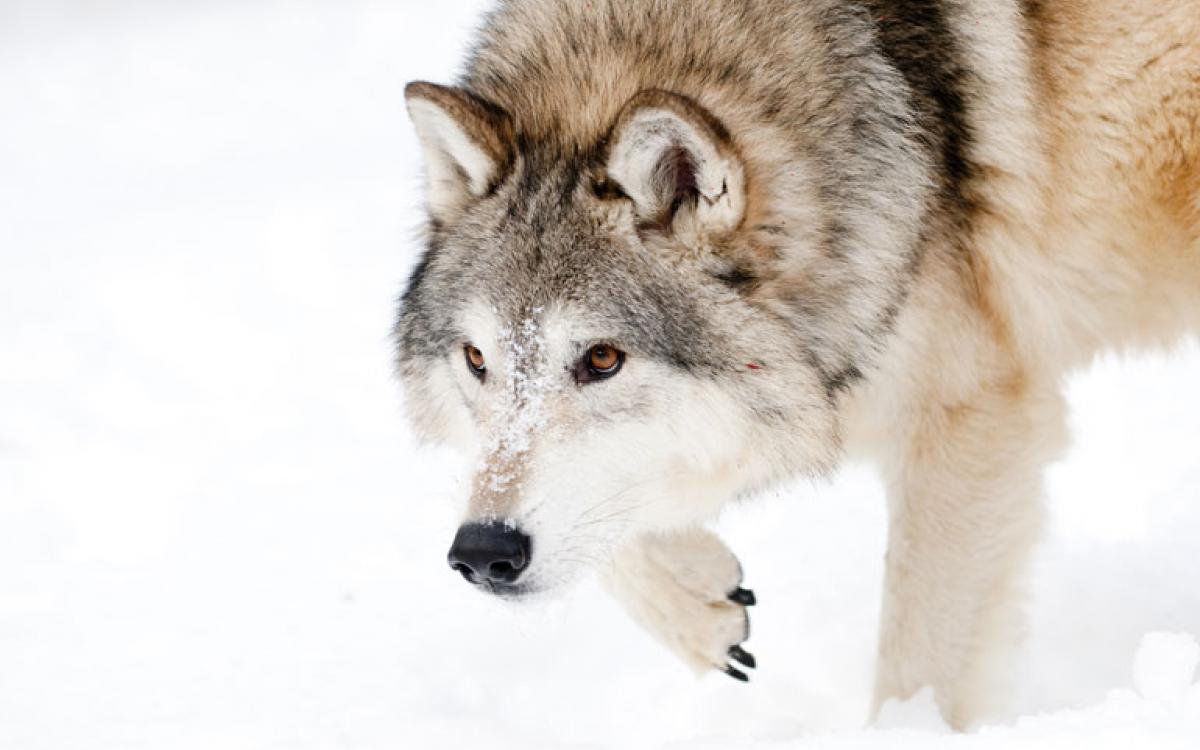
We’re making them look bad… In late January, the B.C. government approved a plan to kill wolves over the next four years to try and save the dwindling Selkirk caribou herd. But that method, employed by other provinces and territories in the past—including the Yukon—only works if you actively kill wolves year after year, says Yukon government biologist Peter Knamiller. Otherwise, their numbers bounce back within five years. That’s why the Yukon’s now encouraging wolf trapping as a more traditional approach to keeping their numbers in check. Besides, habitat destruction for both species—whether it’s industrial development or people moving into rural areas—
is the real threat; caribou and wolves go way back. “Caribou are what they are because of wolves,” says Dean Cluff, a biologist with the NWT’s Department of Environment and Natural Resources. “It’s that evolutionary game: caribou are sleek, fast and healthy because of predation, and wolves follow suit.”
…and we’re spoiling their dinner: Last December, passengers cabbing the 300 kilometres from Fort Providence to Yellowknife (it’s about $650 one way) asked the taxi driver to slow down when they spotted a herd of bison thundering down the side of the highway, three grey wolves close behind. A video posted to Facebook later shows the wolves scattering as the car nears. “Those bison were saved by us,” remarks one of the passengers in the video. The bison keep running for their lives, but according to Cluff, someone later reported seeing those same wolves return and tackle a bison calf.

WOLVERINES: Now you don’t
We don’t appreciate them… Wolverines are fierce, weasel-like enigmas: nearly impossible to spot in the wild, they call almost everywhere in the North home. And although they’ve been endangered or even extirpated in parts of southern Canada, the U.S. and Scandinavia, they’re doing fairly fine in the North—despite a rough lifestyle. “You find wolverine carcasses with spectacular injuries,” says Yukon government biologist Tom Jung, who’s been studying the carcasses submitted by trappers to determine whether the Yukon’s wolverine harvest is sustainable. It’s not surprising, considering they mooch their food off grizzly and wolf kills, they’ve been known to take down the predators themselves, and when caught in a trap, they’d rather chew their limbs free than die there. “You see them with no teeth because they’ve been chewing on frozen bones. They just keep going.”
…and it’s not like they care: Wolverine pelts, prized for their warmth, used to go for $400 apiece; this year, it’s around $260. They’re harder to trap than, say, marten, and back in the days of trapping by dogsled, recalls Behchoko’s Joe Mackenzie, a retired renewable resources officer, they were quite the nuisance: “There’s stories of wolverines going in a tent and pissing on everything.”
…but we probably should: In the Barrenlands in the eastern NWT, wolverine numbers are starting to drop, possibly because their mainstay prey in that region, barrenland caribou, are declining too. “If you look at wolverines as a species, they’re sensitive to disturbance, sensitive to overharvest,” says Robert Mulder, a biologist with the NWT government. “It’s a species you don’t want to be too complacent about. It needs a lot of habitat.” The best way to protect them? “Just make sure there’s adequate prey.”

These posts wrapped in barbed wire and baited with chunks of bison meat, usually scavenged from roadkill, are planted in snow every spring near diamond mines in the NWT. Wolverine fur clings to the wire, allowing scientists to extract the animal's DNA, tracking how many pass through every year. There's no way anyone's getting close enough to count them, or even take a photo--that mounted carmera's triggered when the wolverine climbs up for a bite.