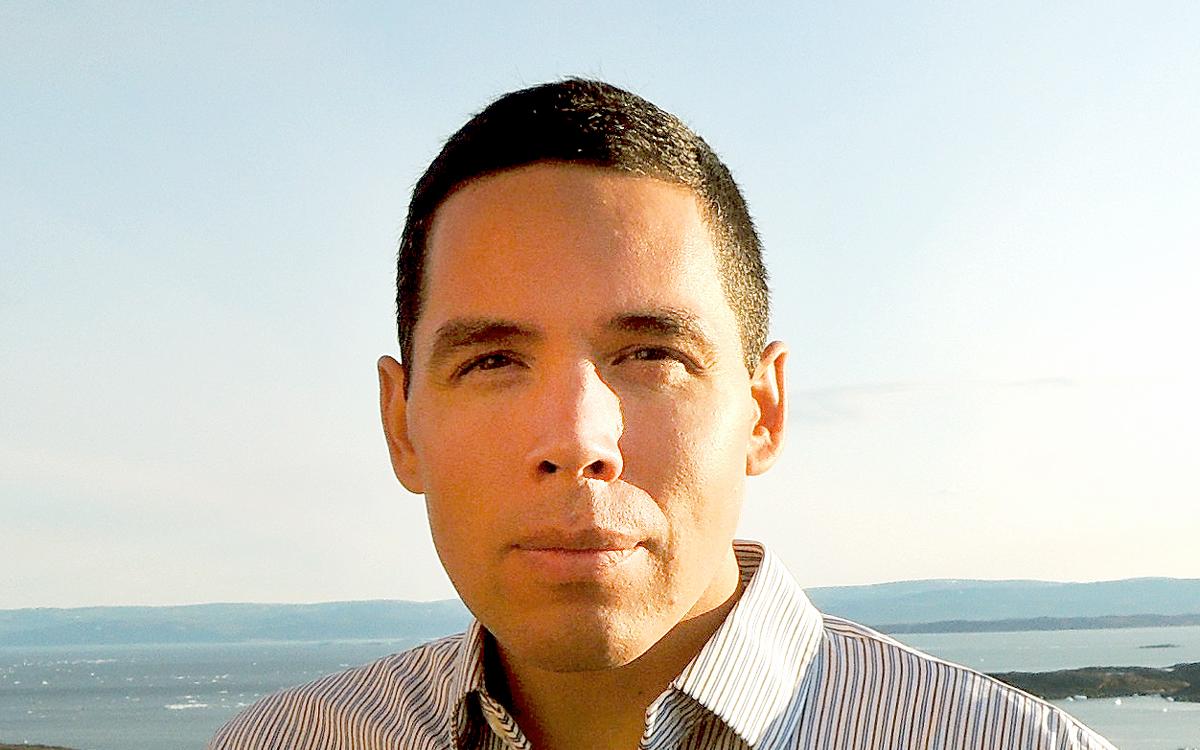
In September, Inuit Tapiriit Kanatami, which represents all Inuit land claims beneficiaries, was getting ready to elect its new president. Of the three candidates, Natan Obed was the only one who didn’t speak Inuktitut fluently. How could he expect to lead Inuit, one of his critics asked pointedly during the election assembly, when he couldn’t even speak their language? Had he lost touch with his culture? Obed coolly responded that language alone couldn’t determine his identity. He ultimately won the election, but the question hung in the air. If young Inuit are not growing up with their ancient cultural practices, are they still “Inuk” enough to claim that identity? We asked three young Inuit leaders to take the discussion further.
Is it in your blood?
“Historically there was no definition of blood quantum for Inuit,” says Obed. “It was: if you believed you were Inuk, if you lived like an Inuk, and if your community accepted you as an Inuk.”
Now, with four Inuit land claims covering Nunavut, the Inuvialuit Settlement Region, Nunavik and Nunatsiavut, there are committees that determine whether you qualify as a beneficiary. And although many Inuit today are of mixed ancestry, that rarely disqualifies them from beneficiary status. Even if it did, it shouldn’t matter anyway, says Jesse Mike, who penned a letter to Nunatsiaq News protesting the criticism of Obed’s Inuit identity. “We shouldn’t leave it up to other people to decide who we are.”
Is it how you speak?
“Children don’t decide what language they learn or where they grow up,” says Obed, who described in his election speech how his father, troubled by alcoholism, never spoke Inuktitut at home, and didn’t pass on many of the traditional activities at the core of Inuit culture. Natan’s own children, however, are fluent in Inuktitut and speak it in school.
Still, being criticized for not speaking Inuktitut stings, says Mike. Not that it’s always meant maliciously, she says, adding: “[It can come from] people who are in communities where 95 percent of the people speak Inuktitut, and maybe are not totally aware of other Inuit outside their community.” Unaware, she says, of the many Inuit who grow up in the south, with little access to Inuktitut education.
When Maatalii Okalik is questioned about her language skills, she has a ready comeback. “I say, ‘How come you don’t encourage me instead?’” And it works. “Those people encourage me on a regular basis now.”
Is it how you act?
Many young Inuit today are pushing to revitalize cultural practices such as hunting and sewing. But as important as that work is, says Obed, it shouldn’t be a prerequisite to Inuit identity. “There are a lot of young Inuit who prefer to be computer programmers or to be pilots or to work in any chosen field that they want to work in,” he says. “That’s just the way it is now: our society is changing. We have a merging of an Inuit society and a non-Inuit society, and I don’t think that’s anything to be feared.”
Is it about acceptance?
“At the end of the day, nobody should be able to define your Inukness,” says Okalik. “If you start quantifying it, that can be a very dangerous situation, because you break down an individual, you break down a demographic, you can break down Inuit youth altogether.”
And in places like Nunavut, where depression affects many and the suicide rate is 10 times the Canadian average, the consequences of constant self-doubt can be drastic. “It’s back to that positive messaging around celebrating life and celebrating being Inuk,” says Okalik.
“It can save lives.”