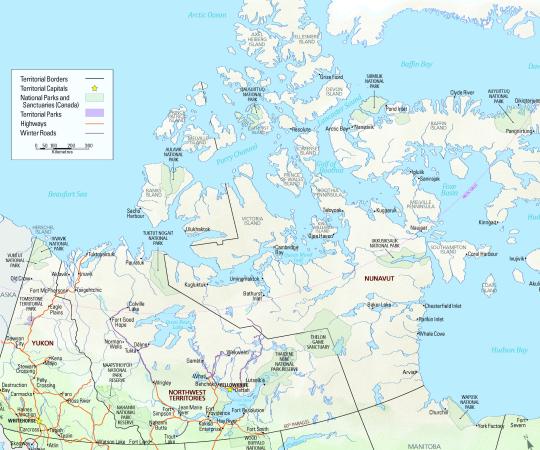
I’m a needy guest. Qikiqtarjuaq is a community of roughly 500 people living 100 kilometres above the Arctic Circle on Broughton Island and I’m here for a week writing about the November 2025 Nunavut territorial election. Like most reporters, I’m a nuisance with my endless questions. “How do you feel?” “What’s the biggest issue for you in this election?” And, of course: “Can I take a picture of you?” The answer is almost always no. But that’s not even my most annoying request. While the incumbent MLA is losing to a political novice, I’m on my own, more personal, quest. I keep asking locals to take me out for a drink of water—the famous Qikiqtarjuaq best-in-the-world water I’ve heard so much about.
For the past decade or so, I have been on an unofficial journey to find the finest drinking water on the planet. I slurped from Lake Päijänne outside Helsinki in Finland. (Disappointing and the number of mosquitoes was criminal.) Five times, I drove for hours through Armenian mountains with two or three five-litre bottles to collect water from a spring in the remote fishing village of Karenis. (Nice and cool, but it’s right next to a smelly fish market). And I once spent $5 on a bottle of “smart” water in Montreal’s airport. (Arguably my stupidest airport purchase).
So far, my favourite water is from Kugluktuk. Nunavut’s westernmost community is the home of rare Arctic trees, many grizzlies and Nunavut RCMP’s lone lawn mower. On a rainy day in the fall of 2025, a local friend and fellow water aficionado, Christine Kuliktana, told me I must sip from the Coppermine River. A few hours later, I was on my knees scooping the dark water. We were surrounded by tundra bursting with fall colours and Kuliktana was holding me by the back of my hood so I didn’t tumble into the river. “Don’t you just feel so fresh and alive?” she asked. Yes, I did. I really did. I was soaking wet under the pouring rain, yet those couple of handfuls from the Coppermine had all the things I look for in my water—cold, crisp and from a beautiful place.
Now I want to try what Qikiqtarjuaq has to offer. Eventually, I find my guy in Johnny Kooneeliusie. A bearded man in his 50s wearing a baseball cap with “Johnny” on it, he’s the manager of my hotel. It’s the usual no-breakfast, faulty furnace and dead-flies-on-the-floor type of Nunavut establishment. But on the final day of my stay, he tells me to grab some empty bottles. I climb into his red truck and he takes me to his favourite water spot. Well, second favourite. “I usually go further out,” he admits. “I don’t have the time now.” So, we start driving to an ice-covered hill just two kilometres from Qikiqtarjuaq. On our way, Kooneeliusie points to people on ATVs with buckets full of freshly collected water. “See them? They are about to make some great tea.”
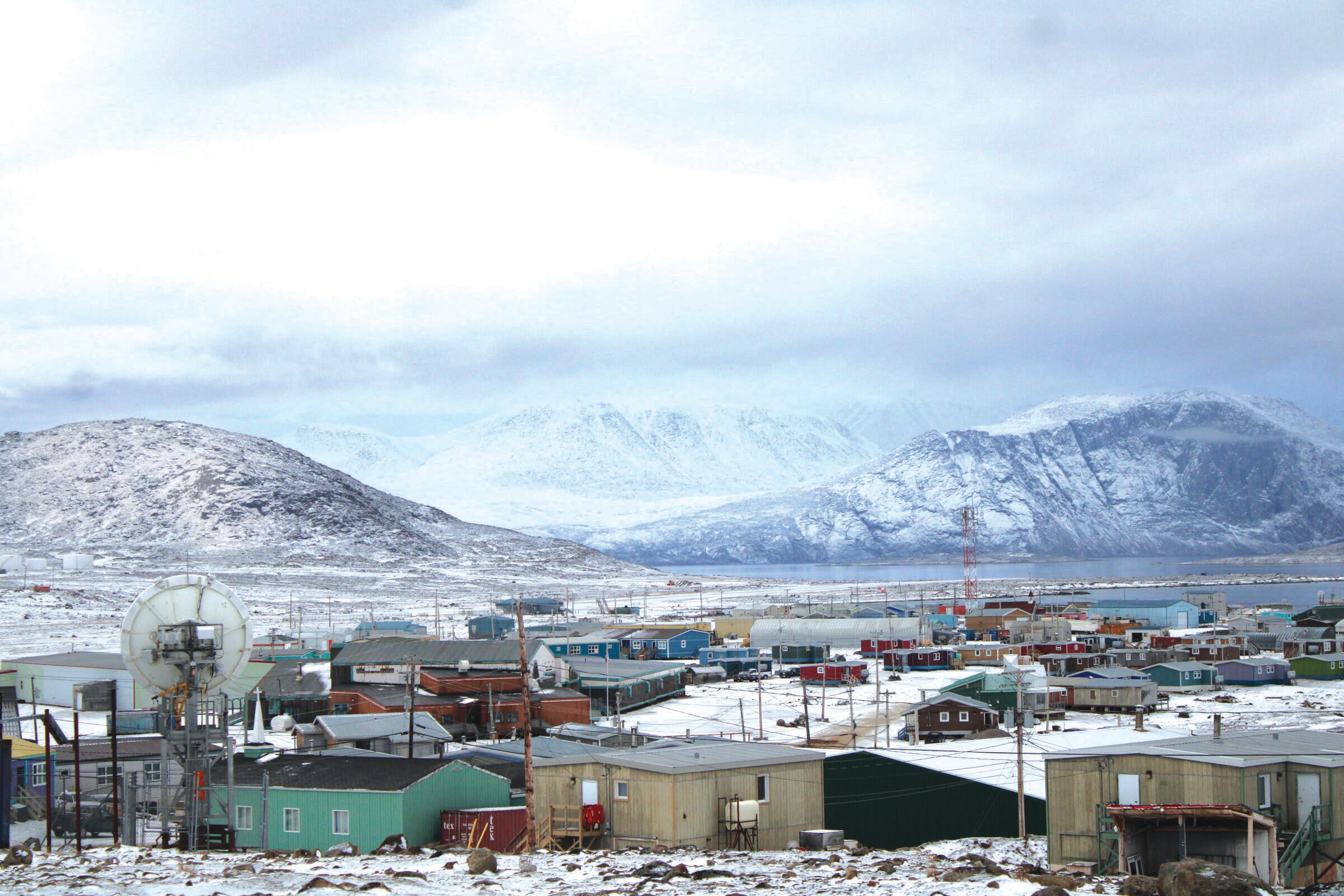 Photo by Arty Sarkisian
KOONEELIUSIE AND I DRIVE past Qikiqtarjuaq’s water treatment plant. The fenced-in reservoir is covered by ice and snow. “We just use it for showering and stuff,” he says. “Otherwise, most people don’t like the water from here.” And they have good reason. Just a few days after I leave, residents of Qikiqtarjuaq will be told to boil their tap water before consumption. Overall, Nunavut communities saw roughly 103 similar boil notices in 2025, with some lasting several months. The issues go deep. In 2024, 17 of 25 Nunavut water treatment plants had health or safety violations and three of them were put under public health orders to fix the problems.
But that’s nothing compared to Iqaluit’s water woes in 2021. In the middle of the pandemic, fuel contaminated the city’s water system. Hundreds of thousands of litres of bottled water had to be flown up to the Baffin Island city and distributed to residents. Some Iqalummiut had a better idea, though. For months—even after the crisis ended—many took cooking pots, buckets and large cooler bottles to collect water straight from the nearby Sylvia Grinnell River.
Since the Iqaluit disaster, the federal government has called the situation with the territory’s treatment plants “unacceptable,” sending over $200 million to Nunavut’s capital for a second reservoir and new pipes. And, in 2026, Ottawa threw another $108 million to the city for water and sewage upgrades. Arctic security expert Ken Coates calls these investments “not very sexy progress” toward establishing Canada’s “Arctic sovereignty.”
Despite these problems, Nunavut has 21 per cent of the country’s freshwater. And most residents ignore recommendations to filter it and just drink it untreated. In 2024, United Nations special rapporteur Pedro Arrojo-Agudo visited Iqaluit and called Canada’s Arctic “pristine” with uniquely pure water.
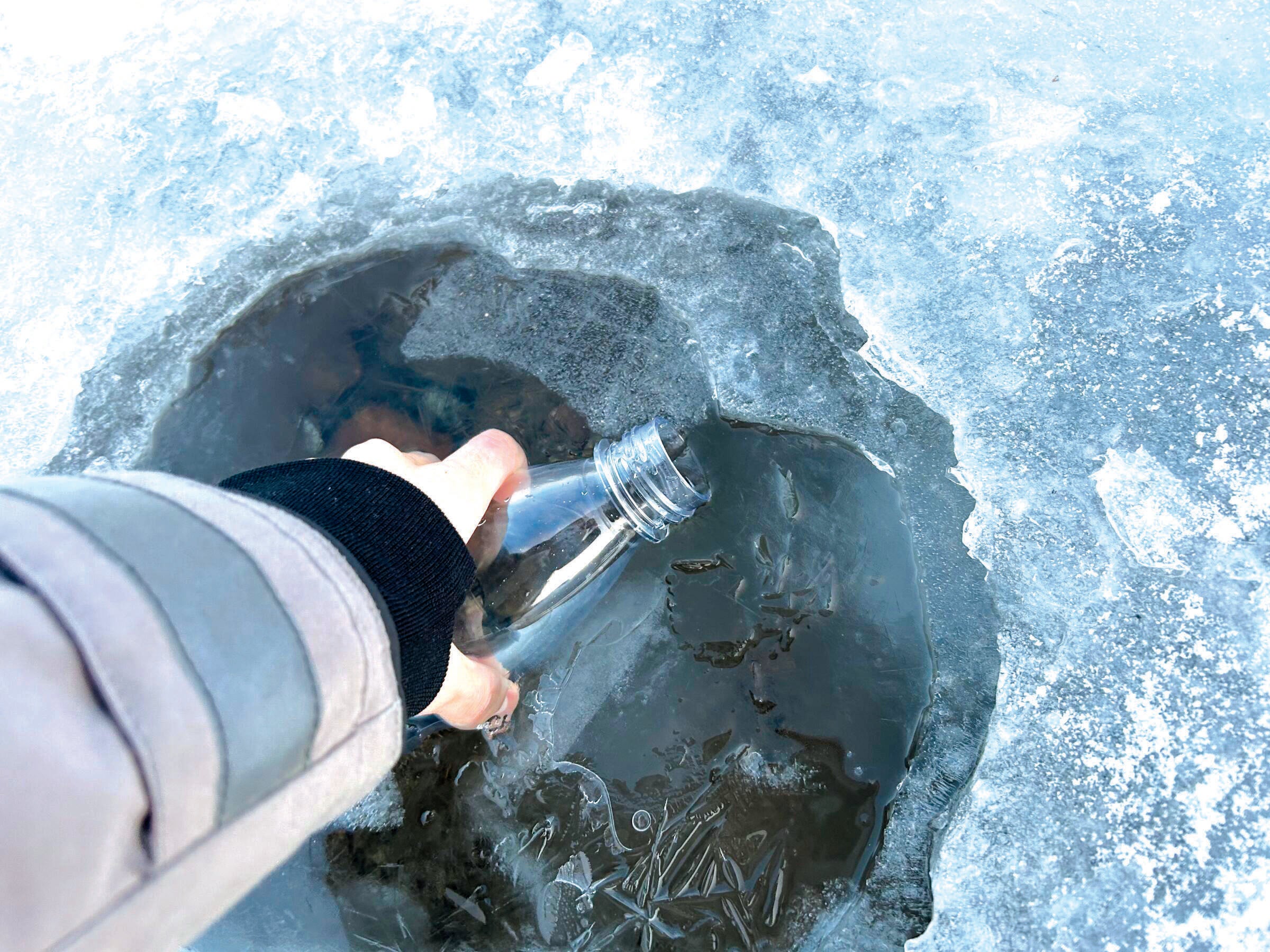 Photo by Arty Sarkisian
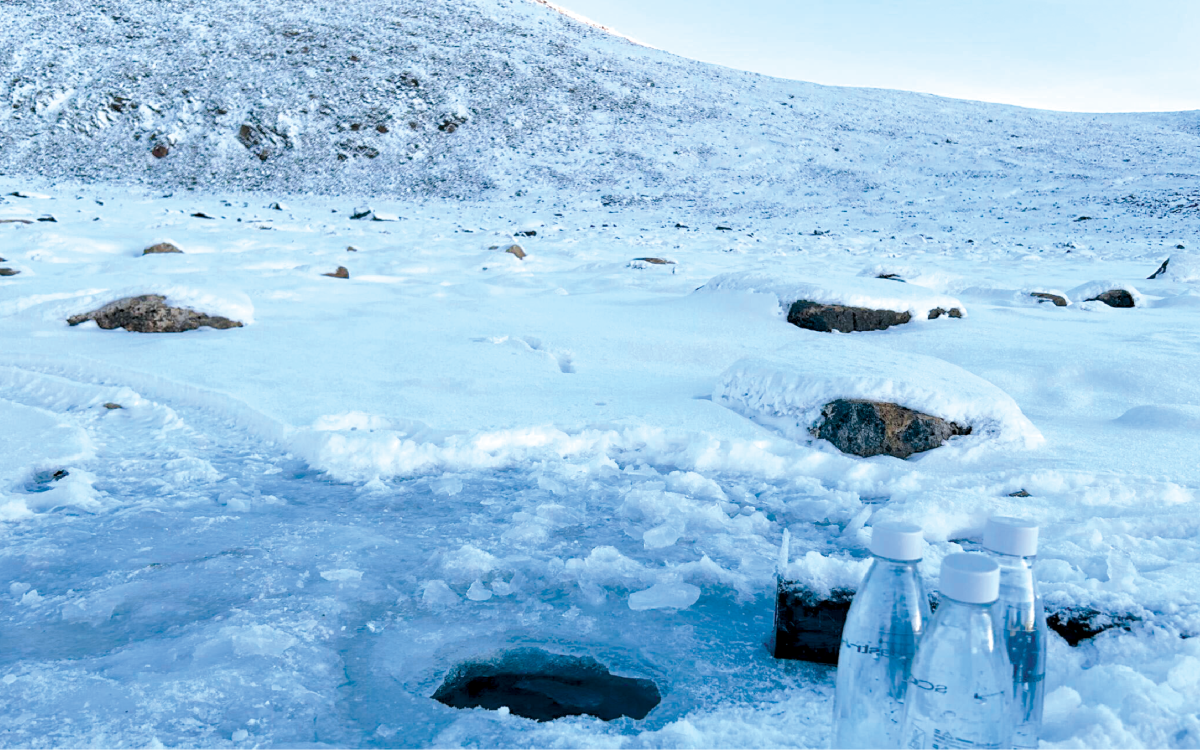
“CHEERS!” After a muffled click of our two plastic bottles, Kooneeliusie and I take a sip of the freshly collected water. I try to hold back my cough after swallowing a few pieces of ice as he says, “No chlorine, no nothing.” We’re standing near a small hole in the ice crust that covers glacier water running down a hill. Kooneeliusie holds his bottle up to the sun. “Look how clear this is,” he says. “It’s the best water in the world.” He’s so matter of fact about it that I have to agree, the same way I once agreed with a wine sommelier who described a 2022 Bordeaux as “fresh and earthy.”
The North is a haven to many amateur water sommeliers like Kooneeliusie. If you ever bump into Pierre Leblanc, a former commander of the Canadian Armed Forces in the North, he might recommend a couple of handfuls from Lake Hazen on Ellesmere Island. Cambridge Bay photographer Brodie Larocque will swear by Nettilling Lake on Baffin Island. And Pangnirtung residents—Qikiqtarjuaq’s closest neighbours—might stake their own claim. Of course, some Yukon and NWT water aficionados will want to contend that water from Kluane Lake, Great Bear Lake or some river is the best. But they’re wrong. Nobody can match Nunavut and its freshwater—partly because nobody relies on it quite like Nunavummiut.
Kooneeliusie and I collect three litres of water. Most of it will fly back home with me to Iqaluit. But as I stand beside the frozen spring, sipping the half-frozen water, I can’t help but wonder: Is this indeed the best I’ve ever tasted? Can I honestly tell the difference between the water from Qikiqtarjuaq, Kugluktuk, Helsinki, Karenis or my own tap in Iqaluit?
Probably not. But maybe that’s just my untrained taste buds speaking, says Adrian Ma, a certified judge with the Berkeley Springs International Water Tasting. The Academy Awards of water tasting based in Berkeley Springs, West Virginia, the event is the ultimate spot for water enthusiasts to come together to talk about how different waters taste, look and smell. The only Canadian judge at the 2025 competition, Ma tried dozens of samples, including from what he calls the source of the “Meryl Streep of world water”—Clearbrook Waterworks District, from Abbotsford, B.C. “Very clean, very refreshing,” he says. “They are really blessed there.”
The more different waters I try, he assures me, the better I’ll become at identifying their salinity, minerality or aftertaste. But, for me, it’s not just about the taste of water, it’s about the coolness of drinking it. I find something magical in travelling hundreds of kilometres above the Arctic Circle and dipping my hand into a freezing spring.
I ask Kooneeliusie whether he thinks that, too, that Qikiqtarjuaq water is the best in the world because you must work to get it. He laughs. “Wrap it up, it’s time to go.”
We climb back into his truck and, as he drives me to the airport, I ask if I can take a photo with him and the full bottles—my main souvenir from town. “I am not a movie star,” he says. “Just drink your water.”