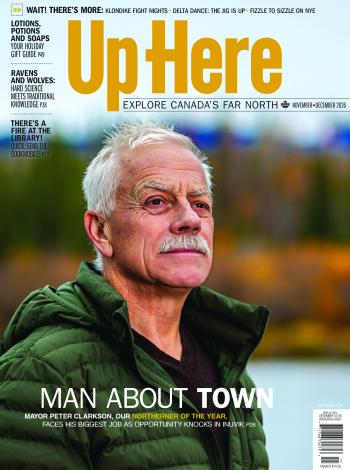
Steven Salamio is a little tipsy, hanging in the window of Peter Clarkson’s dusty black GMC Denali and talking about his kidney stones. “They’re in an awkward place,” he says, but he’s taking honey, lemon and salt and that’s helping. It’s after 8 p.m. on a Wednesday in August, and Clarkson is trying to get home for his nightly elixir, too, a mix of turmeric, spices, honey and milk, but getting there is a bit of a Sisyphean task for the mayor of Inuvik. He promises to call Salamio if he has more construction work, then drives about 75 metres before a woman flags him down to help with an intoxicated person lying on the ground. The ambulance is on its way when Clarkson finally heads home.
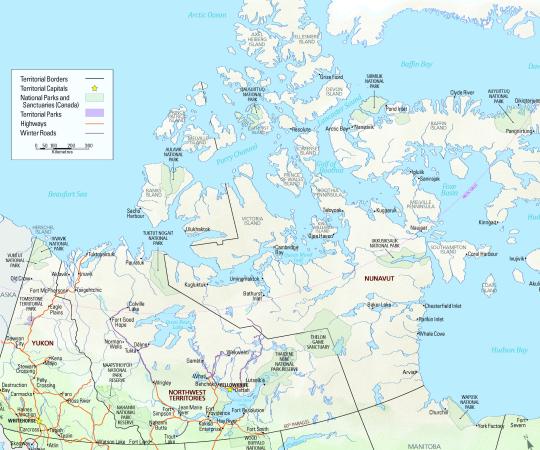
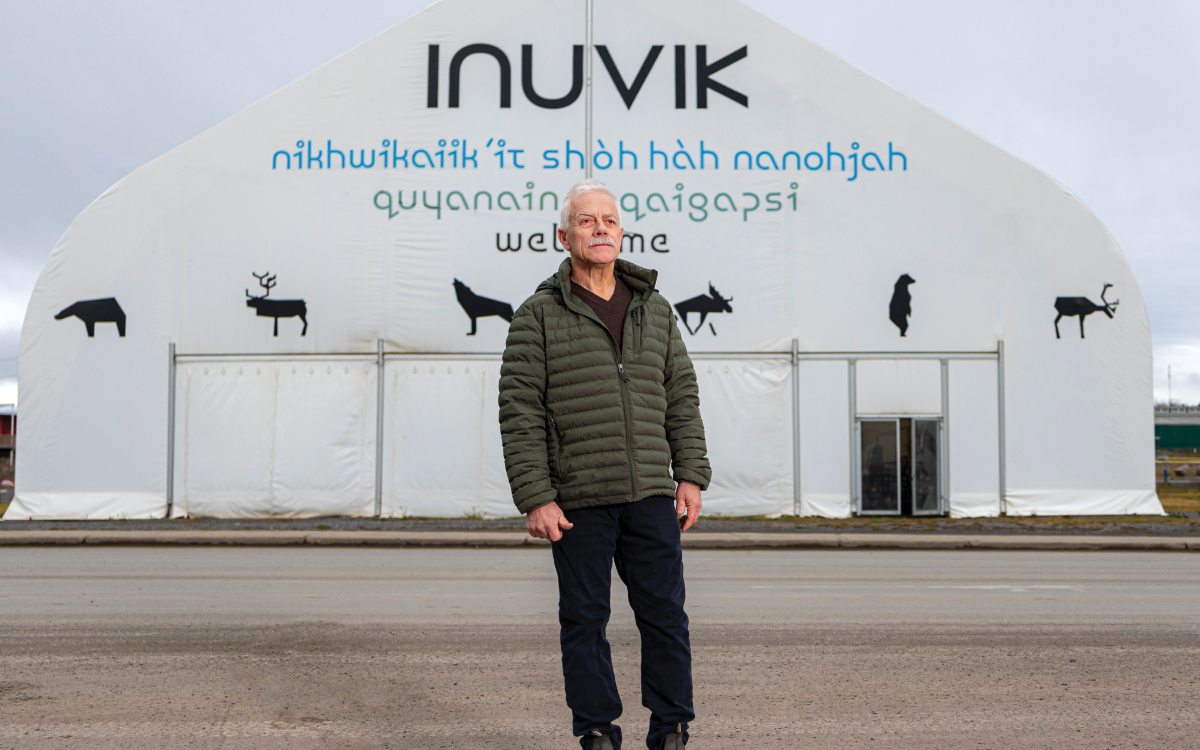
Inuvik, a town of 3,300, sits on the ancestral lands of the Gwich’in and the Inuvialuit in the Mackenzie Delta, a wilderness pockmarked by lakes and spongy tundra many kilometres from anywhere, which is why Clarkson loves it. He’s been here 40 years, wrestled wolves and darted and tagged more than 500 grizzlies as a wildlife biologist, found love and raised a family, turned an old arena into a massive greenhouse in one of the most unlikely places on the planet, spent weeks walking across the High Arctic and served five terms as mayor or deputy mayor since 1998. Today, Clarkson finds himself in a position to help shape his community as it shaped him.
When he first became mayor in 2000, Inuvik was a booming oil and gas town with several restaurants, live music in the bars and a thriving business sector. Now, the oil and gas exploration has dried up and only a handful of shops and small restaurants remain while homelessness and addiction are rising. So, the town—like many northern communities—hopes to take advantage of the federal government’s push to boost Arctic sovereignty and security, which will mean upgrades to the airport with the construction of accompanying buildings and infrastructure. And Clarkson’s track record of building things that last suggests he’s the right man to make the most of this windfall.
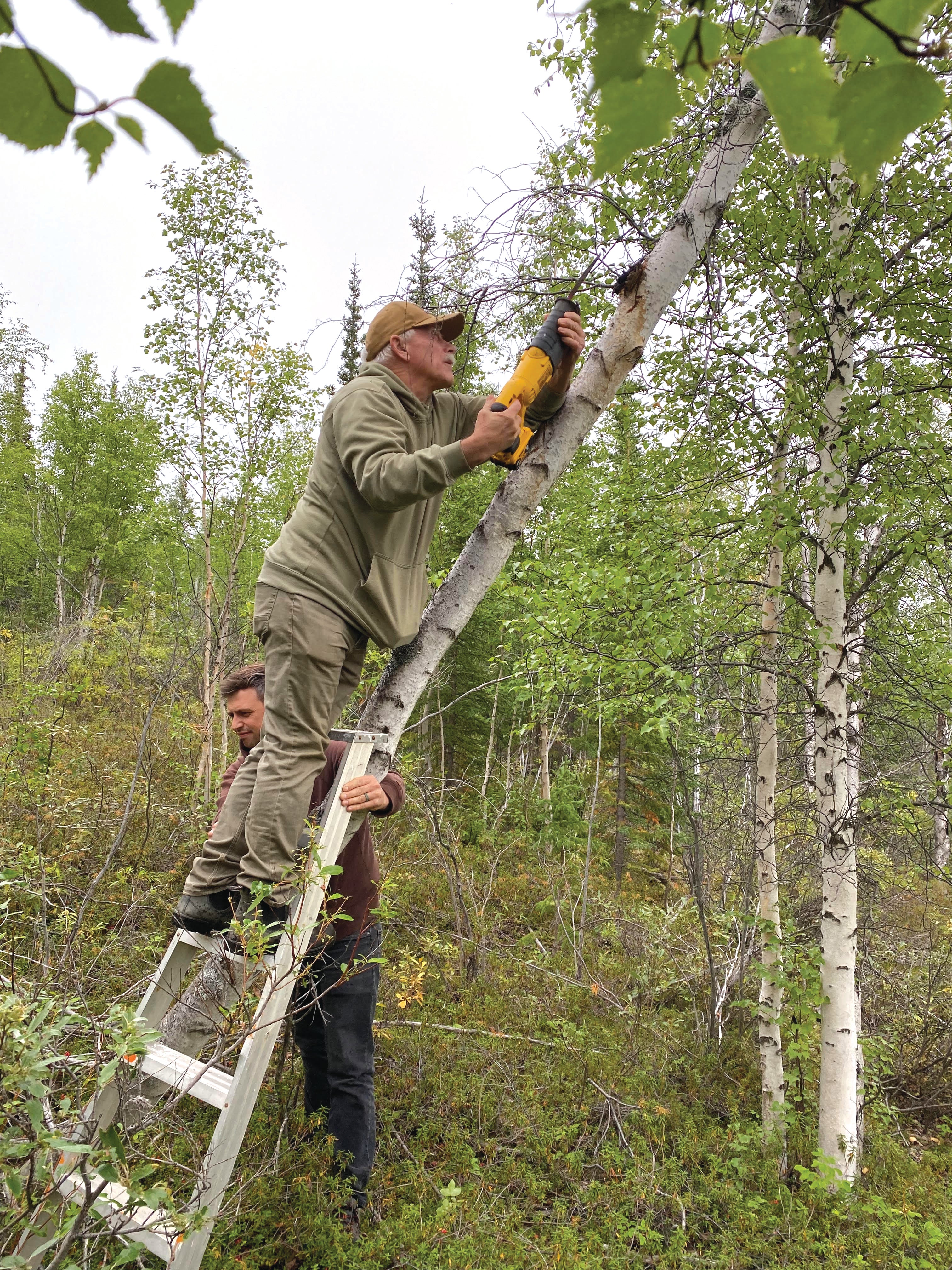
Photo by Genesee Keevil
CLARKSON IS THREE METRES in the air, on a shaky ladder propped against a birch in the forest just outside of Inuvik. He’s cutting a big chunk of parasitic chaga fungus off the tree with a battery-powered Sawzall. His white hair sticks out at all angles above his hearing aids, in contrast to his straight white mustache. The stalwart 67-year-old, who's as fit and energetic as a much younger man, is in the same clothes he wore to last night’s council meeting: tired khaki pants and a matching hoodie sporting “Inuvik” on the front and “Truly Arctic” across the back, an outfit he calls the town uniform.
A mechanic has flown in from Alberta to fix the arena’s Zamboni—it’s not easy getting things fixed this far north—and en route to the airport, Clarkson is fulfilling his promise to take the man chaga hunting. Gathering birch fungus known for its healing properties, pulling weeds in the community greenhouse, meeting with folks running the new thrift shop, hauling cracked stained glass windows out of the Anglican church and fielding calls on his way back from the airport is all part of the mayor’s job. “Sometimes, if you want things done,” he says, “you just got to get them done, and don’t worry if someone else should be doing it.”
When the old residential school skating rink was slated for demolition in 1998, Clarkson sought permission from Aurora College to turn it into a greenhouse. The roof was off and clear plastic panels were going on when the territory tried to stop it. Turns out the building was a government asset. “But it was too late,” Clarkson says with a chuckle, pulling plump raspberries off bushes in his plot. “We just did it anyway.”
The greenhouse has doubled the growing season for residents eight degrees north of the Arctic Circle and acted as a hub for locals to get their hands dirty and forge connections. “The stuff people grow is a bonus,” says Clarkson. “The big benefit is the social interaction.” Before he was mayor the first time, he and his wife, Sue, ran Café Gallery, an art and coffee shop where locals talked about ideas and told stories. “It’s a vital part of community to have a meeting spot,” he says. “The greenhouse is that now. It brings people together with shared interests, values and respect.”
Clarkson learned a lot about values and social dynamics growing up on a farm in Alberta with eight siblings before studying wildlife conservation and biology, focusing on wolf, bear and people conflicts. Following graduate work, he ended up in Yellowknife, then moved to Inuvik in 1987. After years as a biologist—and sometimes Inuvik’s unofficial vet—he ran a company that rented canoes and other outdoor adventure gear before taking a series of government jobs: Gwich’in Renewable Resources Board, Inuvik mayor, the Beaufort Delta/Sahtu regional director, then mayor again. All of these positions involved social improvement.
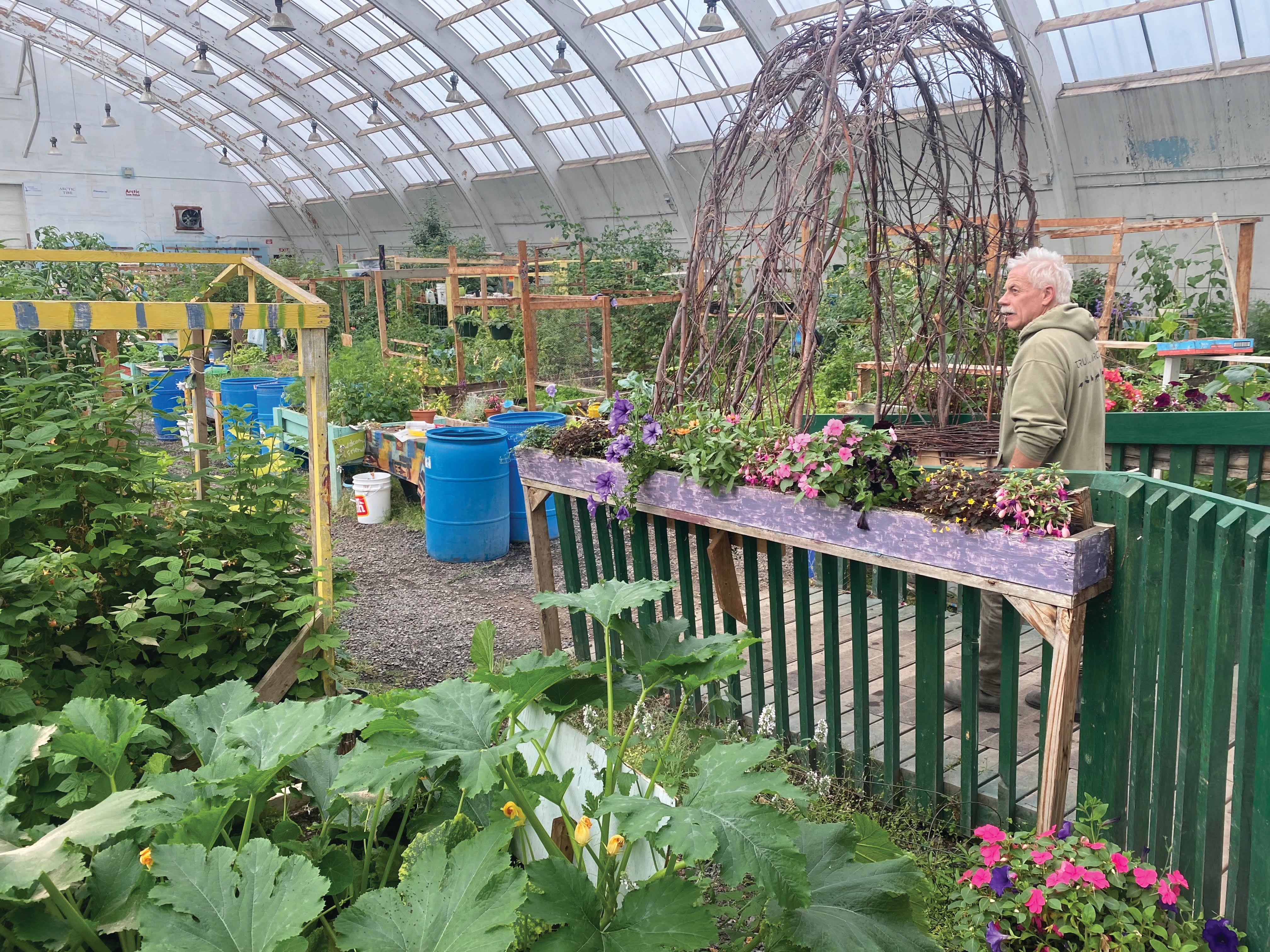 Photo by Genesee Keevil
The greenhouse may be the best example of what he’s accomplished. In April, when the mercury hovers around -15°C outside, the greenhouse is a humid 20°C from passive solar. By August, it smells tropical, with loads of flowers, berries, vegetables and even sizeable apple trees laden with fruit. Several community plots provide food for the little café, tourists come for cookies and guided tours and, each spring, more than 20,000 starter plants for a fundraiser grow in a big, airy room upstairs.
Today, the place is bustling. Clarkson talks with tourists, catches up with locals harvesting veggies from their plots, checks on potatoes school kids will dig up during a vegetable treasure hunt and discusses secret berry spots with a woman who’s on the greenhouse board with him. This year’s aqpik (cloudberries) season is longer than usual, and the new road to Tuktoyaktuk has opened up a raft of picking spots. Clarkson usually picks at a camp high in the mountains near the Rat River, where he used to hunt caribou. But now, he seems to have time for everyone—except himself. On the way out, he greets a young couple and meets their visiting parents. When he finally makes it to the door, after saying goodnight to the café staff, he grabs five huge garbage bags by the entrance. “I might as well take this,” he says, heaving them into the back of his truck. “It saves them having to do it.”
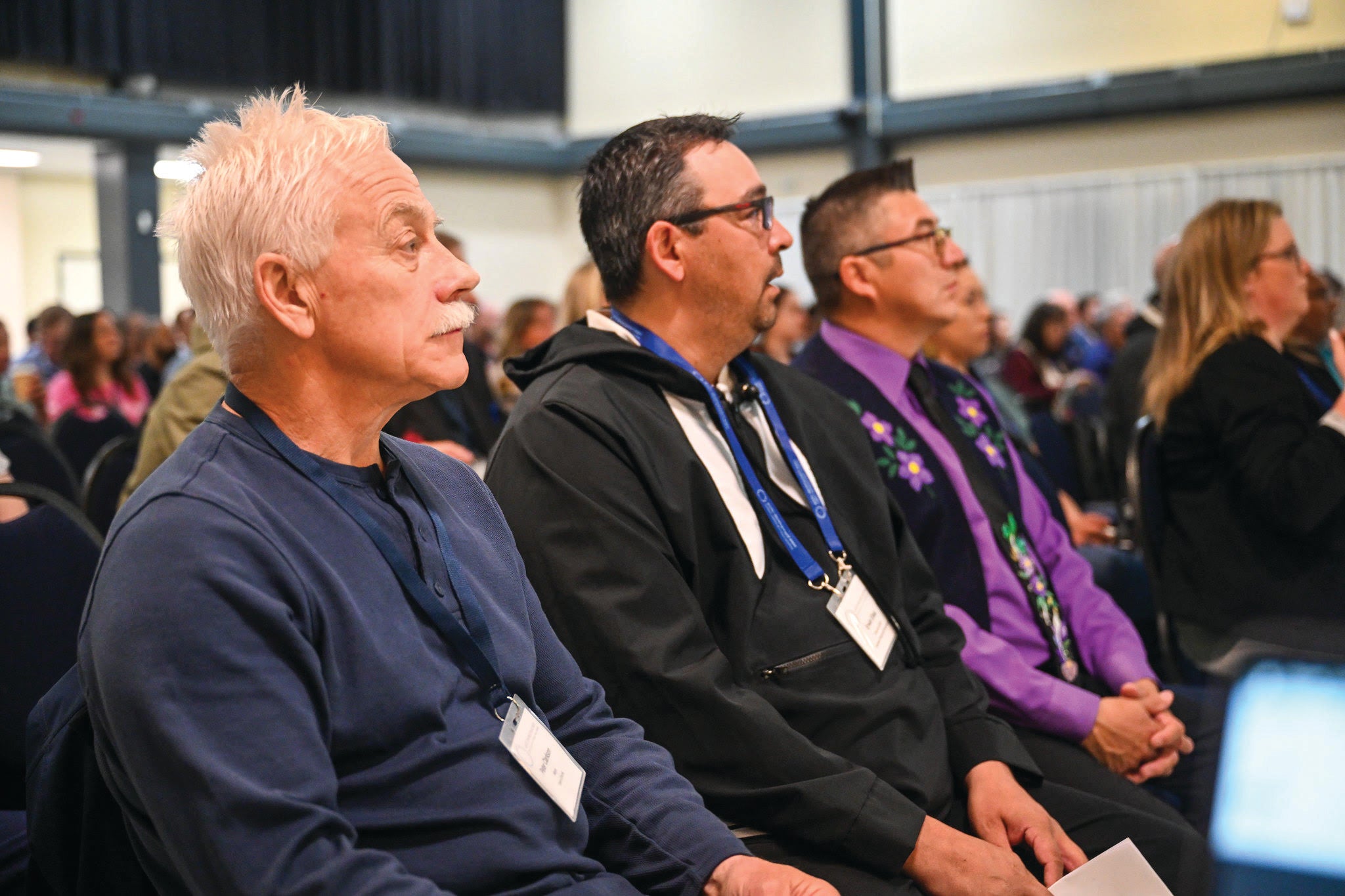 Photo by Town of Inuvik/Tony Devlin
THE INUVIK MIDNIGHT Sun Recreation Complex smells like chlorine and hot dogs. The pool is full of screeching children and a day camp screens a movie in the curling rink while kids hang off an indoor play structure. The building also has an arena, a well-equipped gym and a convention centre where Clarkson hosted the most recent Arctic Development Expo and an Arctic Mayors’ Forum, with delegates from as far away as Sweden and Norway joining Canadian leaders to focus on Arctic security. He sees a mayor as a moderator, offering a public platform where ideas are born and embraced. Then he puts them into action. “The part I enjoy,” he says, “is getting things done.”
Twenty-five years ago, during his first stint as mayor, Clarkson raised $5 million and borrowed another $5 million to build the pool and improve this complex. Today, he’s hoping to erect another sportsplex and a whack of affordable, well-built, insulated and energy-efficient housing using federal money earmarked for Arctic security. Inuvik is set to receive $50 million to upgrade its airport and an additional $230 million to extend its main runway. The town is also one of four northern locations that will share $32 billion to become forward operating bases, which will mean housing, fuel farms, warehousing and support buildings. Further into the future, the planned extension of the Mackenzie Valley Highway will take the road all the way to the Dempster Highway, just south of Inuvik, providing more benefits. “Arctic security is a hot topic,” says Clarkson, “and we want to take advantage of that money.”
During his 14 years as the Beaufort Delta/Sahtu’s regional director, he learned to make money allocated for one purpose fund more pressing priorities. “You can tie different things into Arctic security,” he says, noting that the workers upgrading the airport will need housing and recreational opportunities, and this new infrastructure can become permanent town assets. “If you’re not adding to quality of life and making things better in the community, then you’re just warming a seat.”
But the pressure to get it right is on the mayor. “It can be a difficult job,” says Jim McDonald, a businessman who was mayor 10 years ago. “Your main role is to represent the community and grab opportunities when you can. Peter is doing that.” There are boom and bust cycles up here, McDonald says, but there’s always opportunity. “We’ve never had any issues finding work. The biggest issue is drug and alcohol addiction, and it’s not just Inuvik—it’s everywhere.” He isn’t sure what the answer is, but he thinks a strong economy, bolstered by defence spending, will help. Clarkson, he believes, is a good man to have at the helm. “He’s a go-getter. He makes things happen.”
The mayor runs council meetings the same way he walks—fast. He’s open to debate, listening to discussions about expanding a graveyard and renaming town streets, but he doesn’t linger. “Municipal politics move fast,” he says. “We make a decision tonight and are out implementing it tomorrow.” One topic Wednesday night was the need to clear brush around the Anglican church to expand the parking lot for visitors to the weekend artisan market. Thursday morning, Clarkson was at the church with an Inuvik Works crew as they wound weed whackers and gassed up chainsaws.
Inuvik Works ran when Clarkson was first mayor. After getting elected again in October 2024, he restarted the grassroots program designed to help people facing personal and financial problems. The town struggles with addiction and homelessness, and he’s well aware of the risks a sudden influx of federal spending poses. He helped Inuvik Works start a thrift shop, creating jobs and diverting waste from the landfill. Inuvik also runs wet and dry shelters, where many people live permanently. But that’s not enough, says Clarkson, who would like to see more initiatives such as ones that help people get photo ID and bank accounts so they can qualify for employment. “We need to be providing programs and positive steps toward a healthy lifestyle,” he says, “not just enabling an unhealthy lifestyle.” Care needs to come from the community, he says, but people must want change. “They have to buy in; no one else can do that for them.”
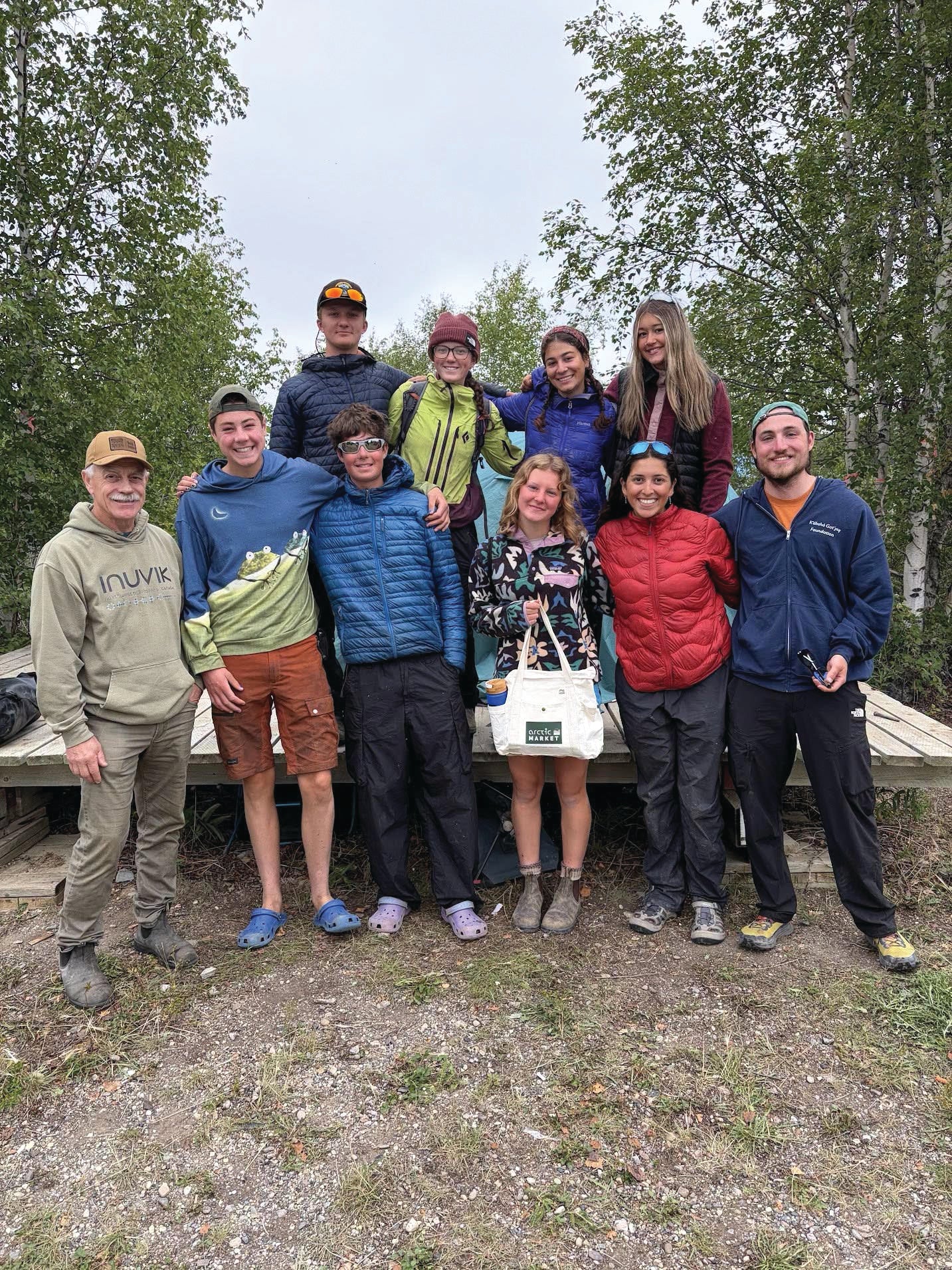 Photo courtesy of Town of Inuvik
JUST BEFORE LUNCHTIME, Clarkson and his communications officer drive around town looking for the “tourist of the week.” When they stumble on young Calgarians who’ve just paddled 600 kilometres from Norman Wells, Clarkson gives them a gift bag with pins, stickers and a glossy book on the Western Arctic he helped write and publish. He poses for a picture, which will go on the town’s social media streams, but he doesn’t bother telling the canoeists he’s mayor. A few hours later, Swiss tourists wander into the igloo-shaped Catholic church, and he offers them a tour. He discusses the art and architecture, but he never mentions his official role. Although Clarkson doesn’t seek the limelight, he can’t go anywhere without being approached—partly because he ensures he’s approachable. Which may be why he sometimes takes off walking.
He walked Ellesmere Island; travelled on foot and by canoe from Sachs Harbour to the top of Banks Island; and hiked 500 kilometres from Kugluktuk to Paulatuk, which took three weeks and involved a river crossing that almost claimed his life. He also walked from Inuvik to Tuktoyaktuk the last year the 180-kilometre ice road was in. The four-day jaunt offered time to think. “You get in a zone,” he says. “And you’re always watching for things—animals, tracks. I like the sensory awareness of it.”
When he first came north, Clarkson worked as a “cowboy biologist” hanging out of choppers shooting wolves and grizzlies with sedatives so he could radio-collar them and sample their teeth. Once, waist-deep in snow, he was about to tag a wolf when it suddenly woke up and bolted. Without thinking, he grabbed it by the tail. It spun around and jumped on his chest, biting his hand. He held it by the jowls and jammed its face in the snow, pulled another syringe from between his teeth and gave the animal more sedative while the helicopter pilot watched wide-eyed. Clarkson still has the jagged scar between the pinky and ring finger on his right hand. Another scar, on his left thumb, is from a bear bite.
He left that line of work because he realized he could safely tempt fate for only so long when wrestling wolves, flying around in bush planes—he’s been in two crashes—and darting hundreds of grizzlies. But he’s still dealing with bears as mayor. After a fence went up around the Inuvik dump this year, its ursine residents began wandering through town looking for food. More than 14, including a sow who had two cubs, have been shot, dividing the community. It’s not worth relocating them, says Clarkson, though it’s the territorial government’s decision. “There is no easy answer; they’d likely get shot anyway,” he says, noting that they’re habituated to an unnatural food source. “It’s unfortunate.” This is typical of his approach as Inuvik’s level-headed arbitrator: He weighs all sides, then he pushes ahead with what is best for the whole community.
Aside from politics, Clarkson has been a success in business. Over the years, he bought 20 rental units and hired Salamio and other locals to renovate them. He also built and sold an energy-efficient house that cost just $200 a month to heat, even in the dead of winter. “I have a habit of buying stuff that needs a lot of TLC,” he says. But when he got sick of fixing washing machines on weekends, he sold off most of his properties—except for a new vacation spot in Atlin.
He also has a yurt on a lake just a few kilometres from Inuvik as the crow flies, although it takes a couple of boat rides and some walking to get there; the place he visits on the Rat River; and an Airstream trailer waiting for more adventures. Add in three adult sons and a grandchild out east and he’s ready for something new and, possibly, less demanding. Certainly, another term as mayor wasn’t in his plans. “At retirement age, why did I take on a job I’ve already done?” asks Clarkson, drinking chaga at his dining room table, looking out over the lakes and spruce that stretch off to the mountains. The last mayor and much of council had been acclaimed and might have been again if Clarkson hadn’t decided the town needed a change. But he insists this is the last time.
Before his term ends in October 2027, though, he needs to ensure federal cash goes toward a new sportsplex and energy-efficient homes; fix the multiplex foundation before it sinks into the thawing permafrost; employ more folks through Inuvik Works; launch more effective social programs; help out at the greenhouse; support staff at the thrift shop; give the odd tour; and navigate the dump bears.
But first he wants to stop by a food truck in the church parking lot. The owner, Dustin Qaiyaan Smith, who also has a fashion line, is taking orders in a black ball cap and dangly pheasant skull earrings. Clarkson wishes him a happy birthday, admires his bling and buys a burger. Then the mayor heads back to the greenhouse for a cookie, checks on staff at the café and talks with more tourists and locals.
“You’ve got to be supportive of others, and you’ve got to show up,” says Clarkson, because community is built one burger, cookie and connection at a time. “If you have a vision, you have to share it with others, so they, too, can see great things for the community and pull together to make it happen.”