On a rainy June day, low-hanging clouds shroud the mountains surrounding Yukon Grain Farm. Steve and Bonnie MacKenzie-Grieve sit at their kitchen table, the expansive windows overlooking an emerald-green barley field. Their 17-year-old cat snores loudly on a chair as Steve talks about what may be the farm’s most-loved crop. “If we quit growing carrots, I think our customers would revolt,” he says. “When you get a good carrot—a good carrot—you can’t eat enough of them.”
Steve’s right—Yukoners love the farm’s carrots, plus the other vegetables he and Bonnie grow on their 300-acre property. The list includes potatoes, beets, cabbage, broccoli and parsnips—about 600 tons a year. All of that produce lands profitably at grocery stores in Whitehorse, 30 kilometres to the south, reducing shipping costs and offering a competitive advantage to the MacKenzie-Grieves over southern imports. “We can kind of short-cut the system,” Steve says.
But major challenges persist. Agriculture businesses in the Yukon must overcome short growing seasons and extreme winters, as they do across the North. Market size is another factor that can affect the final retail price of produce, although the MacKenzie-Grieves are competitive with southern imports. But Yukoners have strongly supported the business, which has encouraged investment and growth.
Of course, the couple never imagined any of this when they opened Yukon Grain Farm in 1999. Before that time, they had been living east of Lethbridge, Alta., and Steve was travelling across western Canada insulating vegetable storages for farmers. They’d come up to the Yukon a few times on hunting trips, and decided to buy property and farm for fun, perhaps grow some oats and sell animal feed.
There was nothing unusual in the plan. Dozens of farms dot the territory, with livestock feed accounting for the majority of crop production. Then, in 2002, a friend planted a test acre of potatoes at the farm and sold them at a farmer’s market in Whitehorse. Despite an early frost that year, the potatoes, small but tasty, survived. The friend talked up someone he knew in produce at a local grocery store, and then Steve got a call from a Loblaws regional manager in Calgary: “‘We hear you want to grow potatoes.’”
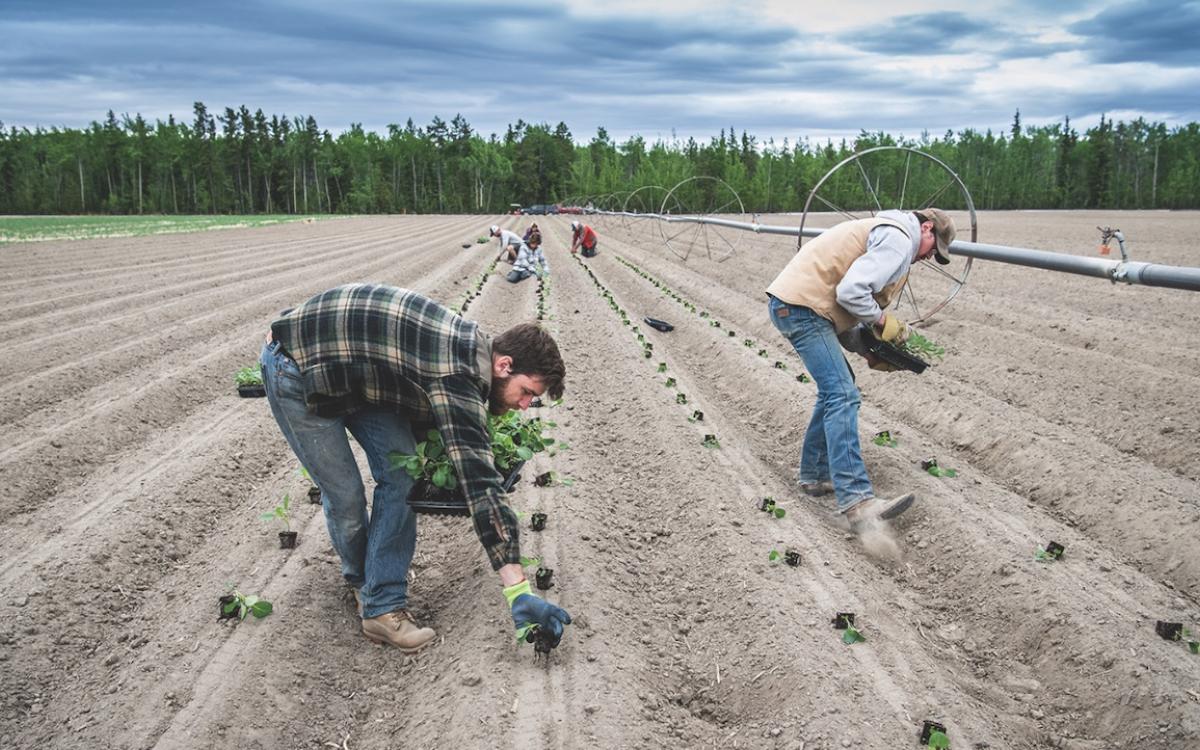
And so Yukon Grain Farm pivoted. In the early days, the MacKenzie- Grieves washed and bagged the tubers by hand and delivered them to stores in a small van, but the business was growing. They bought more land and invested in more cold-storage capacity, which has allowed them to supply stores for up to 10 months a year. As they grew, they experimented with new crops. Now, the operation is much larger and mechanized. Steve and Bonnie have six employees— though Steve prefers to call them “partners”—an abundance of cold storage and sheds full of equipment.
“In order to keep the business rolling and keep everybody paid well, we just keep evolving and growing different things all the time,” Steve says. “The whole farm has been trial and error.” Produce now makes up half of their sales—which have shown consistent growth over the years—while the other half is animal feed.
This willingness to experiment is why their carrots are so good. Southern growers aren’t selecting varieties for taste, Steve says. They have to pick ones that handle and store well to ensure the product will survive the long processing and shipping journey.
“The varieties of carrots we grow are not varieties that are really commercially grown,” Steve continues. “They’re hard to grow, they’re hard to process, and they don’t store well.”
But the MacKenzie-Grieves make it work, and not just for carrots, but also for other fresh produce. And Yukon diners are thanking them for it.