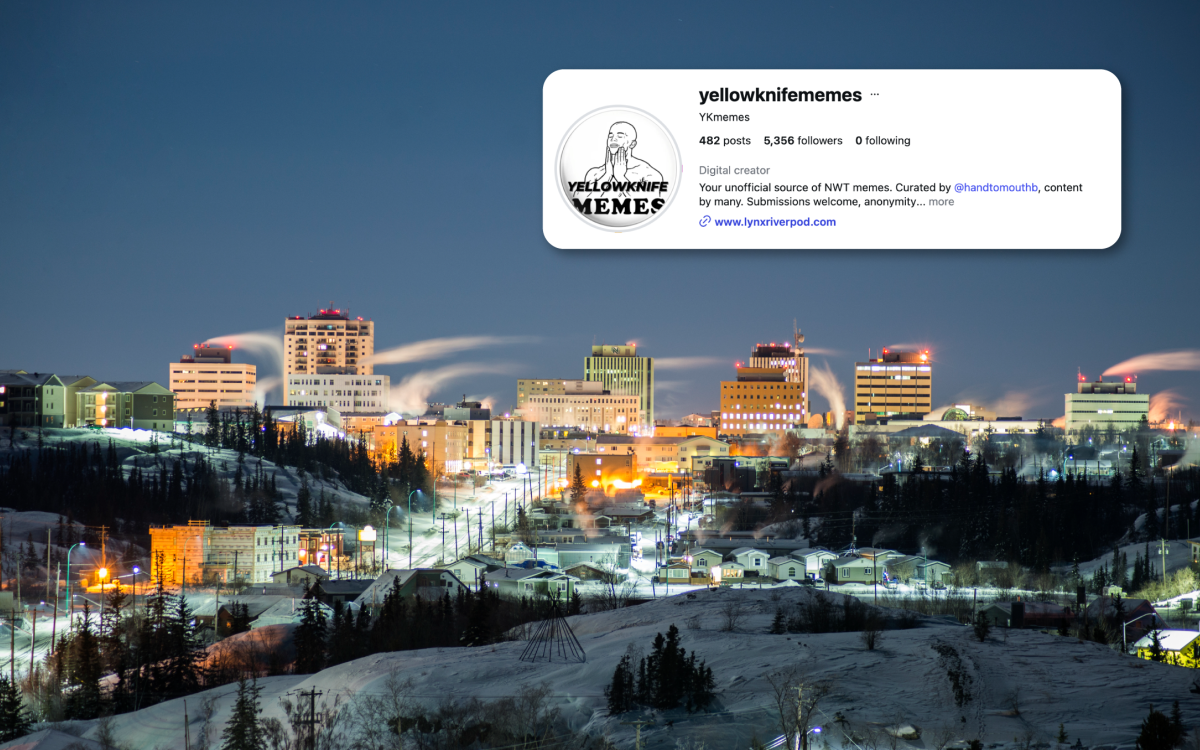
During the wildfire evacuations in the summer of 2023, Yellowknifer Brie O’Keefe was among the displaced Northerners. With her two-month-old baby and some friends, she rented a log cabin in Alberta. From there, she watched politicians argue as the City of Yellowknife announced a plan to host its 21,000 residents in the Multiplex (which has a capacity of about 1,495). She heard rumours of people sneaking back into town and conspiracies about whether the fire was even real. “The more weird things happened, the more I felt quite inspired creatively to take my frustrations out through meme form,” she says. “It all just seemed so absurd.”
O’Keefe started creating memes and posting them on her Instagram account. She poked fun at politicians (including an MLA who returned to the city mid-evacuation), ridiculed the Multiplex plan and depicted the strange evacuee experience, including waiting in line for gas at Big River and driving during Edmonton rush hour. One post joked about Yellowknifers dealing with their “evacuation trauma” by getting big-city pedicures.
This emotional outlet evolved into the city’s funniest social media account:
@yellowknifememes. Within 72 hours of O’Keefe making the page, it hit 1,000 followers. Other people started submitting memes, and she posted more than 100—most her own inventions—in those first three days. “We were all apart and felt really alone,” she says. The ability to express an opinion about a collective experience, from the hilarious to the maddening to the absurd, is what resonated so strongly with Yellowknifers.
Memes—images, GIFs, short videos or phrases used to express a shared cultural experience or joke—are often dismissed as disposable internet junk: low-effort comedy designed to disappear into the endless ether of doomscrolling. But they’re a method of meaning-making like any other media. And, in Yellowknife, they’ve taken on a different role, functioning as political critique, historical record and communal coping mechanism all at once.
Today, YKmemes hovers around 5,300 followers, while the City of Yellowknife’s official Instagram page has about 5,600. Unlike anonymous shitposting accounts—which share deliberately low-quality content to provoke a strong reaction—O’Keefe has had her name attached from the beginning. She wanted to set a standard so the page didn’t become a toxic space hiding behind anonymity. This decision shapes the tone of the account. “I try to use the memes for good,” she says. “I save the snark and critiques for those who actually have put themselves in positions of public scrutiny.”
Politicians and public figures are fair game, but the page avoids what she calls “low blows,” including submissions that are only about a person’s looks. For O’Keefe, it’s not about political ideology or airing complaints but rather being clever and making a good point. “I will publish things whether I agree with them or not,” she says, “as long as they’re funny.”
Many of the memes are about niche experiences only Yellowknifers will understand, such as the copious amounts of sand collected in every nook and cranny of your body, clothes and bed after a weekend at Folk On The Rocks. Others are about complex issues that have long histories, including decisions made by the territorial government to bail out diamond mines or to close the Aurora College Community Learning Centres.
In this way, YKmemes offers a hyperlocal perspective that can prompt passive followers to look further into an issue when they don’t understand the layers of context needed to interpret the post. “It’s a way of understanding the North but also seeing perspectives of the North from Northerners for Northerners,” O’Keefe says. “You’ll always learn a bit about Yellowknife in the process.”