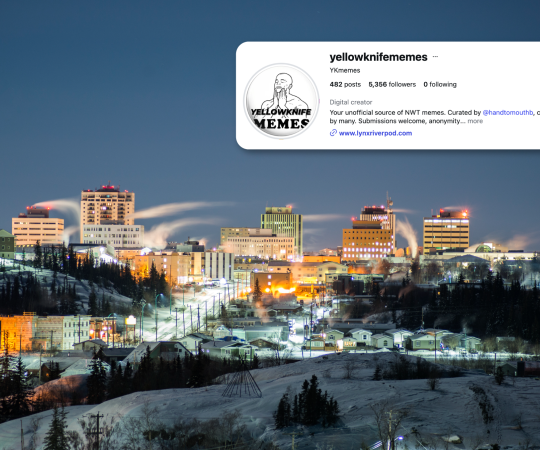
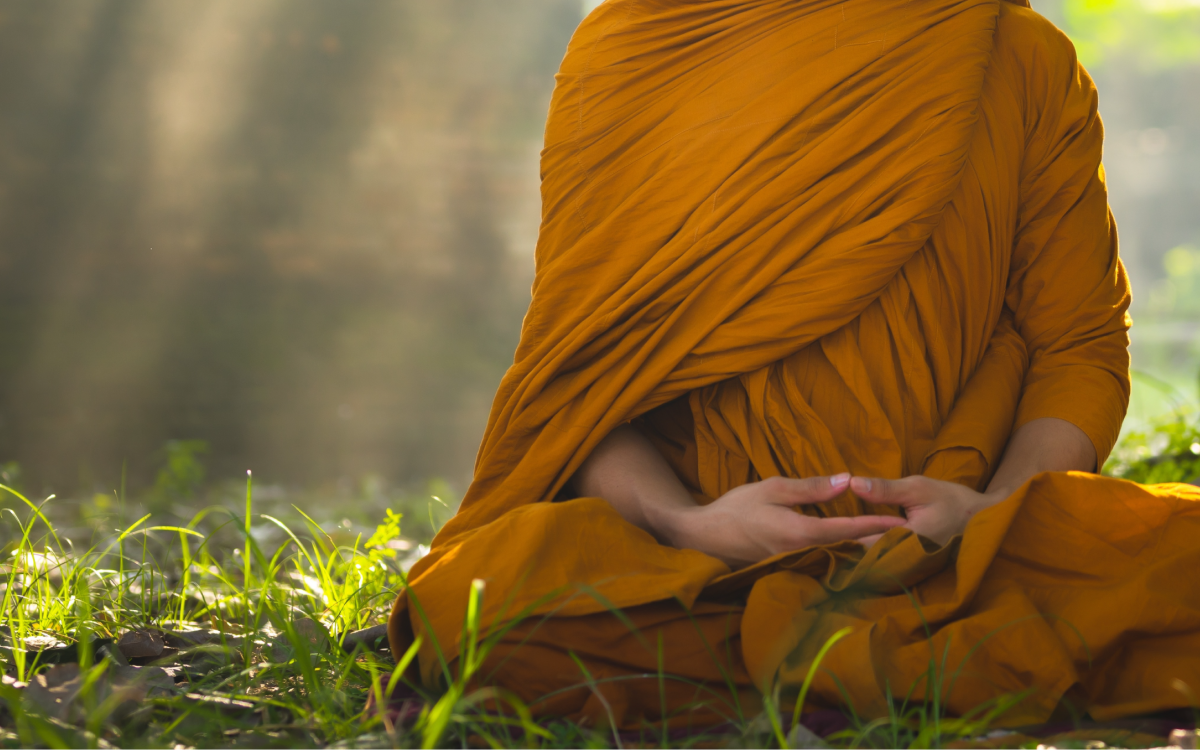
Bhante Andrew’s bare feet stick out from his ochre robe as he sits on a lichen-covered rock near the Ingraham Trail about 30 kilometres outside of Yellowknife. Every day, the 33-year-old Theravāda Buddhist monk walks to this area from his camp to meet people and collect alms, or food offerings. Some drivers give him fish, moose, army rations or vegetables. Other locals aren’t sure what to make of him.
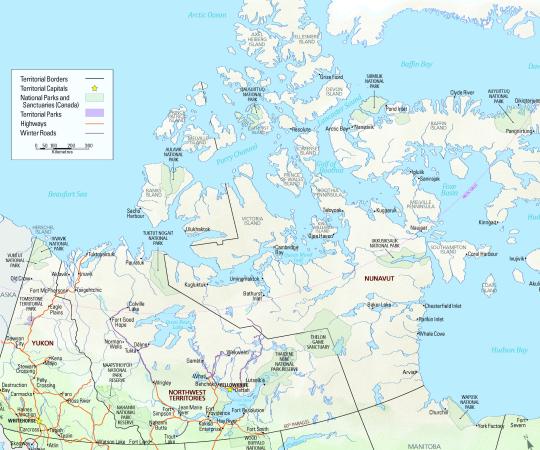
Theravāda, the oldest form of Buddhism, calls for closely following the original teachings laid out roughly 2,500 years ago. Bhante Andrew, whose formal monk name is Dhammādhipo Bhikkhu, doesn’t participate in the monetary economy, is celibate and has no permanent home. He moves every few months, living in a tent in summer and a cabin or hot tent in winter. For most of the past four years, he’s lived in the Alaska bush, though he’s also spent time in the Yukon and other parts of the NWT. Since April, he’s been camping off the Ingraham Trail, where he plans to stay until the end of October before going back to Alaska. The tradition of Theravāda monks living in wilderness has become rare, and Bhante Andrew proudly says, “I’m for sure the most northern one.”
The lifestyle comes with many rules. Not allowed to grow his own food, hunt or forage, he eats only what people offer him. He turns down few foods, but usually has only one meal a day, freeing up the rest of his time to develop his mind. “We eat solely for the sake of maintaining the body enough to keep practising.” People often ask him how many hours a day he meditates, but for long-time practitioners, he explains, there’s less contrast between formal closed-eye sessions and other activities.
Originally from upstate New York, Andrew Chmielowski started meditating at 19, shortly after moving to Colorado. By 20, he wanted to be a forest monk and moved to a monastery in California, where he was ordained and lived for more than six years. During trips to Alaska in 2019 and 2020, he was struck by the vast wilderness and moved there a few years later.
Meditating in nature isn’t all peace and quiet. Bhante Andrew suffered stress fractures in his spine and a torn meniscus from spending so much time sitting in the meditation posture. His injuries healed, but he’s camped soaking wet in freezing temperatures, had bears rip up his tent and dealt with unrelenting bugs. Camping outside of Yellowknife has been relatively easy. “It’s like paradise back there.” The terrain offers easy walking, the bugs aren’t so bad and it hardly rains. Plenty of people come out to see him and some invite him on outings. He recently went on a drive up the Ingraham and a road trip to Fort Smith.
Not everyone understands what he’s doing, though. The North has a history of attracting ill-equipped outsiders with big ideas who become a burden. For example, Christopher McCandless—made famous in Into the Wild—died while chasing his dream of living off the land in Alaska. Several others who followed him died or required rescue.
Some NWT residents worry about Bhante Andrew’s safety or his ability to handle tough conditions. “How soon before the black flies make an offering of him?” one Facebook user wrote. Others point out that Yellowknife’s unhoused population needs food, too. “Our ppl in town need support when asking on the street,” noted another, “maybe we can give that consideration.”
Bhante Andrew says he has more wilderness experience than people assume and doesn’t see himself as an imposition. Monks are not beggars and people don’t have to offer him food. “It’s entirely voluntary,” he says. “We don’t have to have anything to do with each other.”