Site Banner Ads

Site Search

Search

Home Up Here Publishing

Mobile Toggle

Social Links

Facebook Instagram

Search Toggle

Search

Main navigation

  • Magazines
    • Latest Issue
    • Past Issues
    • Up Here Business
    • Visitor Guides
    • Move Up Here
  • Sections
    • People & Places
    • Arts & Lifestyle
    • History & Culture
    • Travel & Tourism
    • Nature & Science
    • Northern Jobs
  • Newsletter
  • Community Map
  • Merch
  • Our Team
  • Support
  • Subscribe/Renew

What Can Our North Become?

May 2016

Canada’s North is slowly becoming more accessible and self-sufficient, but some of our Arctic neighbours have been thriving for years. It’s high time we look outside our borders for inspiration.

By Samia Madwar

Breadcrumb

  1. Home
  2. What Can Our North Become?

What exactly is the Arctic?

Five years ago, while reporting in northern Norway, my local colleagues asked me whether I considered their hometown of Kirkenes as being in the Arctic. “Well, yes—we’re north of the Arctic Circle,” I said, bewildered at the question. “Ah,” came the reply, as if they’d never thought of it that way. 

At 69 degrees North, Kirkenes is along the same line of latitude as Gjoa Haven, around 250 kilometres north of the Arctic Circle, and well above the Canadian treeline. Yet the climate in Kirkenes is a little different. Average temperatures, for instance, are much warmer than in Gjoa Haven, thanks to the Gulf Stream that brings warm ocean currents from the Atlantic to western and northern Europe. While Kirkenes does get short, cold days in the winter and 24-hour sunlight in the summer, it’s also lusher and greener than Gjoa Haven—and it’s got trees.  

Like me, some define the Arctic in technical terms: it’s the region north of 66.66 degrees latitude—the Arctic Circle. To others, the term conjures images of endless ice and snow, a land mostly devoid of people, and home only to a man in a big red suit, his reindeer, and his elves. To many inhabitants of the North, whether they’re in the Arctic or the subarctic, the question is irrelevant.

"It's like asking a fish about the water,” says James Raffan, geographer, writer, and former head of the Canadian Canoe Museum. “You ask a fish about the predators or competitors for the same food substrates, and they’ll tell you all kinds of stories. Ask a fish about the water, and it’s a different story, because it’s just there.”

During his travels through Iceland, Norway, Finland, Sweden, Russia, Alaska, Canada, and Greenland, Raffan met indigenous leaders ranging in age from 17 to 78. He learned reindeer like bananas, had his future predicted by a Sakha shaman, ate flapjacks with an Inupiaq elder in Alaska, paddled with Inuvialuit youth along the Coppermine River in Nunavut, and toured a couple of self-proclaimed Santa Claus villages in Rovaniemi, Finland and North Pole, Alaska. 

To the people he met, living along or north of the Arctic Circle wasn’t as prominent a label or identifying feature in their lives as Raffan expected. Instead, what characterized many of his encounters with Northerners around the world was the feeling that they were on their own. 

“There is a kind of pride and sense that being a Northerner has its own set of values,” he says. “I think there is a suite of understanding ... that has to do with self-reliance and knowing that you’re a long way from the heart of the economic engine of the world.” 

In the following pages, we’ll focus on some of the things that make Arctic and subarctic communities around the world so different from each other. We’ll ask what the Yukon, NWT, and Nunavut can learn from their circumpolar neighbours. We may be alone in the far North, but at least we’re all alone together.
May 2016

Kæstur hákarl, fermented Greenland shark. Photo by Tina Lee

We Dare You To Try These

Five shocking, belly-filling polar treats you need to taste... someday.

By Samia Madwar

Kæstur hákarl, fermented Greenland shark. Photo by Tina Lee

December 3rd, 2025 December 3rd, 2025

May 2016

Photo courtesy Kakslaut Tanen Arctic Resort.

Behind The Walls

As any architect will tell you, the far North, with its extreme climate and diverse indigenous populations, is a tricky place to tackle. But not impossible. Here are a few ways designers and engineers have taken on the challenge.

By Samia Madwar

Photo courtesy Kakslaut Tanen Arctic Resort.

December 3rd, 2025 December 3rd, 2025

Related Articles

Tear Sheet

Hunters of the twilight

Hunters Of The Twilight

The Inuit of northern Baffin Island's Admiralty Inlet still survive by the hard-earned skills of their ancestors.

December 3rd, 2025 December 3rd, 2025

Tear Sheet

-----

The Tundra Still Holds Its Secrets

Lost aircraft are an inseparable part of Northern lore. Here are forlorn tales of the most mysterious. 

December 3rd, 2025 December 3rd, 2025

UP HERE - MAY/JUN 2025

----

Them’s Fightin’ Words

The Godsells expected something different when they moved to Fort Fitzgerald. A punch-up wasn’t it

December 3rd, 2025 December 3rd, 2025

UP HERE - MAY/JUN 2025

Photo by Bill Braden

Birthday Buck

Yellowknife celebrated the NWT’s centennial with an idea that was so money

December 3rd, 2025 December 3rd, 2025

UP HERE - JANUARY/FEBRUARY 2024

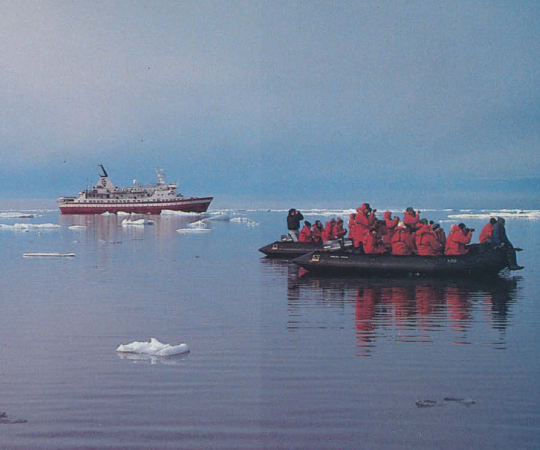
Lindblad explorer

BACK TO 1984

When the world seemed full of promise.

December 3rd, 2025 December 3rd, 2025

UP HERE - SEPTEMBER/OCTOBER 2023

Gates of Pioneer Cemetery

The Grave Story Of Pioneer Cemetery

A milestone of Whitehorse’s history was once ignored by officials, and reviled by locals. 

December 3rd, 2025 December 3rd, 2025
Newsletter sign-up promo image.

Stay in Touch.

Our weekly newsletter brings all the best circumpolar stories right to your inbox.

Up Here magazine cover

Subscribe Now

Our magazine showcases award-winning writing and spectacular northern photos.

Subscribe

Footer Navigation

  • Advertise With Us
  • Write for Us
  • Privacy Policy
  • Disclaimers & Legal

Contact Information

Up Here Publishing
P.O Box 1343
Yellowknife, NT
X1A 2N9  Canada
Email: info@uphere.ca

Social Links

Facebook Instagram
Funded by the Government of Canada