Growing up in Fort Smith in the 1970s and ’80s, I probably had the same fears as anyone anywhere my age: Ouija board spirits, bloodsuckers at Pine Lake, Nostradamus prophecies, Freddy from Nightmare on Elm Street finding me at bedtime, Jason from Friday the 13th discovering me while camping, killer bees and piranhas in the south realizing that there are humans in the North and both species—at the same time, through some kind of symbiotic telepathy—coming north through the air currents and waterways to hunt us all. But, on top of all of that bone-squeezing terror, what terrified me the most were the wheetago stories.
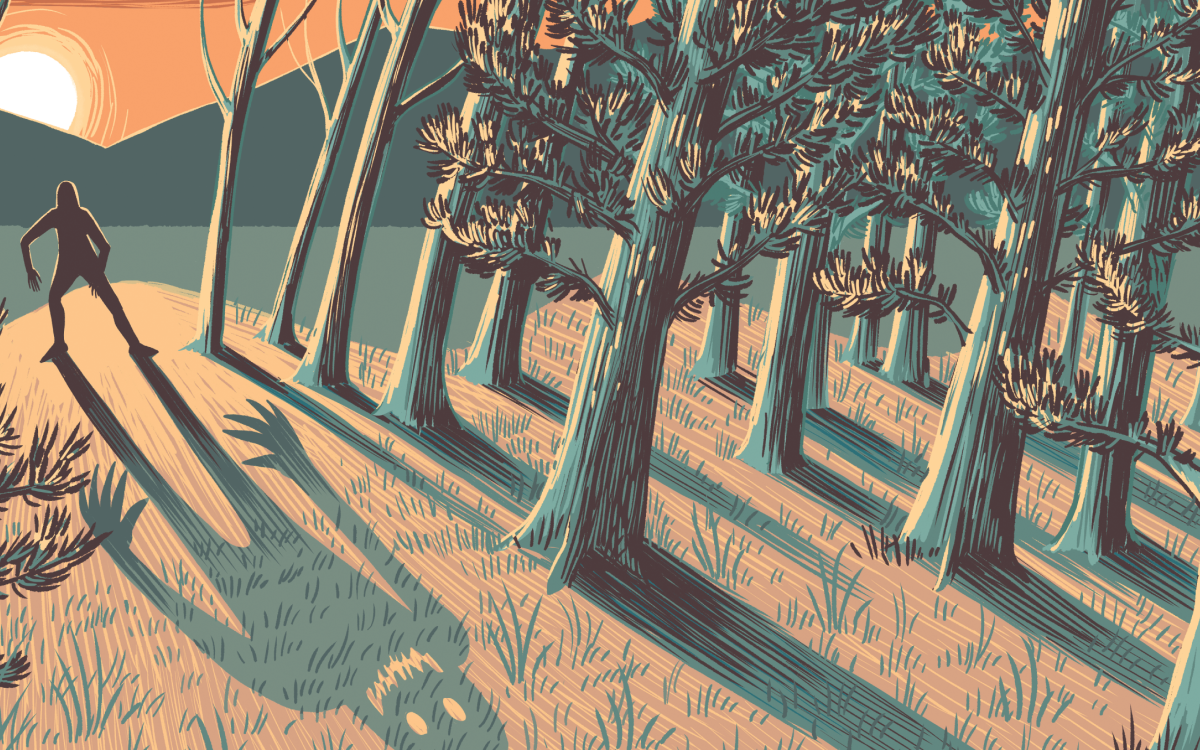
The wheetago are beings cursed with never-ending hunger. The more they eat, the hungrier they become. Their names are spelled many different ways depending on where you live and what dialect of terror is being spoken. I’ve heard them called wheetago, wetigo and windigo in stories told during the winter in Fort Smith. To be respectful, we do not say the “W word” out loud unless there is snow on the ground. We do not want to give them any power or call them.
I was told that when you see them, they look like they’re smiling; but, in just about every story I’ve heard or read, as they come closer to you, you can see that they’ve eaten their own lips and that the main weapon of the wheetago is not their fingernails or teeth—it’s their screaming cry. They could freeze a whole camp with it. Once they were done screaming, the Ws would not run into the camp. They didn’t have to. They would walk and take their time feeding on everyone caught in their spell.
Every time I hear a wheetago story, I get so scared that I feel like my face is being pulled inside out.
I never wanted to believe the Ws were real, but then I discovered the December 1976 issue of a Fort Smith publication called Northern Breed and read a story called “Wetigo.” It was written by Arthur Heming, a wilderness aritist and novelist famous for chronicling the North. He shared a few of the W’s abilities: to fly, to stop rifles from firing at it and its strength in its pursuit of meat. What really put the fear in me was the detailed account of one W being transported from Fort Fitzgerald to Alberta in 1921. Heming, who died in 1940, wrote that the wetigo “that was held in chains would jump up at the sight of the people and let out some horrible screams but would lie on the floor of the wagon and whimper whenever a Slavey woman told it to be quiet.”
Fort Fitzgerald is just down the highway from Fort Smith. I’d love to know more about this Slavey woman, and I wonder who this creature used to be and if they ever returned to themselves once they were doctored by, as the article says, “some Indians in the south who knew how to rid the man of the Wetigo spirit.”
I’ve always loved reading horror, whether it was Stephen King, The Walking Dead graphic novels or zombie fiction like David Wellington’s Zombie trilogy. But it was reading northern voices like my uncle Johnny Washie, Antoine Mountain, George Blondin and Cece Hodgson-McCauley and other writers in News/North, The Yellowknifer, The Inuvik Drum, The Press Independent, The Slave River Journal, Up Here and Above & Beyond that gave me the courage to start writing my own stories. I decided to dive deep into our lore about the wheetago and have a human and spiritual militia face and fight them. And, at the same time, I wanted to work on a book that had something far scarier than Pennywise the Dancing Clown in King’s It, the novel and movie, and that’s when I started writing my novel BEAST.
I love writing spooky stories like BEAST and my graphic novel Wheetago War: ROTH and my short story collection Wheetago War (stories) because you can pass on cultural teachings and warnings and watch them play out on the page. You get to see which characters listen and which characters don’t. At the same time, readers can learn our ways, our beliefs and our protocols, including not saying wheetago out loud when there is no snow on the ground. Whether we are talking about ghosts, spirits, creatures or supernatural beings, I feel that what we are really sharing is our respect for all creation, and the North has more than enough ghost stories that can haunt you for a lifetime.
Growing up, I was always told to carry a stick of ratroot with me for protection, and this is how I ended up writing my graphic novel, Wheetago War: ROTH, with artist Christopher Shy. I wondered what would happen if Ross, a Tłı̨chǫ man, was bitten by a wheetago and, when he was bitten, he was holding a stick of ratroot. Because Ross continues to hold on to this stick of ratroot, I could see that he would only half turn into a wheetago and my plot was that he had to save his family from an uprising of dozens of wheetago having their wheetago strength and, at the same time, knowing that if he dropped or lost this stick of ratroot, he’d turn full wheetago and begin hunting his own family.
I think the reason we enjoy watching and reading horror is we know the movie and the novel, at some point, is going to end. But there are beings out there in the world that we know about whose existence never ends. And that terrifies and inspires me because we should be thinking about how to learn their ways and create a treaty or outsmart them and let them know we know how to face them.
I’ll give you an example. Here’s a cultural teaching you can use right now—and I’m not saying spiders are evil: A long time ago, I was given a teaching from a Dene Elder. I apologize for not asking her name. She shared that if you are scared of spiders and see one in your house, calmly walk to it with Kleenex and catch it slowly and softly and say, “There is better food for you outside, my friend. Grandpa, bring me some money.” Release this one gently outside and see that money will come to you. Don’t believe me? Try it.
See how fun it is when you create a peace treaty with something you used to fear? You will look forward to the next time your relation comes to visit. In fact, you will welcome your new favourite cousin. ;)
The gift of Indigenous and northern literature is we are braiding what we know, what we’ve been warned about, what we’ve seen and what we fear most coming to life being published for the first time. I’ll give you an example. In the Taaqtumi: An Anthology of Arctic Horror Stories series, we are introduced to Indigenous beings and creatures such as the Ijiraujaq (zombie), the Na acho (giant animals), the Nanurluk (giant polar bear), Nuliajuk (spirit at bottom of sea), Amautaliit (ogresses), an Ijirait (shape-shifter) and Nàhgą (bushman or sasquatch).
I’m hoping that whoever is writing about these beings and creatures is also offering solutions on how to face and defeat them. You’ll see how in my novel, BEAST, Lawson Sauren, who is Tłı̨chǫ, Shari Burns, who is Métis and psychic, and Isaiah Valentine, who is Cree, use all of their cultural teachings to defeat “The Dead One.”
Now that I’m 54, I think it’s important to talk about the Ws because they teach and warn us about greed and all-consuming hunger.
We live in the time of the wheetago: where greed is worshipped at the cost of the planet, where so much hoarded wealth—when billionaires could be helping the world—is never enough.
As Dene, we are taught to leave each person and each place better than we found them. My prayers and my writing all ask for better leaders who will not betray the beauty of what we all enjoy now for all future generations. May our teaching stories—especially the ones that can scare you back onto a good path—continue.
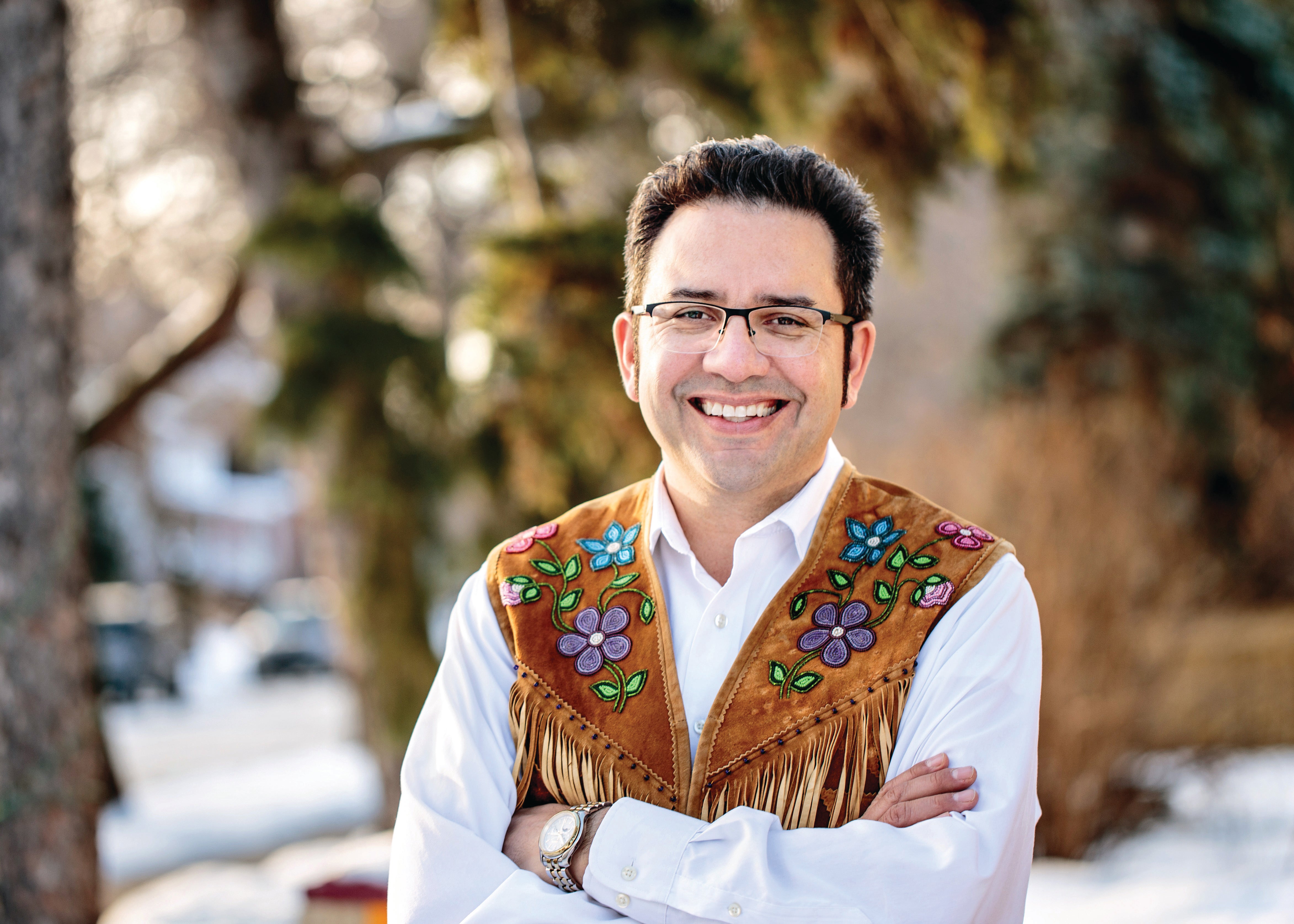
Richard Van Camp