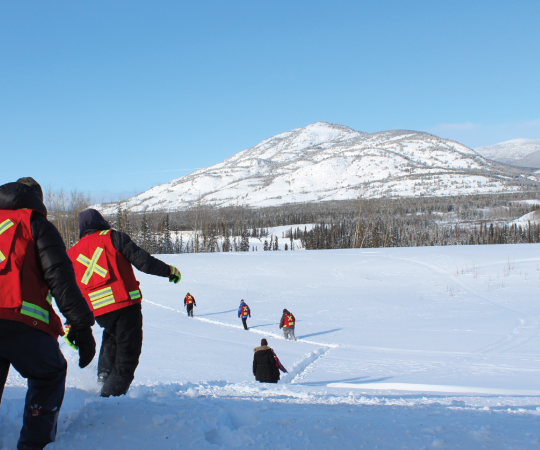
Even after many summers on the Arctic tundra, I simply cannot wait for the last half of June. The sun seems to circle in the sky, birdsong echoes all about and the land is full of promise as plants green up with great enthusiasm, bursting into a rainbow brought to Earth.
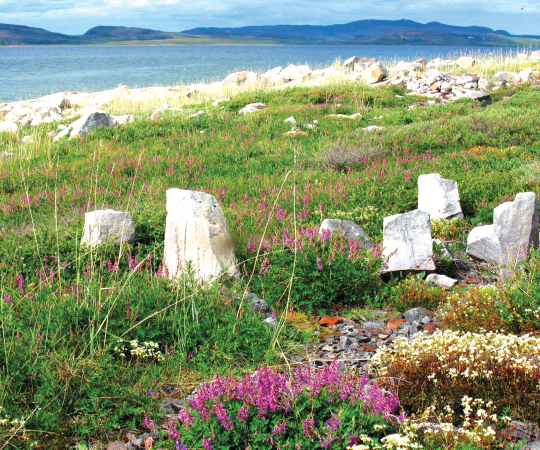
An early-summer walk on the tundra or in the treeline seems psychedelic. You wade through colour, surrounded by an incredible carpet of tiny plants, all blooming madly in the long days of the midnight sun. Most species bloom in June and July and produce seed by early September.
The Ericaceae or heath family includes small shrubs that typically grow in acidic and infertile soils, on rocky ridges or gravelly slopes and in peat bogs, though a few grow where snowbanks persist long into the summer. Many produce edible berries or dry seeds dispersed by passing through the digestive tracts of birds and mammals.
Most heaths grow in a symbiotic association with specialized mycorrhizal fungi that assist with extraction of nutrients from poor soils. The underground hyphae (threadlike filaments that carry nutrients) of the fungi attach to and transport nutrients to the roots of the heaths.
These plants are insect-pollinated, many by bumblebees. The bees use “buzz pollination” to stimulate the flowers to release pollen from anthers (part of the male reproductive structure). While gripping the flower, the bee swiftly vibrates its thorax without moving its wings. This motion causes a slit in the anther to open, releasing pollen, which then sticks to hairs on the bumblebee’s body and legs, to be transported to the next flower. (If you grow tomatoes, you can watch bumblebees do this. But honeybees don’t do it.)
Heaths are supremely adapted to extreme cold, snow cover and high winds. If you visit the North in summer, you may find yourself on your stomach with your cellphone or a hand lens enjoying these minute botanical marvels. Here are a few to keep an eye out for:

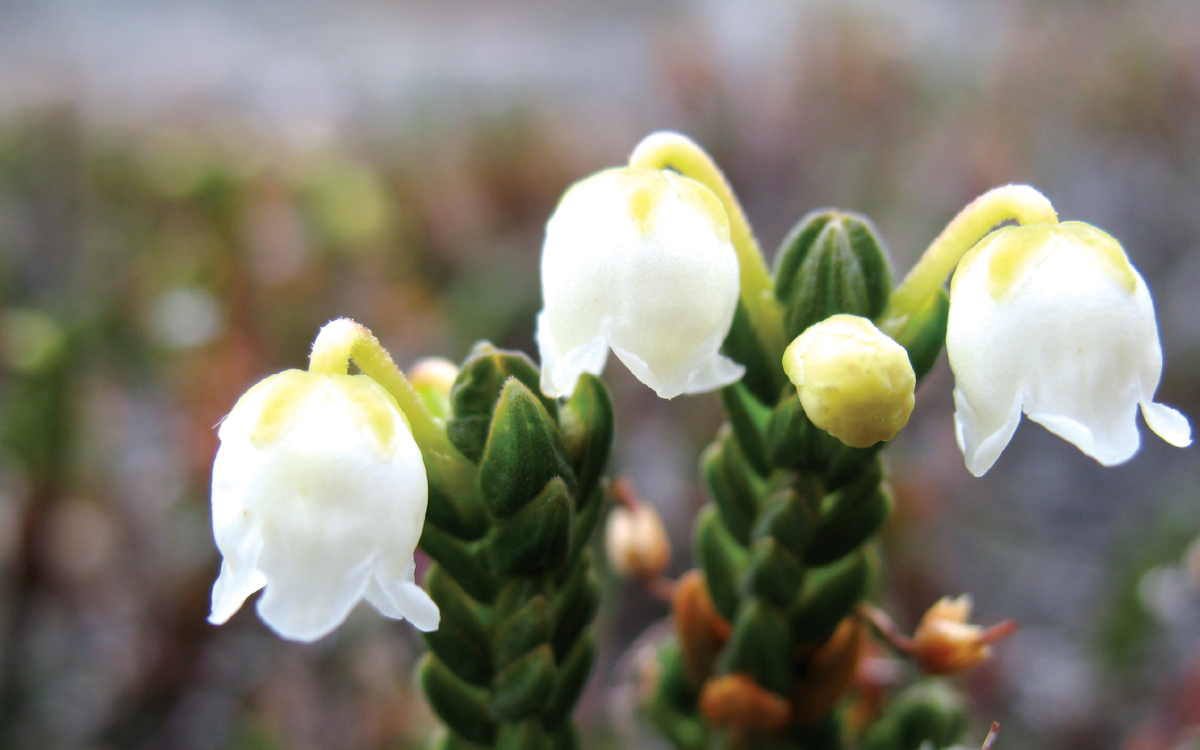
• White Arctic Heather (Cassiope tetragona) has bell-shaped flowers that face downward until pollinated, then rotate to face up, holding the developing seeds as high as possible. Their leaves form a four-sided branch and remain during winter. This plant grows thickly in sheltered spots on the tundra, in the lee of ridges and at the edges of snowbanks. Long used by Indigenous groups as firewood, it burns even when wet, due to its oily foliage.
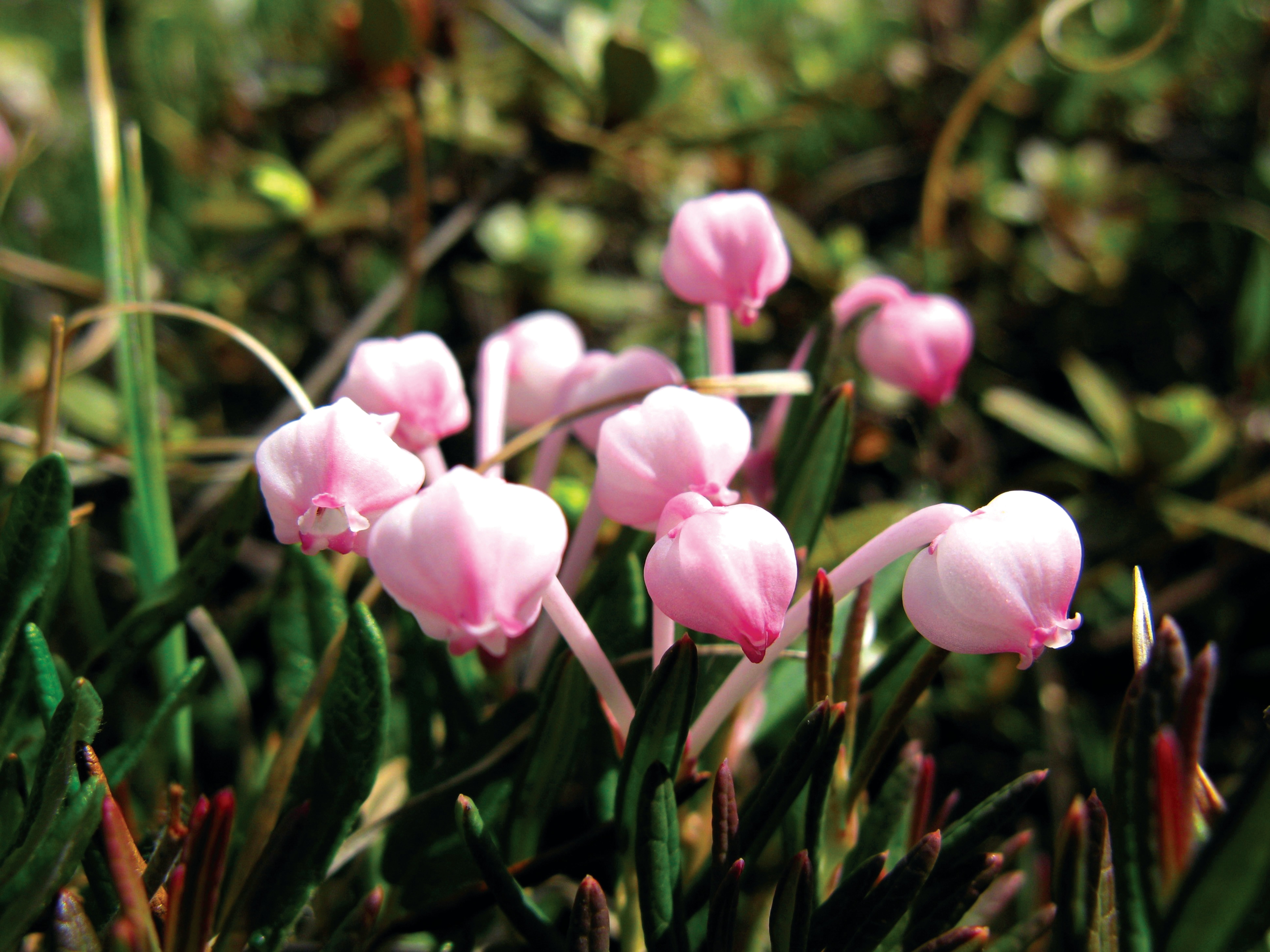
• Bog Rosemary (Andromeda polifolia) is a plant of wet areas, bogs and hummocky tundra. Globular pink flowers cluster at the ends of long pedicels (stalks), resembling minute Japanese lanterns. These are pollinated by small flies, mosquitoes and gnats, or they self-pollinate. The leaves are narrow, with margins bent under and look much like the herb rosemary. But bog rosemary is poisonous, so do not use it in cooking!
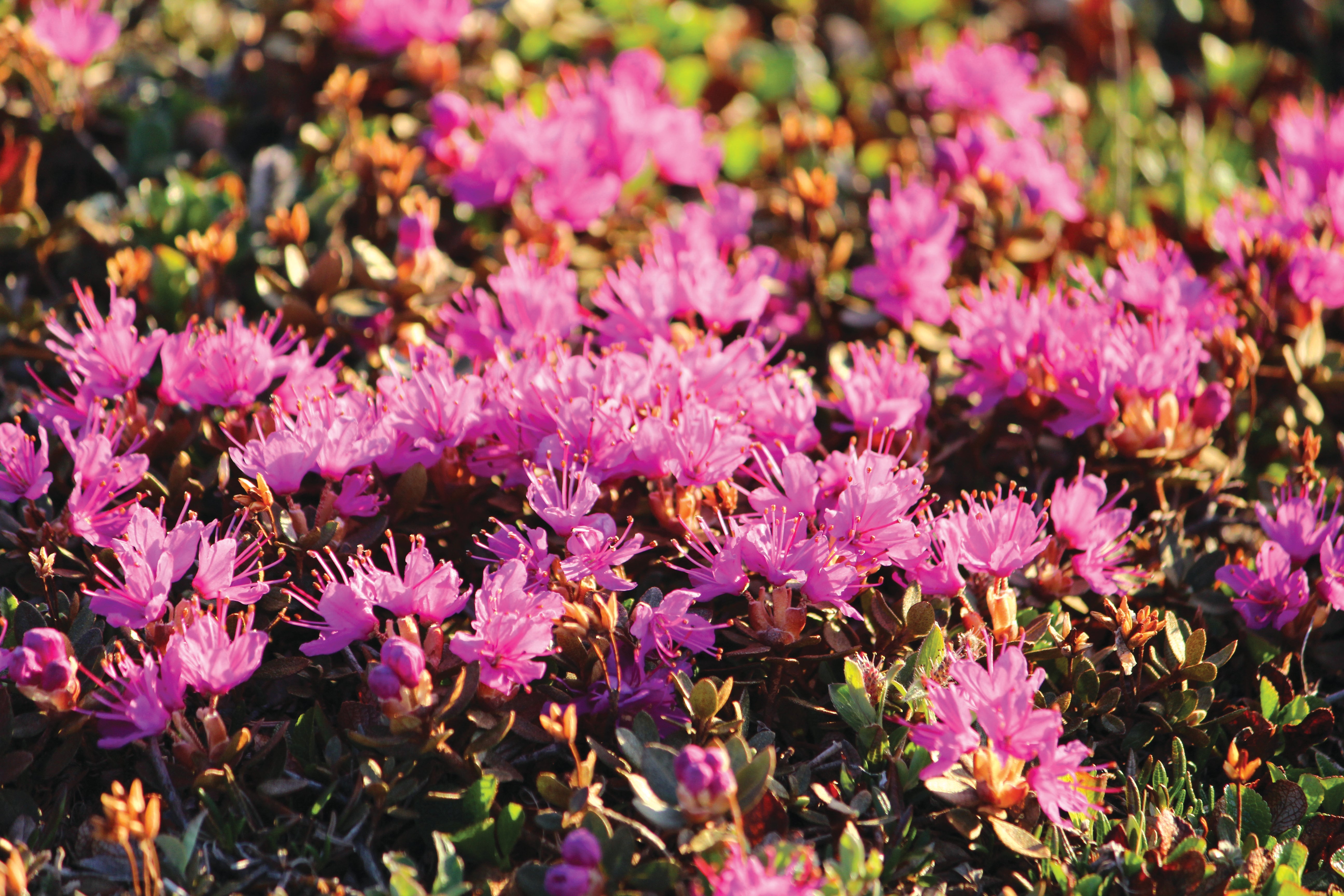
• Lapland Rosebay (Rhododendron lapponicum) has spectacular fuchsia flowers borne in clusters at the ends of short boughs, and pollinated mostly by bumblebees, butterflies and moths. This low shrub produces carpets of colours on the tundra in June. A rhododendron the size of a cantaloupe may be 100 years old. Their cell membranes are flexible to -40oC, which decreases crystal formation and helps with leaf survival. Ptarmigan feed on the leaves and buds in winter.
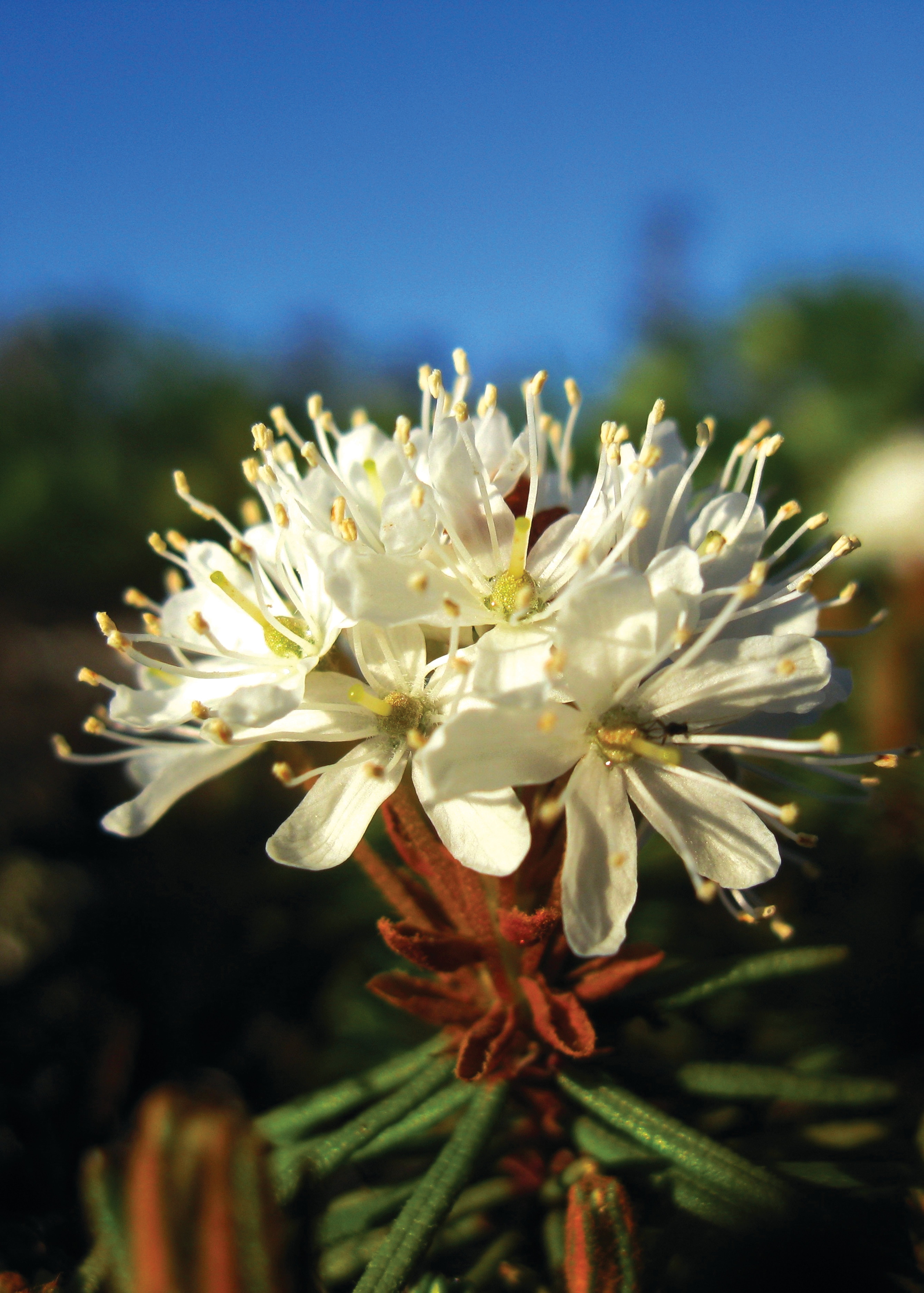
• Labrador Tea appears as one of two species: one mostly tundra (Rhododendron tomentosum) and the larger (Rhododendron groenlandicum) that grows in the treeline and boreal forest. The flowers are white, in tight terminal clusters. The leaves are leathery and dark green with rolled edges and a reddish furlike covering on the underside. Strongly aromatic, they’re used medicinally and for tea by many Indigenous groups. But do not boil the tea; steep it briefly and avoid it if you have heart problems or are pregnant.
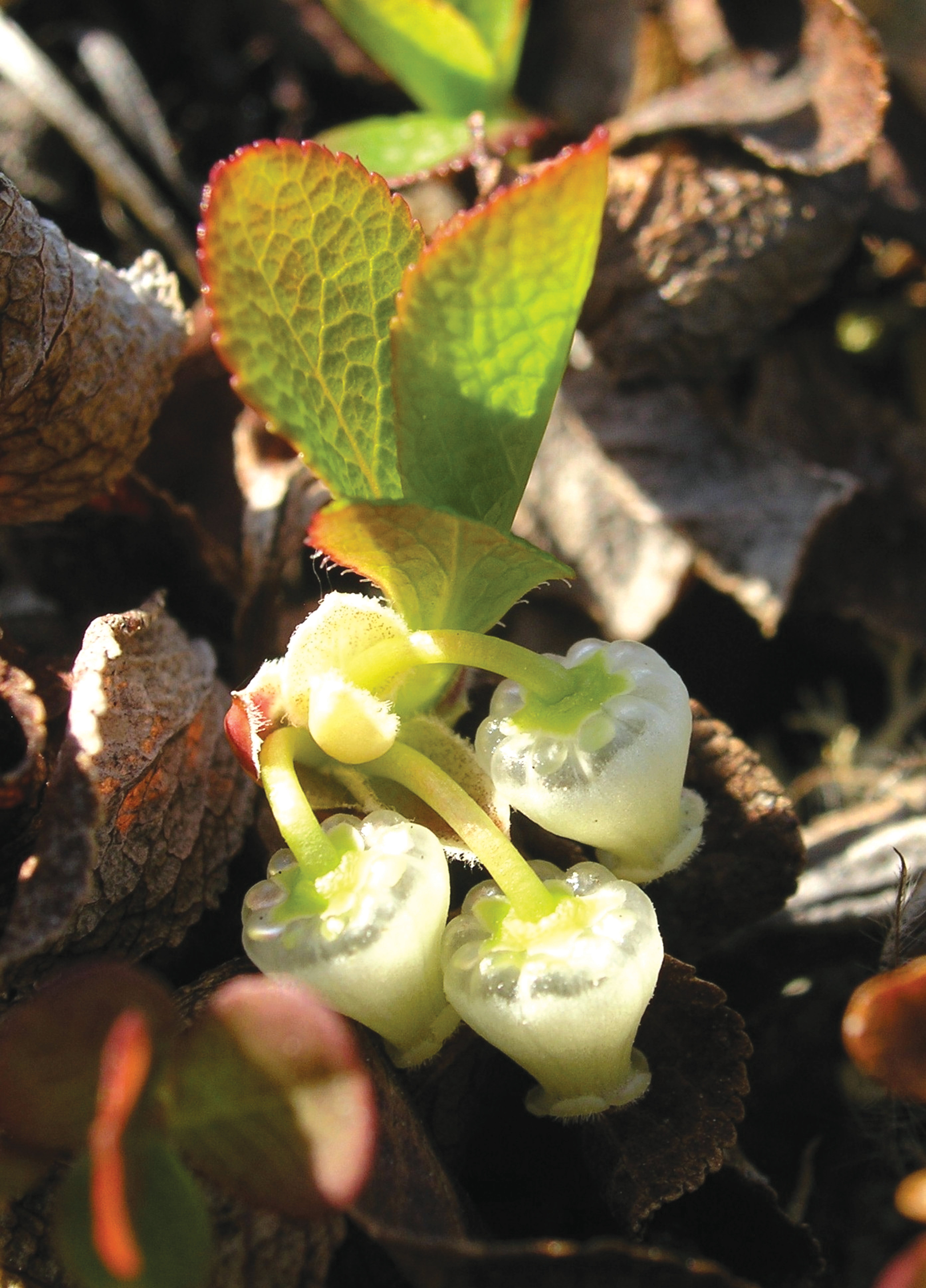
• Red and black bearberries (Arctous rubra and Arctous alpina, both formerly in the genus Arctostaphylos) are tundra plants with downward-facing white urn-shaped flowers. During the early part of their blooming, clear bubble-like lenses develop at the base of the petals. These focus the sun’s rays on the developing flower parts and accelerate maturation of the anthers and pistils (the flower’s female part, which receives the pollen). Red bearberry grows on moist tundra and loses its leaves in winter; its berries are translucent red, juicy and sour. Black bearberry occurs in mats on drier spots, ridges and eskers; it turns a brilliant red in fall and produces mealy black berries. It provides food for bears, geese and gulls.
• Kinnikinnick (Arctostaphylos uva-ursi) is a boreal forest species that grows in mats on rocky ridges and outcrops. The leathery, green leaves remain on the plant all year. The pink flowers are urn-shaped and have lenses at the base of the petals when first in bloom. The berries are orangey-red and quite dry and mealy. Kinnikinnick has long been important to Indigenous groups of the treeline and boreal forest, who mix it with fat and other berries to make pemmican.
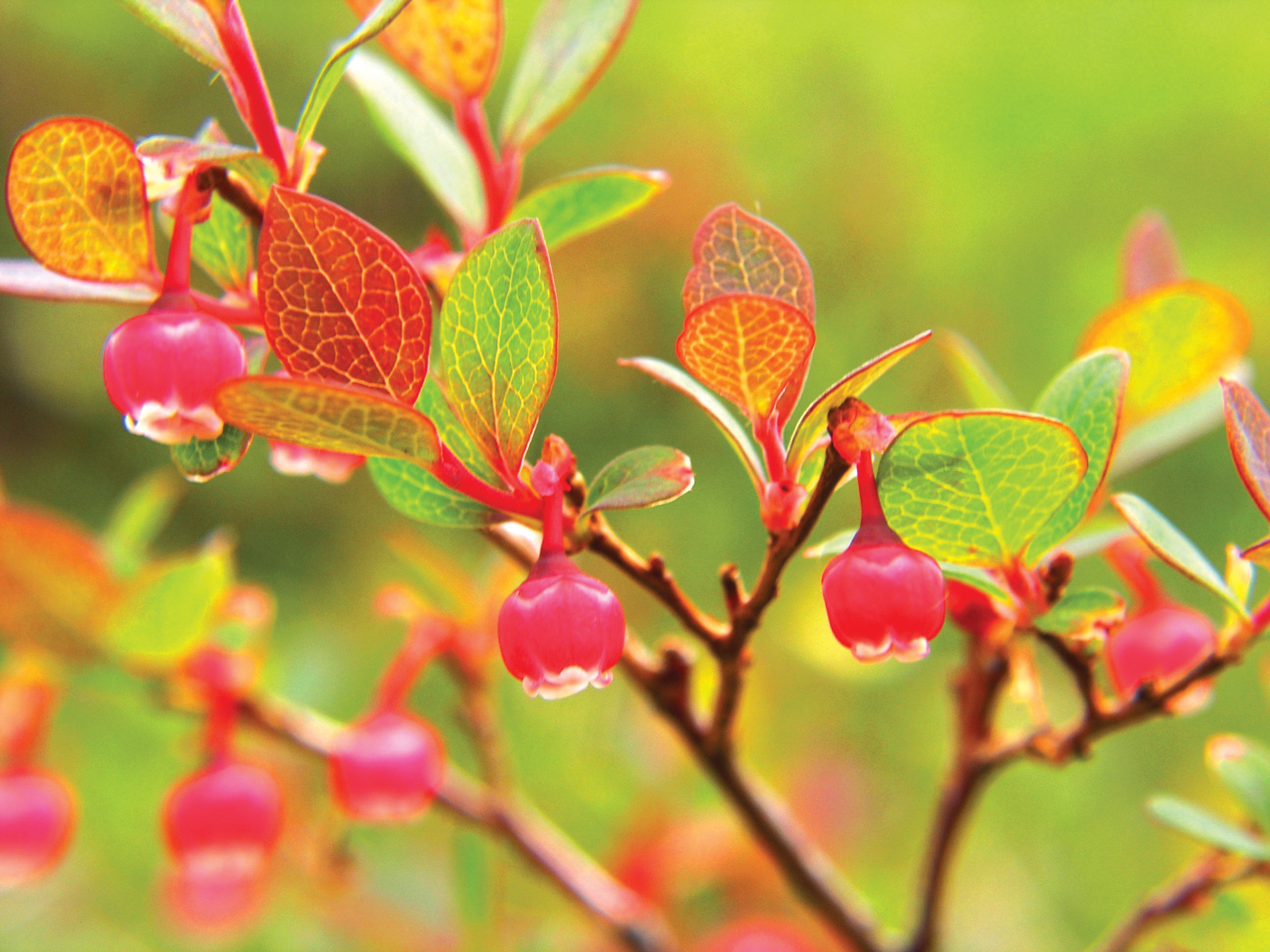
• Bog Blueberry (Vaccinium uliginosum) can be found in the forest or treeline and on tundra. The reddish flowers look like small bells and mature into vibrantly blue berries, avidly sought by many mammals, birds and, of course, people. Blueberry and cranberry plants often produce brilliant red, slightly succulent leaves at the end of summer, when the days get shorter. The red pigments increase the efficiency of photosynthesis at lower light levels.
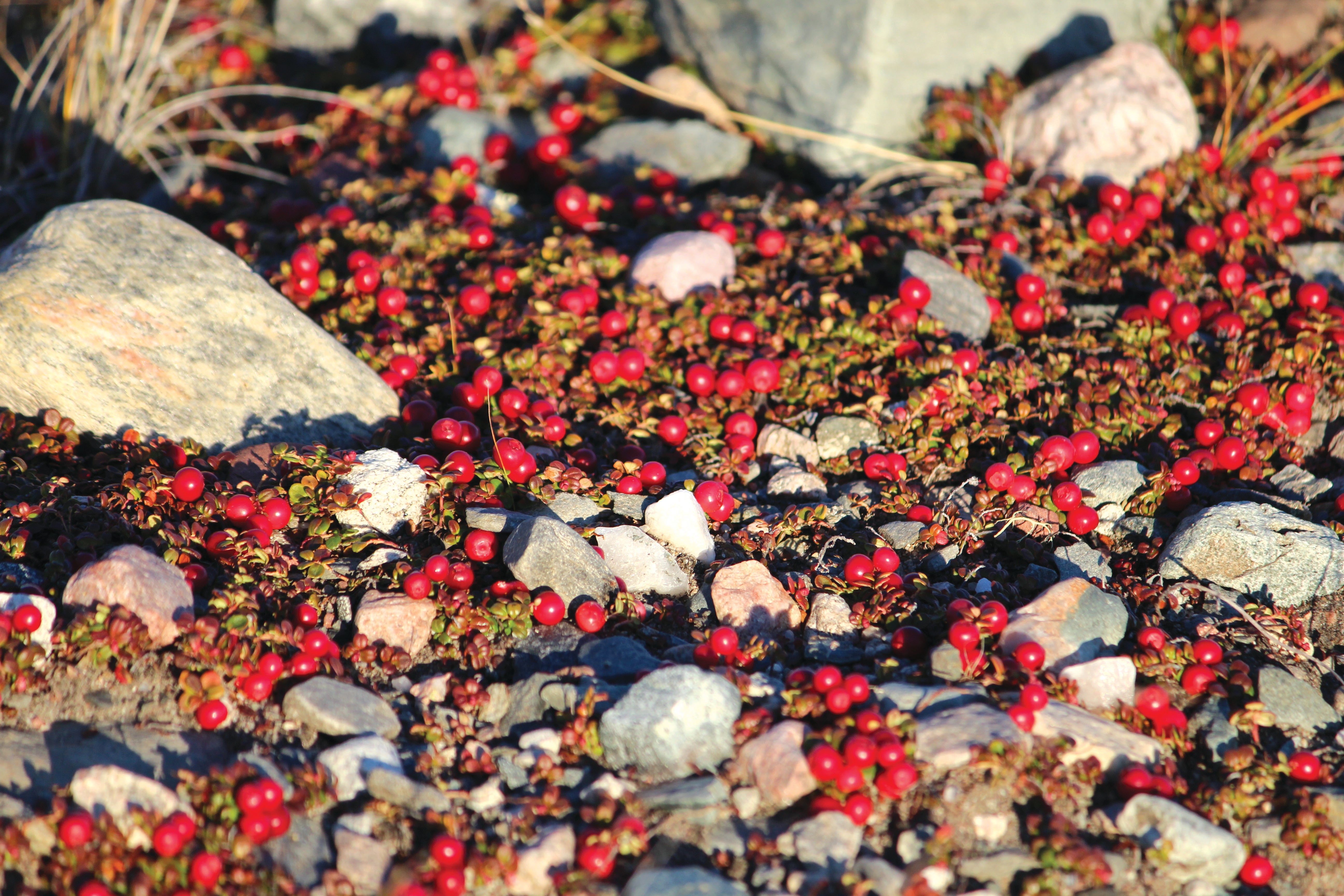
• Lingonberry or mountain cranberry (Vaccinium vitis-idaea) is a low shrub of drier areas on the tundra, eskers and rocky hillsides. It has oval, shiny leaves with curled-under edges and a waxy surface, which helps retain moisture. The flowers are white to pinkish bells in small clusters at the ends of the boughs. The red berries ripen in August or September and are best after the first frost. Any not eaten by mammals or geese, ravens, gulls and perching birds remain through the winter, turning to a deep maroon colour and providing food in spring for returning migrants and multitudes of Inuit children who find them as the snow recedes.
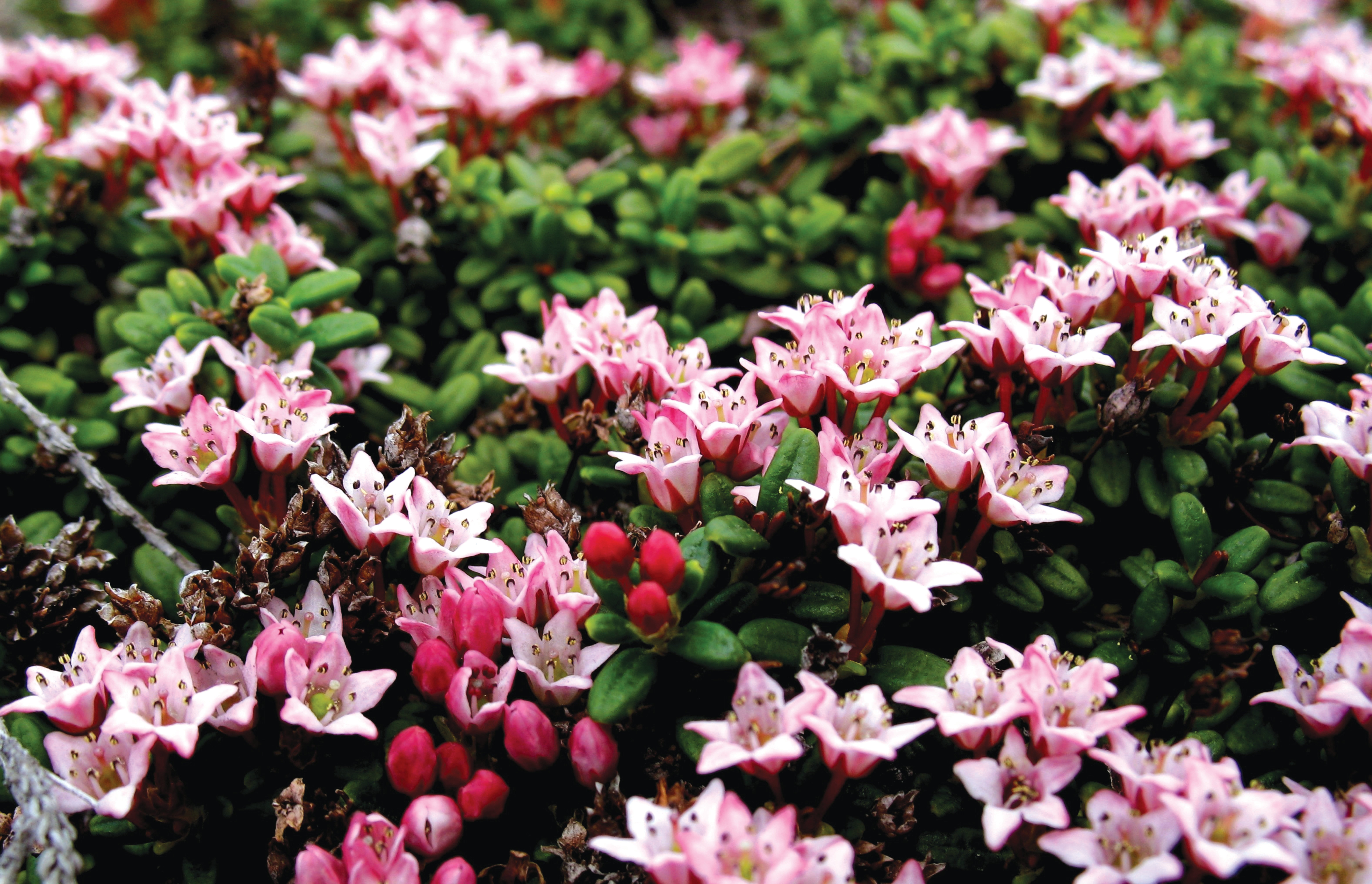
• Alpine azalea (Kalmia procumbens, formerly Loiseleuria) is a tiny shrub forming mats intermingled with other tundra shrubs. The leaves are bright green, leathery and about one centimetre long. The flowers, in clusters at the ends of the branches, are red in bud and pink in bloom.