EXPLORE THE NORTH ON ANY BUDGET
WITH THE NEW RELUCTANCE to travel to the United States, more Canadians are opting to explore their own country. While many may be intrigued by the North, a common concern is that it’s too complicated, extreme or expensive. As Lin Ward, co-owner of Canoe North Adventures, which offers guided paddling trips, admits, “I think a lot of people have trepidation.”
That may be because the focus is often on hard-core expeditions, she says, which can make people feel like the North is out of reach. But experiencing the region doesn’t have to be extreme or expensive. From low-cost camping trips to guided day outings to high-end getaways, you can save, spend or splurge. So, settle on a budget and come on up.
SAVE
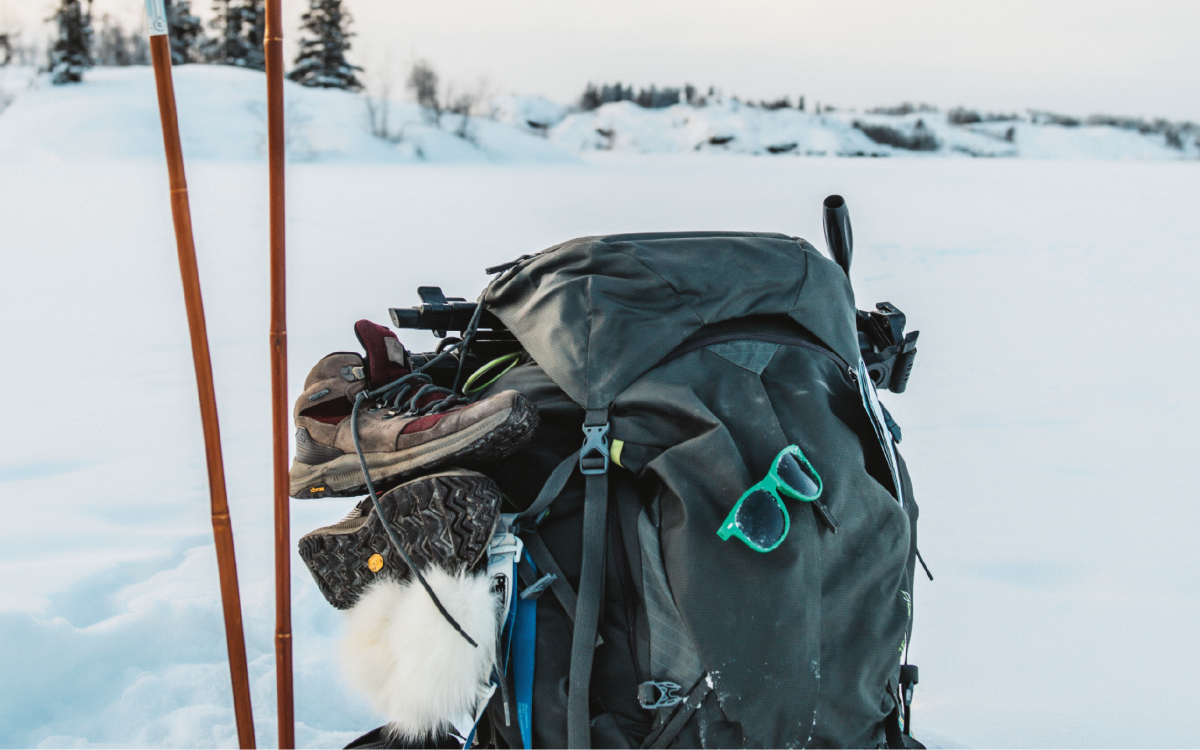
If you’re looking to explore the territories without spending too much, travelling by car is the best option. A road trip isn’t feasible in Nunavut—no roads connect the communities—but driving is a great way to explore the Yukon and the Northwest Territories. From Whitehorse, several charming destinations are just a few hours away, and campgrounds along the way can keep accommodation costs low. Throughout the Yukon, more than 50 campgrounds and recreation sites are serviced from May to September and camping costs about $20 per night.
For a quick getaway, head to Carcross, less than an hour from the capital. This town boasts several unique landmarks: the Yukon’s only one-way street, the oldest hotel in the territory (the Caribou Hotel, originally built in British Columbia in 1898 and floated to Carcross in 1901) and, not far away, the world’s smallest desert.
Another popular spot is Haines Junction, nestled alongside the Saint Elias mountains and Kluane National Park and Reserve. This vast wilderness is home to 17 of Canada’s 20 tallest mountains. While hiking is the main attraction in Kluane, it’s far from the only one. You can also visit the Da Kų Cultural Centre to learn about the local Champagne and Aishihik First Nations and grab a bite at the Village Bakery & Deli. Try the cinnamon buns, brownies or salmon dinner.
Even without a car, an affordable trip to Haines Junction is possible with Adventure Time’s shuttle service to and from Whitehorse for $60 each way. Isabelle Piché started the business after learning visitors would pay $400 for a taxi to Haines Junction. “That totally breaks my heart,” she says. Her mission is to make the mountains accessible to everyone.
Although you’ll need a vehicle to reach it, Faro is known for its wildlife. Each May, the former mining town hosts the Crane and Sheep Festival, where you can see thousands of sandhill cranes migrating north and the Fannin sheep on the cliffs around the community. Most of the festival’s events are free.
For a rugged mountain adventure, head to Tombstone Territorial Park, about 70 kilometres up the Dempster Highway. Known as the “Patagonia of the North,” Tombstone offers both road-accessible and backcountry hiking and camping. The region is especially picturesque in late summer, when the vegetation turns red.
In the NWT, you can explore the southern part of the territory by car while staying frugal. Take a trip to Fort Smith and Wood Buffalo National Park, where you can look for wood bison and explore the Salt Plains, an expanse encrusted in salt. If you visit the area in August, you may catch the Slave River Paddlefest or the Dark Sky Festival. Full passes typically cost less than $100, but some ticket options are as low as $15.
From Yellowknife, heading up the Ingraham Trail for camping, paddling, fishing or hiking is popular among locals. There are also several camping spots farther from the capital. Lady Evelyn Falls or Sambaa Deh Falls are both good spots to fish and enjoy some downtime.
SPEND
If you’re willing to spend a bit more, you can think about longer trips, short guided excursions and more amenities. Consider taking a road trip with the added comfort of sleeping indoors. In both the Northwest Territories and Yukon, you can find a variety of hotels and cabin stays.
From Whitehorse, drive north to Dawson City and stay at Bombay Peggy’s, a former brothel that’s now a boutique inn, or one of the less expensive hotels in town. Or rent a rustic cabin at a family-operated gold mine. Alternatively, head south to the secluded Southern Lakes Resort on the shore of Tagish Lake, where you can cozy up in a cabin and enjoy fine dining.
In the NWT, the Mackenzie Cabins outside of Fort Providence offer a retreat alongside the Mackenzie River. You can also explore the Dehcho Region, in the southwest of the territory. Rent a cabin equipped with a woodstove at the Blackstone Territorial Park campground or stay at the Lady Slipper Lodge in Łı́ı́dlı̨ı̨ Kų́ę́ (Fort Simpson).
“If you want to see the mountains by road, you could go towards Wrigley,” says Jonathan Antoine, community tourism coordinator with Łı́ı́dlı̨ı̨ Kų́ę́ First Nation. He describes the community as “the hidden gem of the North.” A road trip from Yellowknife to Wrigley allows visitors to experience the capital city, smaller communities, bison, ferry crossings and mountains.
In the mid-price range, longer road trips—which may require a fair amount of gas—are also an option. A classic is the Dempster Highway, one of the only all-season roads that crosses the Arctic Circle. This 740-kilometre journey starts near Dawson City and ends in Inuvik with the Eagle Plains Hotel offering a place to stay midway. You can extend your drive by a few hours to reach the Arctic Ocean and Tuktoyaktuk. The return trip takes about a week if you want to make stops—to fish, for example—along the way.
For a few hundred dollars, there are also numerous short, guided excursions offered in some of the North’s larger centres. From Whitehorse, you can join a guided paddling day trip on the Yukon River or take a horseback trail ride in the mountains. In Yellowknife, try kicksledding on a frozen lake, watch the aurora while staying warm in a heated tipi or learn about Dene culture through storytelling, craft-making or land-based
SPLURGE
If money isn’t an issue, there’s no shortage of awe-inspiring trips in the North, ranging from luxurious getaways to extreme expeditions.
For a comfortable wilderness retreat, consider one of the NWT’s fly-in lodges. Blachford Lodge, accessible by private flight from Yellowknife, provides an upscale escape in the northern wilderness and excellent aurora viewing in winter. Further north, Ten Stone Mountain Lodge, outside Norman Wells, offers a self-catered getaway in the Mackenzie Mountains. And Plummer’s Lodge on Great Bear Lake is renowned for its fishing.
You can also take a flight-seeing tour. From Fort Simpson, board a flight into Nahanni National Park for about $2,340, with stops at Little Doctor Lake and Náįlįcho (Virginia Falls). From Haines Junction, a flight over Kluane National Park’s ice fields and around Mount Logan, Canada’s highest mountain, costs about $630 per person.
For a more active adventure, try a guided multi-day backcountry trip. In Nunavut, embark on a 10-day hike in Auyuittuq National Park on southeastern Baffin Island. Starting in Pangnirtung, you’ll travel through a landscape of rocky peaks, glaciers and fiords. Alternatively, head even farther north to Resolute, the starting point for an 18-day trek through Quttinirpaaq National Park on Ellesmere Island, Canada’s northernmost park.
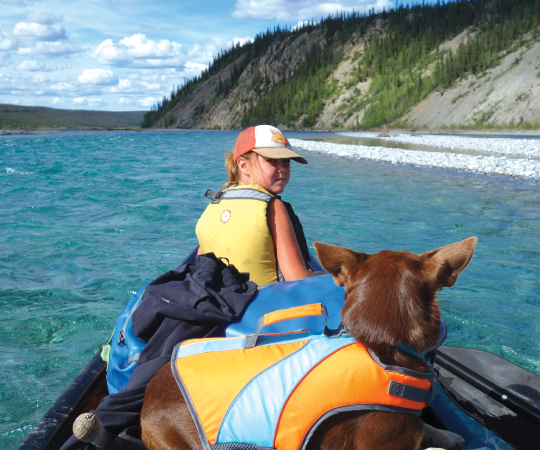
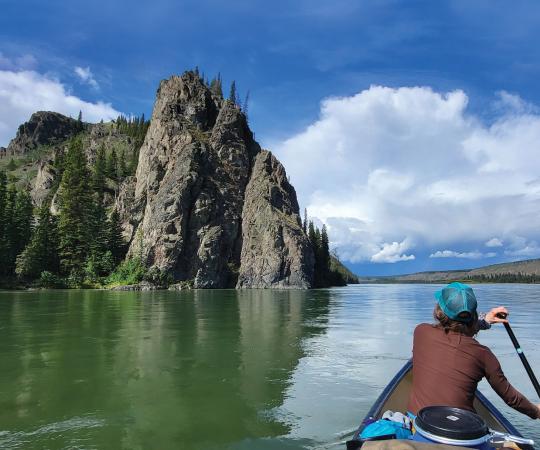
If you prefer paddling, consider a guided canoe trip. The Keele River and the Upper Horton River, both floatplane flights from Norman Wells, are less travelled than the well-known Nahanni. They’re both special in their own way, says Ward. She describes the Keele as a “kind whitewater trip,” with turquoise water, big mountains and good fishing. It takes 12 days to paddle with Canoe North Adventures and costs about $8,695. The Upper Horton is a 13-day trip on a tundra river that will run you roughly $12,595.
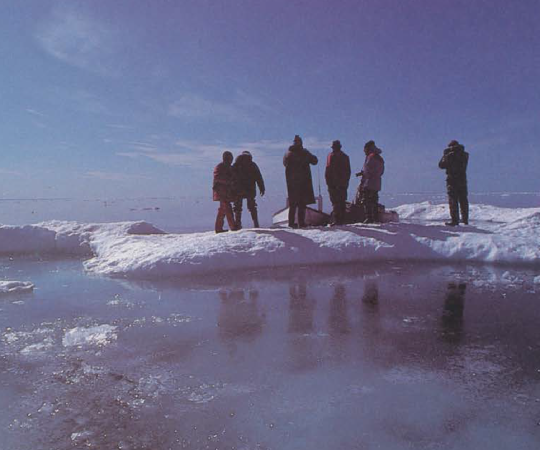
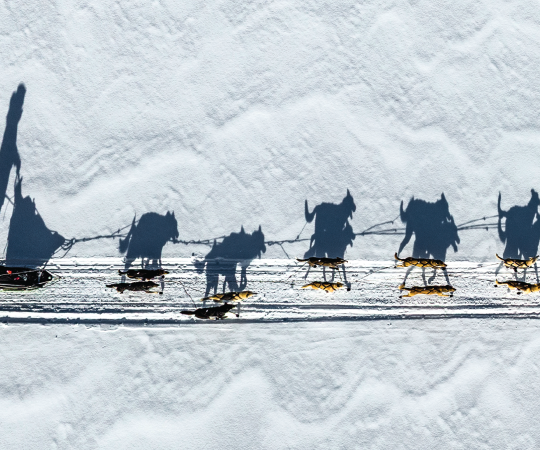
Another special experience is a northern safari. From Iqaluit, board a charter flight to a camp on the shores of Foxe Basin. Travel by snow machine and qamutiik (a traditional Inuit sled) by day to search for wildlife, and view the aurora through geodesic domes by night. On Baffin Island, you can camp on the sea ice and explore the floe edge, where sea ice meets open water and wildlife abounds.
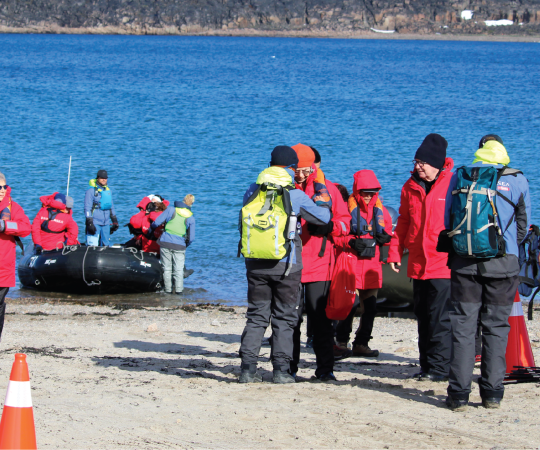
If you want to visit several Arctic locations, a cruise is a good option. Several companies offer sailings through the Northwest Passage, a route that European explorers attempted to chart for centuries. These trips are the most noteworthy and the most expensive, says MJ Swan, managing director of Adventure Canada. The company offers two routes through the region, from Kugluktuk to western Greenland, which cost roughly US$18,495 to US$36,495 (about $25,955 to $51,215).
While some cruise lines focus on luxury—think butler service and submarine tours—Swan says Adventure Canada emphasizes a high-quality educational experience. With interpreters and cultural educators on board, the goal is for visitors to come away with a deep understanding of the Arctic.
No matter how they choose to explore the North, Ward hopes more people will come to experience the region, which she says allows people to step out of the confines of their typical lives. “We forget about how innocent and simple the world can be,” Ward says. “I think that’s what the North of Canada offers.”
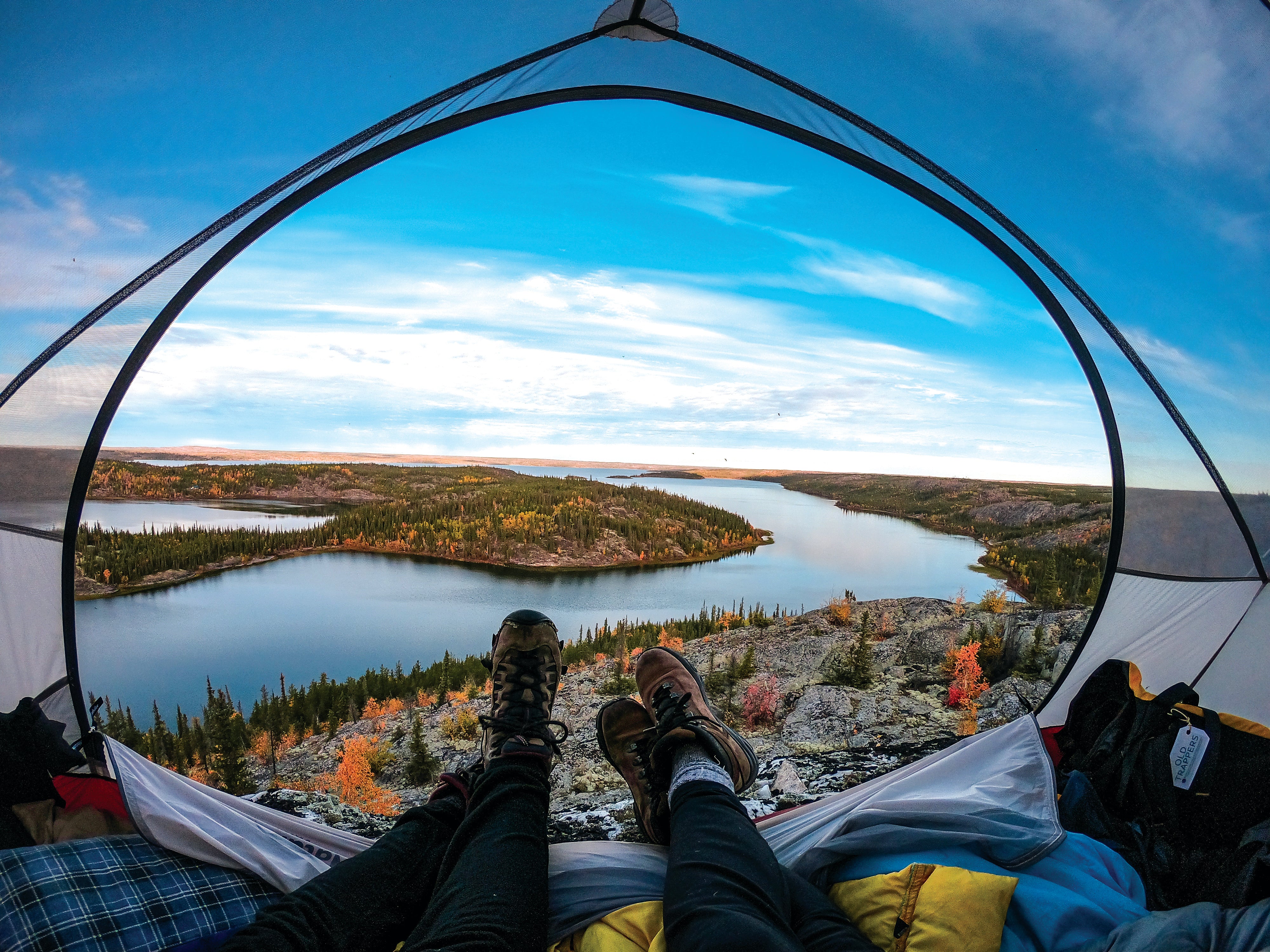 Photo courtesy of Kaitlyn Vician/NWTT
SAVE
ITINERARY:
CAMPING IN KLUANE
• Day 1: From Whitehorse, drive about two hours to Haines Junction. Stop at the Village Bakery & Deli for a treat and take in the scenery from the patio. Visit the Da Kų Cultural Centre to learn about Champagne and Aishihik First Nations culture. The centre also houses Parks Canada’s Kluane National Park Visitor Centre, which has interpretive displays, and the Yukon government’s Visitor Information Centre, which exhibits pieces from the Yukon Permanent Art Collection. Head to the Mät’àtäna Män (Kathleen Lake) campground and pitch your tent at one of 38 sites, a short walk from the picturesque lake.
• Day 2: Make your way to the King’s Throne trail for a steep, challenging hike with majestic views. After five kilometres, you’ll reach the “seat” of King’s Throne, a bench along the ridge. If you’re looking for more of a challenge, go on to the summit, but beware that the trail becomes difficult.
• Day 3: Go south to the St. Elias Lake trailhead. This is an easy, roughly three-kilometre walk to a lake. While it’s possible to camp here, the lake is also a good spot to simply relax for the day. Read your book, play a game, have a picnic and take a dip. Or, if your legs are toast from the previous day, go to Pine Lake, just outside of Haines Junction, for a swim and hang out on the sandy beach.
• Day 4: Break camp. Before heading back to Whitehorse, stop in Haines Junction to check out the community’s art scene. Along with the St. Elias Convention Centre, which hosts most of the Haines Junction Public Art Collection, there are several private galleries and studios to explore.
SPEND
ITINERARY:
NWT CABIN TOUR
• Day 1: Start your trip in Yellowknife with a guided day trip, travelling by boat to the East Arm of Great Slave Lake
to fish for monster trout. Cook your catch for a shore lunch.
• Day 2: Take the only highway out of Yellowknife and head toward Fort Providence. Past Behchokǫ̀, you’ll drive through the Mackenzie Bison Sanctuary, where you’re all but guaranteed to see wood bison grazing alongside the road. Stop at the Big River Service Centre in Fort Providence for a famous bison burger. Spend the night at the Mackenzie Cabins.
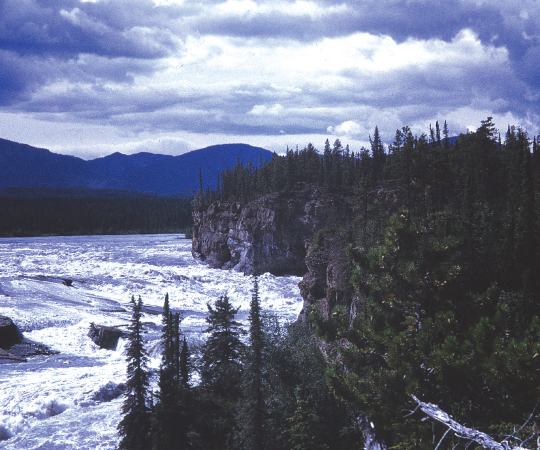
• Day 3: Travel west along the Mackenzie Highway toward Łı́ı́dlı̨ı̨ Kų́ę́, or Fort Simpson, and you may spot black bears, moose, caribou, lynx, wolves and bison. Stop at Sambaa Deh Falls to photograph the water gushing through the canyon. If you have enough time, follow a trail upstream to visit Coral Falls or walk downstream and fish for Arctic grayling and pickerel. Continue to Łı́ı́dlı̨ı̨ Kų́ę́, catching a ferry across the Liard River. Stay in a cabin or canvas tent and enjoy a sauna at Łı́ı́dlı̨ı̨ Kų́ę́ First Nation’s new Cultural Tourism Centre.
• Day 4: In Łı́ı́dlı̨ı̨ Kų́ę́, check out the Dehcho Heritage Centre, which has a museum and gift shop, or the Open Sky Gallery, which has art and craft exhibits as well as locally made items for sale. Take a boat to K’iyeli, a Dene camp, and learn about local culture and history, try traditional food and play Dene games.
• Day 5: Drive southwest to Blackstone Territorial Park, a hidden gem at the convergence of three rivers between Fort Simpson and Fort Liard. Enjoy the mountain views, look for wildlife or catch a fish. Stay in an A-frame and get cozy by the wood stove.
• Day 6: On the return trip to Yellowknife, spend a night in Hay River at the Castaways Cottages, located on the shore of Great Slave Lake. Check out Fisherman’s Wharf, an outdoor market with fresh fish, produce, baked goods and crafts.
• Day 7: End your trip in Yellowknife where Arctic Duchess Adventures offers sauna and cold plunge experiences off a barge in summer and on frozen Great Slave Lake in winter. Take a dip, if you dare.
SPLURGE
ITINERARY:
NORTHWEST PASSAGE CRUISE
• Days 1 to 3: Board one of Adventure Canada’s ships in Nuuk and sail north along Greenland’s west coast. Enjoy views of glaciers, fiords and small communities against towering mountains. Stop in an Inuit community for a walking tour and learn about the local culture.
• Day 4: Visit the Ilulissat Icefjord, a UNESCO World Heritage Site renowned for its massive icebergs. This is where the Sermeq Kujalleq, one of the fastest moving glaciers, reaches the sea.
• Day 5: On an expedition to shore, explore the Greenland tundra while learning from experts on a hike, botany walk or photography tour.
• Days 6 to 7: Sail toward Nunavut. Along the way, take a photography or Arctic history workshop, watch a documentary, look for whales and seabirds from the ship deck or participate in Inuit games. Once you reach Nunavut, visit a community such as Pond Inlet (Mittimatalik) or Arctic Bay (Ikpiarjuk).
• Days 8 to 9: Explore Tallurutiup Imanga, also known as Lancaster Sound. Rich in biodiversity, this is one of Nunavut’s newest marine conservation areas. Keep an eye out for the Arctic Big Five (polar bears, walruses, belugas, muskoxen and narwhals). See archeological sites and hike in the tundra.
• Days 10 to 12: Visit Beechey Island, where Sir John Franklin’s crew overwintered and three of his men died while trying to traverse the Northwest Passage. Reach the narrow Ikirahaq, or Bellot Strait, which separates Somerset Island from Boothia Peninsula, the northernmost part of mainland North America. Visit old Hudson’s Bay Company and RCMP posts. As you journey deeper into the Northwest Passage, keep watching for polar bears, muskoxen, belugas and other wildlife.
• Days 13 to 16: Stop at an Inuit community in the Kitikmeot Region, possibly Gjoa Haven (Uqsuqtuuq) or Cambridge Bay (Ikaluktutiak). Learn about the community’s past, present and future. At this point, you’ll be heading into the hardest part of the Northwest Passage to navigate. Watch the landscape change and level out.
• Day 17: Disembark in Kugluktuk and catch a charter flight to Yellowknife before making your way home.