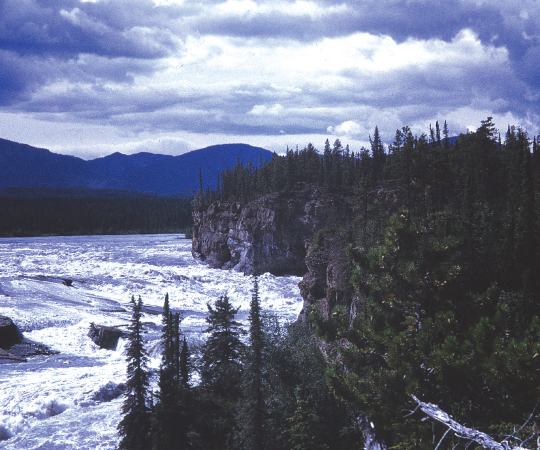
THE HOOD RIVER drops a giddy 61 metres over Wilberforce Falls in Nunavut’s northwestern barrens. Standing beside that raging cataract in 1992, Wendy Grater looked downstream towards a deep scar of canyon two kilometres long that, as far as she knew, had never been run. The owner of Black Feather, a wilderness adventure company, was camped at the top of the falls with her clients—and the more she studied that water, the better it looked.
Early the next morning, before anyone was up, Grater carried her canoe below the falls, but she left it above the forbidding canyon. Then over breakfast, rather nonchalantly, she asked Don, the best paddler in the group, if he wanted to try shooting it with her. During a moment of quiet, the query sank in. Then Don bit. Grater placed other group members along the cliffs with throw bags and had another client after the canyon with another throw bag. They’d be ready if the paddlers ended up swimming. Grater and Don were in an open canoe—without a spray deck to keep water out or airbags to help with flotation—but they made it and made history with the first known descent of Wilberforce Canyon.
Running that big water was a risk Grater wouldn’t normally take. Good guides don’t; they anticipate risks, plan accordingly and foresee problems before they arise. She took that chance only because she was confident Don could paddle it and the rest of the group was there to support them, working together to ensure a rescue if it came to that.
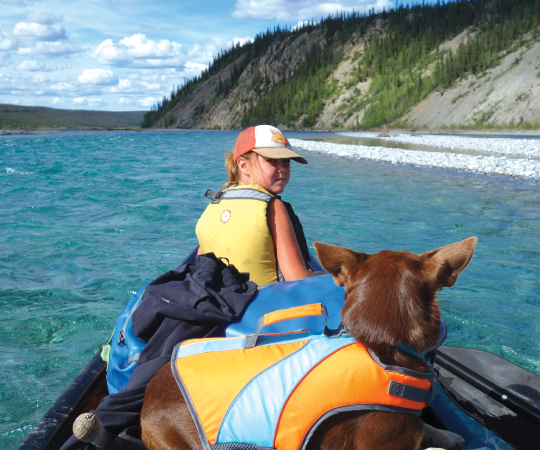
Guided wilderness trips can toss disparate people together in sometimes fierce and unexpected circumstances, which is part of what makes them so remarkable. Facing hardship, groups always come together to stay safe. “This is what the human condition is all about,” says longtime Norman Wells-based outfitter and canoe guide Al Pace. He’s guided trips where the river has risen three metres in a few hours and everyone had to scramble to high ground; other times, he and his clients have paddled through forest fires with wet bandanas over their noses and mouths. “These situations bring out the absolute best in people.”
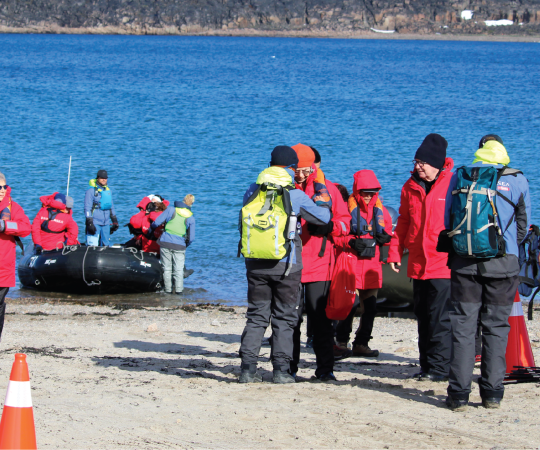
Beyond helping clients connect with the rugged and delicate beauty of the North, this is a guide’s ultimate purpose: turning adversity into adventure. That adventure builds meaningful community, as complete strangers find themselves together in a landscape where life and death often feel more immediate and survival becomes a shared endeavour. Even trips that are just bluebird skies and lazy days foster a renewed understanding and appreciation of communal existence.
GUIDES HELP OUTFIT THE TRIP, often prepping all the meals and gear, they cook the food and they shoot off bear bangers in their underwear at two in the morning to scare off curious grizzlies. And they are always on alert, watching the weather, the water, the wildlife—and the group dynamics. “The most stressful, funny and enjoyable thing that comes out of guiding is this thing that comes out of close proximity with a group of people. You’re dealing with fatigue and exhaustion and, at the same time, working closely together,” says hiking guide Olivier Clements, whose company, Yukon Alpine Adventures, takes clients into the wilds without a path or even a trip plan, just following game trails and the allure of the land. “Guiding is putting your body through the wringer with a group of people and seeing what the heck happens.”
And things do happen. Last year, on a trip in Asi Keyi Territorial Park, Clements and his clients woke up to 30 centimetres of snow—in August. The kitchen tent had collapsed and digging through drifts looking for the food bags felt like an avalanche rescue. The next morning, they awoke to sun and realized the entire slope around them was covered in caribou, wolf and grizzly tracks, all within a couple of hundred metres of their tents. “So, even in the Yukon, where things can feel pretty desolate, you realize the hills are just alive,” he says. “To see those tracks and to know those animals had been there in the last 24 hours while we were there was a really special feeling.”
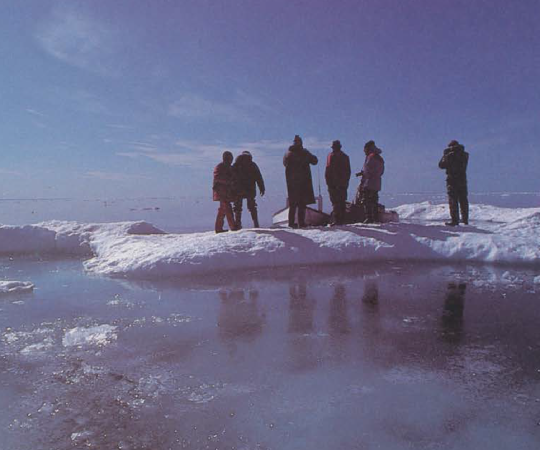
Guides can heighten a group’s appreciation of beauty, turning a hike or paddle into an intimate exploration of the natural world. Francois Rossouw used to carry a gun guiding for a big-game outfitter. Today, he’s more worried about the light and how the red of the fall buckbrush complements the shimmering brown of a grizzly’s glossy coat. He now shoots wildlife with a camera, guiding photo tours on the barrens above the treeline near the Nunavut-NWT border. “You use very similar skills hunting with a camera,” he says. Once, spotting a herd of caribou in a valley, he tucked his guests behind rocks as the snorting animals ambled past within metres.
He guides guests at the fly-in Peterson’s Point Lake Lodge. Sometimes, they don’t quite know what they’re getting into as they stumble across the uneven spongy tussocks and moss of the Arctic tundra. But even the most unprepared are always taken aback by the harsh grandeur of the landscape and its minuscule beauty. The Arctic has teeny delicate flowers that are so easily trampled—until they’re identified. Then everything changes, says Rossouw, and the hikers slow right down and look at the ground, taking pictures of every tiny, breathtaking thing.
Sean O’Donnell likes to see grown men cry. And, lately, he’s been seeing it a lot. The owner of Arctic Motorcycle Adventures takes clients on 10-day excursions from Whitehorse to Tuktoyaktuk up the gravel Dempster Highway. Of all his routes, this one has the greatest appeal, mostly to retired men chasing a bucket list. At first, the tears surprised O’Donnell. “I knew there would be people that would have their moments,” he says. “Not from frustration or anger—just the pure emotion of being totally taken aback by where they are and what they’re experiencing. But to actually see that, it’s something that sticks with me.” Other times, O’Donnell’s guests are so awestruck by the beauty they’ve driven off the road. “I have to remind clients, as beautiful as it is, you have to pull over.”
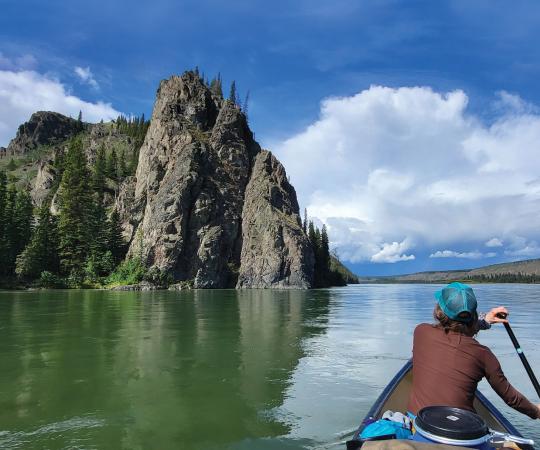
WHEN PACE STARTED guiding more than 40 years ago, he paddled in Kodiak Greb work boots and a hockey sweater. That was before dry suits, neoprene booties, “spicy spray decks and all that stuff,” he says. “I am proudly old school.” Back then, the rivers were mostly empty and he was in it for fun. “Today,” he says, “there is a lot of urgency in what we’re doing.”
The co-owner of Canoe North Adventures takes well-heeled clients on rivers accessible only by floatplane. The beautiful, rugged landscapes remain, but things are changing. “We’re taking Canadians to the epicentre of difficult conversations in this country,” Pace says. “Indigenous issues and reconciliation, climate change, for sure, resource development—all these conversations are complicated and tricky, and we take people right into the firestorm.”
In a world increasingly divided by politics, having difficult conversations around a campfire with a mix of guests who don’t always see eye to eye is not only revealing, it’s essential. Pace believes “building the fabric of the group” is part of being a good guide. He encourages clients to leave their phones behind, offering everyone an opportunity to disconnect from technology and connect with one another by virtue of living in tents together, sharing meals and keeping each other safe. “You learn to have a conversation that might go off and on for 10 days,” he says. “And you might disagree with a tripmate, but you let the conversation move back and forth and learn to just live with that person for who they are and understand your differences.”
Coming off these trips, clients often find ways to stay connected not just with new friends, but also to the region. Some sponsor food programs in the remote northern communities they’ve visited; others have contributed to youth programs. Many guides also try to do their part. Pace’s company does campsite and river cleanup, including removing old fuel drums, and offers canoe safety training and skills development for Dene youth.
Clements, who takes clients on the traditional territory of First Nations, always gets consent first and says, “I’m trying to do things through the lens of reconciliation.” Wilderness guiding is not all that different from other extractive industries such as oil and gas or logging. “We’re going into people’s territory and extracting the tourism resource of that land and often that extraction is never shared or even acknowledged in the industry.” He’s working on profit-sharing agreements with local First Nations and doesn’t compete with Indigenous companies. “When we bring people to experience the awe and wonder of being in a place that makes up the fabric of an entire nation’s identity, we have to acknowledge that and do better.”
O’Donnell’s clients stay in Inuvialuit-owned hotels and he hires local First Nation guides if they want to fish, rather than taking them in his own boat. “It’s a respect thing,” he says. These connections also mean his guests sometimes get invited to fish camps or to watch beluga whale harvests. And when climate-related flooding unexpectedly shuts down the ferry crossing on the Dempster, he can hitch rides to get his guests across the river.
Flooding is just one of many climate-related events affecting the North. Like Pace, Rossouw has been here for more than four decades and is seeing big changes. Warmer and wetter summers mean more dwarf birch growing on what was once open tundra, making it harder for caribou to run and easier for predators to hide. There are also almost no more mosquitoes. Though this may sound ideal, he says, the insects are important pollinators that help feed the birds.
Along with more fires and more floods, Pace has noticed the once spongy tundra is now dry and brittle. In November, he gave a talk called “The Changing Arctic—48 Years of Climate Change Observations from the Stern-Seat of My Canoe” at the Wilderness Canoe Association’s annual general meeting. “It feels we are in a bit of a race because the landscape is changing right in front of our eyes,” he says. “So, there is a lot of anxiousness to do the trips now. We want people to experience the North the way that we’ve seen it.”
AROUND THE FIRE on the Yukon’s South MacMillan River, on the last night of the first trip Pace guided, two paddlers announced they were going to get married in Dawson City and invited the whole group. The couple had decided that if they could survive two weeks together in the Yukon and still come out in love, then they’d spend the rest of their lives together. The next day, they bought a marriage licence at the liquor store and had Klondike gold hammered into their rings. They held the service on the porch of poet Robert Service’s historic cabin—which Pace had to crawl under to look for a wedding ring that bounced through a crack in the rough timber deck. That night, the group celebrated at Diamond Tooth Gerties, where the justice of the peace who’d performed the marriage was their blackjack dealer. “That wedding,” says Pace, “was the most romantic thing ever.”
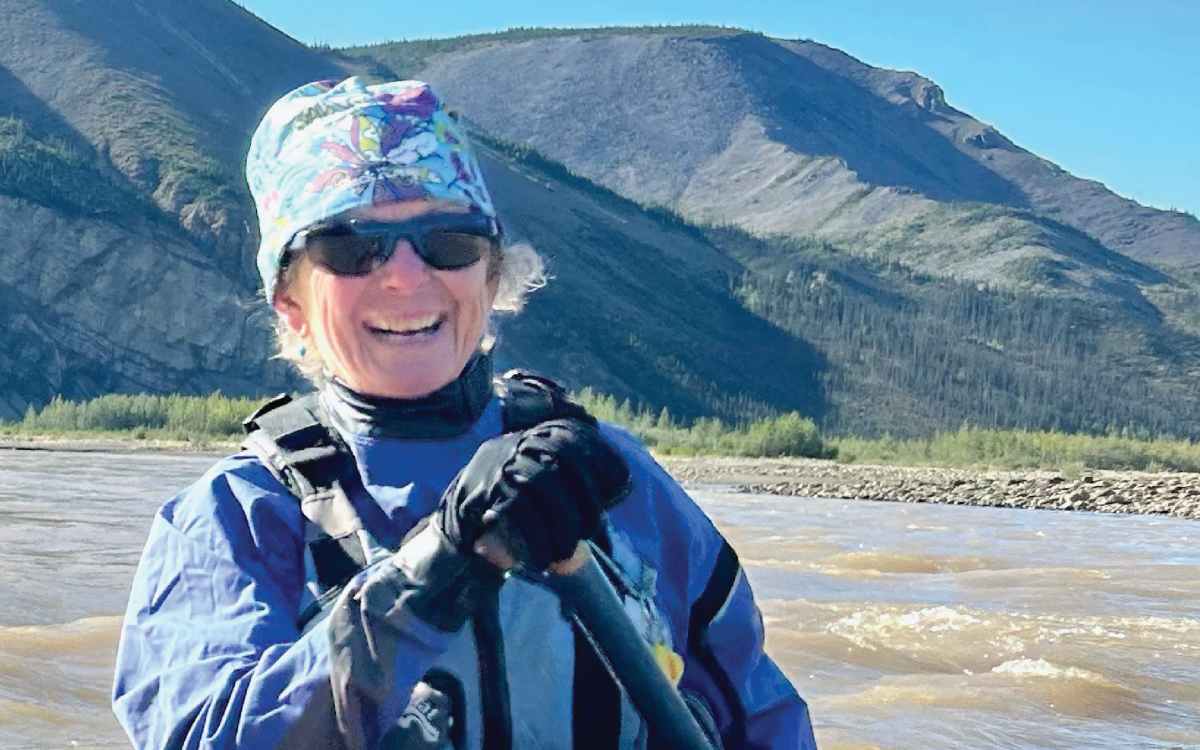
People who met on wilderness trips decades ago are often still in touch, sharing life’s highlights and hardships. And many keep coming back to the North. The client Grater shot Wilberforce Canyon with is still exploring remote water. This year, he paddled the Yukon’s Snake River with her, navigating another canyon together more than 30 years after their descent of Wilberforce. Grater left the helm of Black Feather in 2022, but hasn’t stopped guiding and says, “One of the totally wonderful things is the people you meet, people who share my love of the outdoors and inquisitiveness of the natural world.”
Wilderness trips connect people intimately with the landscape, and what matters starts changing. Instead of workaday worries and the incessant interruption of social media, groups watch clouds for signs of weather moving in, keep an eye out for dead trees for firewood and take time to ponder the rich red speckles in a graphite-grey pebble. They also begin to appreciate one another differently, erupting with laughter over a piece of spaghetti stuck in a beard and listening to one another without the immediate socio-political sorting that so often happens in our fast, judgment-based society. “The world has gotten to be such a stupid and crazy place,” says Pace. “We build community just popping up a tarp, living in tents, eating great food and coming together through this shared experience—keeping each other safe and being supportive. This is what the world is missing today, this notion of society and community.”
Again and again, Grater has witnessed the wilds act as the greatest of equalizers. “Wilderness is a vehicle for people to work as a team because out there you can’t do it by yourself,” she says. “It puts into perspective what really matters in life.” The stillness, the beauty, the hardship—all of it is experienced through a necessary, appreciated camaraderie that is cultivated despite differences. “If more people were out there,” she says, “I think we’d have fewer wars.”