Like tens of thousands of other dreamers who headed to the Klondike in the late 1890s, Thomas William Fuller had big plans. Unlike almost all the others, he had the authority and the budget to make his ambitions come true. During his two and a half years in the Yukon, the federal government’s resident architect in Dawson City was responsible for the design and construction of six prominent public buildings. All of them reflected an almost giddy confidence in a prosperous future.
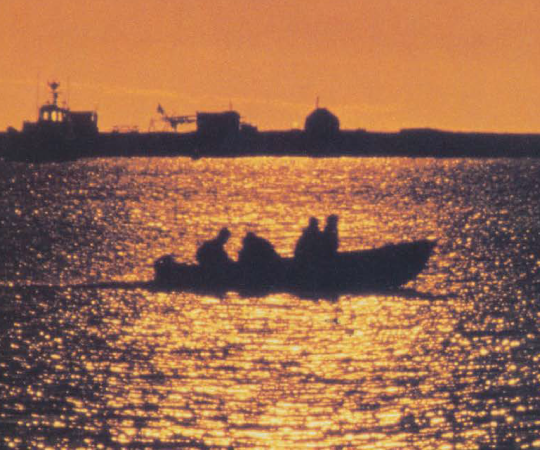
Just three years before Fuller arrived in July 1899, the alluvial flat at the confluence of the Trʼondëk (Klondike) and Yukon rivers was home to moose, migrating caribou and a seasonal Hän Hwëchʼin salmon fishing camp. Two summers after that, the area teemed with 30,000 people, many living in tents. Even a year later, Dawson sure didn’t look like a territorial capital. Fuller’s job was to remake the boomtown.
The 34-year-old was a nepo baby. He’d grown up in Ottawa and worked for his father, also named Thomas, who’d been the Chief Dominion Architect from 1881 to 1896. But he had no experience with the challenges of northern construction. Those included permafrost, the subarctic climate and the cost and hassle of obtaining the necessary building materials, most of which came from Outside.
With lots to do and lots to learn, he was eager to get at it, and all the territorial officials swamping him with requests for repairs or renovations to their homes were an unwelcome distraction. Two months in, he wrote to David Ewart, his father’s successor as the government’s top architect: “I must say Mr. Ewart, I have never worked so hard in my life.”
His first project, the government telegraph office, was the smallest and simplest, but it was still significant. The completion of a telegraph line to Dawson in September 1899 connected the Klondike to the rest of Canada and the world. The building also served as Department of Public Works headquarters, meaning Fuller now had an office.
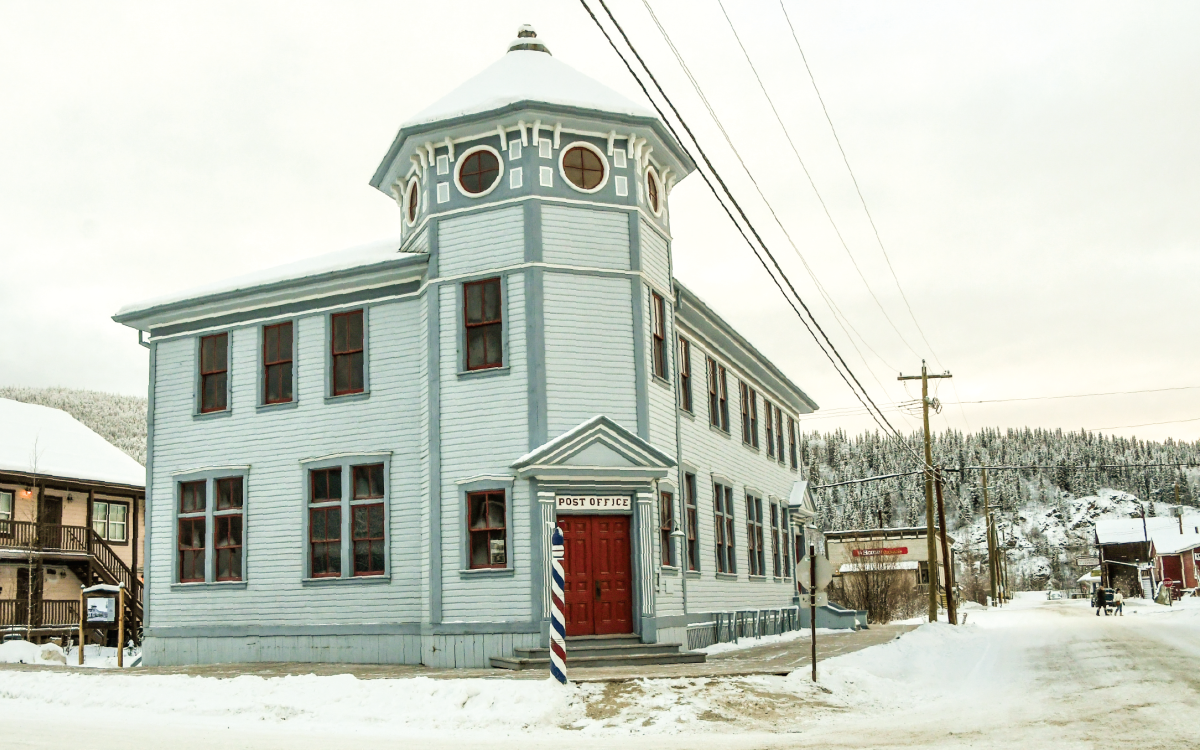
His next five projects were in the neoclassical revival style, common in federal buildings at the time. The first three were the post office, which was two storeys with a three-storey octagonal tower; the two-storey Central Public School with an arched entrance and a bell tower; and the territorial courthouse. Replacing a log structure that was too small for all the business the Mounties generated for the judicial system, the two-storey courthouse, which included two courtrooms, was a show of force by the feds, who wanted law and order in the region.
Although construction of the territorial administration building and the Commissioner’s Residence didn’t begin until early July 1901, both opened before the year was out. The former was the largest and most ambitious. An imposing two-and-a-half-storey structure—836 square metres (9,000 square feet)—it offered electricity, telephones and, when it was warm enough, running water; unfortunately, heating the uninsulated wood building soon proved to be a major problem. Sixty civil servants moved in at the beginning of December. The Klondike Nugget, a regular critic of the Liberal government in Ottawa, deemed the estimated $120,000 cost “money well spent” and declared, “It is a magnificent building, magnificently furnished and is one which would be a credit to any city in the Dominion of Canada.”
Although the administration building was bigger, the Commissioner’s Residence, originally called Government House, was Fuller’s grandest design. Located on Front Street facing the Yukon River and surrounded by landscaped grounds, it featured a two-storey central hall, ornate trim and a generous wraparound veranda. Construction costs were more than $40,000, with another $7,000 for the elegant furnishings. Before long, the house would host many swanky social events for the town’s elite.
Gold still dominated the Klondike economy, and the private sector had built close to 50 large, corrugated-iron warehouses and operated the power, telephone and other utilities, among other businesses. But Dawson was now also a government town. More than that, the new buildings announced that the Klondike was growing up and leaving the gold rush chaos behind.
Fuller wasn’t just the architect. He sourced the supplies, hired the workers, acted as construction foreman and picked the fittings and furniture. His buildings were primarily wood because it was the most readily available material and, compared to stone and brick, was less susceptible to damage from freezing and thawing permafrost. Settling due to the permafrost also made lath and plaster walls and ceilings impractical, so Fuller imported fir and cedar from British Columbia and had it oiled, shellacked and varnished to finish the interiors. The total cost for his six buildings was almost $300,000, more than double the original estimates.
Today, most of Dawson’s gold rush structures are long gone or exist only as decaying relics, but all of Fuller’s buildings—except the school, which burned down in 1957—remain standing. Along with offering tours during the summer, the Commissioner’s Residence hosts an annual afternoon tea every June, for example, and the administration building is now the Dawson City Museum and the Klondike History Library and Archives.
After Fuller went back Outside, he returned to the architects branch of the Department of Public Works and became the Chief Dominion Architect in 1927. The Klondike didn’t fare as well. The optimism that had spurred the turn-of-the-century construction binge proved to be nothing more than wishful thinking. During Fuller’s first winter in town, 8,000 residents joined a gold rush to Nome, Alaska; others left for Fairbanks. The first official census showed that Dawson was home to only 9,142 people in 1901. The decline continued and, in 1953, Whitehorse took over as the territorial capital. By the mid-1960s, the population was down to triple digits.
Rather than ending up a ghost town, though, Dawson eventually rebounded and the community, while much smaller, is thriving again with an economy largely dependent on mining, tourism and the arts. Fuller’s buildings play a part in the Klondike’s frozen-in-time vibe, but more than just historical artifacts, they’re reminders of what Dawson expected to become.