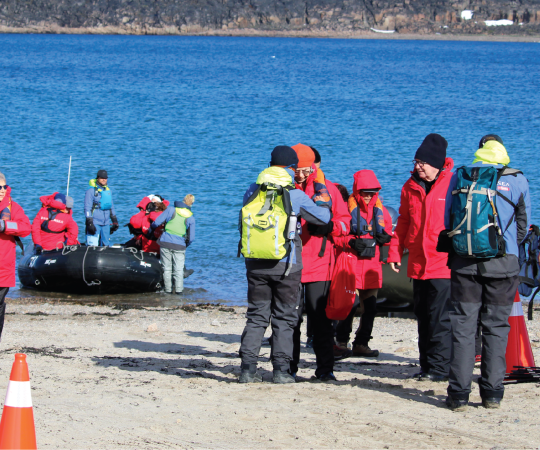
THE TAIWANESE TOURISTS had come to see the Canadian North and had chosen Arctic Bay Adventures, an outfit based in the northwestern Baffin Island community, to guide them. As they boated around Admiralty Inlet in a 28-foot Silver Dolphin with the Inuit crew, they were suddenly surrounded by hundreds of narwhals. The guests were awestruck. The company’s staff sometimes encounters visitors who believe narwhals are mythical—akin to unicorns. “When you sail into a megapod,” general manager Chris Mitchell says with a laugh, “it ends that question for you, your friends, your relatives and anybody you can ever tell a story to.”
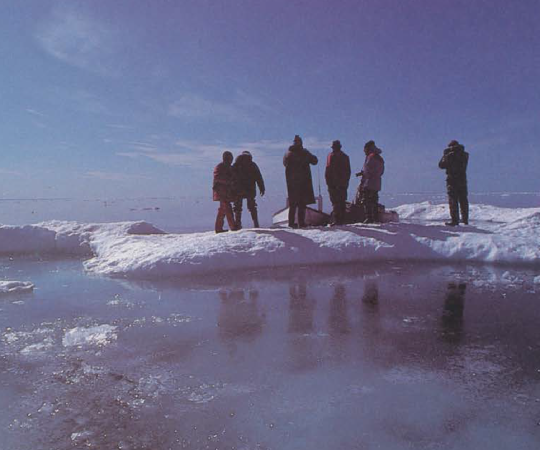
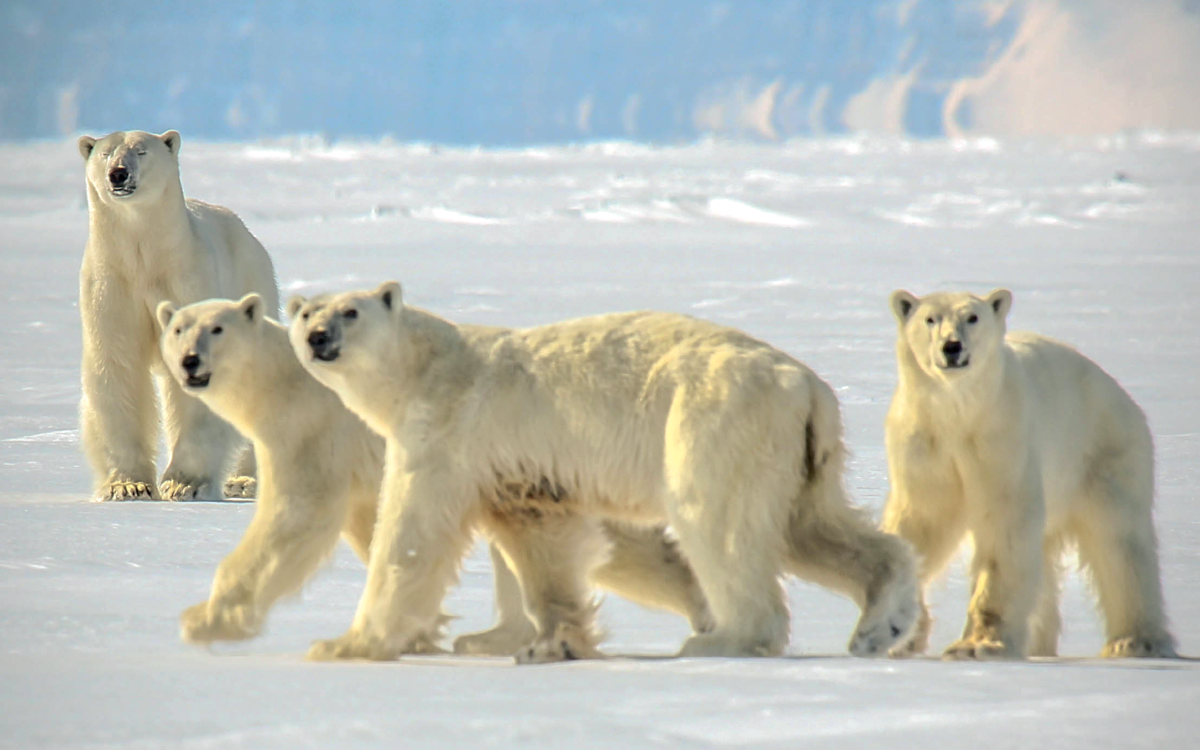
The legendary wildlife and landscapes draw tourists to Arctic Bay from the United States, Europe and Asia as well as the rest of Canada. The hamlet, which is home to 995 people, owns the company. Its most popular offering, a floe-edge tour that takes place in May and June, takes guests on snowmobiles and qamutiiks to where the ocean meets the sea ice. For four to 10 days, they camp in Arctic Oven tents heated by propane and look for bowhead whales, polar bears, beluga whales, walruses and narwhals. Depending on the availability of country food, they may eat fish, caribou or muktuk.
Indigenous-owned tourism companies in the North offer everything from cultural experiences and lodge stays to aurora viewing and on-the-land tours. Arctic Bay Adventures started in 2015, an attempt by the hamlet to jump-start economic development after the Nanisivik lead-zinc mine closed in the early 2000s. The business employs 40 people, including Inuit guides. “You can’t get more authentic than us,” says Mitchell. “We are the community.”
These businesses offer something different from other tour companies: an opportunity to learn about the North’s culture and people on a deeper level. Because Indigenous tourism experiences offer a look beyond recent settler history, they present a way to really get to know a place, by learning from a guide or operator whose family has lived in the area for hundreds or thousands of years. And for Canadians interested in reconciliation, signing up for an Indigenous-led tour or trip is a chance to go beyond platitudes.
Interest in this way to travel is growing, says Keith Henry, president and CEO of the Indigenous Tourism Association of Canada. The group was founded in 2015, but the concept has been around for decades. The Yukon was one of the first jurisdictions in Canada to have a regional association for First Nations tourism, back in 1994. Now, 10 of the 13 provinces and territories have organizations representing Indigenous operators. In 2015, there were 1,500 Indigenous-owned businesses. Today, there are more than 2,700, and 11 per cent are based in the territories. “The common thread,” says Henry, “is they all want to share culture in a variety of ways.”
Indigenous tourism directly contributed $1.6 billion to the country’s GDP in 2023. While there’s demand among international visitors, Canadians are the biggest market. A 2024 report found that 66 per cent of domestic travellers are interested in Indigenous travel at home. Henry says there was an uptick in 2021, after the discovery of unmarked graves at the site of a former residential school in Kamloops. The growing national interest in reckoning with Canada’s past has boosted the sector as well. “We say Indigenous tourism is reconciliation in action,” Henry says. “We try to help visitors realize that there’s a much deeper history to Canada. We’ve got landmarks and ancient sites in this country that outdate the pyramids in Egypt.”
In Haines Junction, Kyra Chambers aims to share this history. She grew up trail riding with her dad and her sister; when she was six, she drew a picture of herself as a wrangler, leading a string of horses through the mountains. But it didn’t really seem like an attainable dream. A Champagne and Aishihik First Nations citizen, she went on to study anthropology at university, and then, in her early 20s, she attended a horse-packing clinic with Yukon outfitters Neil and Tara Cosco. She loved it. When they asked her if she wanted to wrangle on an upcoming moose hunt, she didn’t think twice.
That was the start of a new chapter for all three of them: the Coscos sold their outfit and started a new venture with Chambers. She’s now president, CEO and majority owner of Champagne Pack Trains, a horse-packing business that offers rides on the Cottonwood Trail in Kluane National Park. The business is in its early stages, having incorporated just a couple of years ago, but Chambers wants to add day trips for people who aren’t prepared for multi-day rides.
As with many Indigenous-owned tourism experiences, there’s a deeper layer to Champagne Pack Trains. Chambers can tell her guests stories about the area that have been passed down through her family—stories a non-First Nations guide wouldn’t know. She grew up listening to her dad talk about riding in Kluane; in the 1950s and ’60s, he guided geologists through the park, wrangling horses and cooking. And the Champagne and Aishihik First Nations’ presence in the region goes back much further than that. The Cottonwood is a historical trail used by First Nations people. “I have a very strong connection to that land that no other operator has in the Yukon,” Chambers says. “When I go on the Cottonwood, I can really feel my dad.”
On the East Arm of Great Slave Lake in the Northwest Territories, Frontier Lodge has welcomed anglers since 1960. But in the last six years, the experience has changed—though the fishing remains as good as ever. In late 2019, the Łutsël K’é Dene First Nation bought the lodge. The move came just a few months after the creation of Thaıdene Nëné Indigenous Protected Area, which includes the lake’s east arm. In Dënesųłiné Yati, Thaıdene Nëné means “Land of the Ancestors.” Southerners had owned the business for decades, and it seemed like the right time for a change.
During the pandemic, the First Nation renovated the lodge, transforming it from a two- to five-star experience. It held community meetings with elders to learn which areas in Thaıdene Nëné were important to them and what they wanted visitors to know. Out of these meetings emerged a nearly forgotten Dënesųłiné name for Great Slave Lake: ʔedhe yé ts’ële, meaning “I’m going to cook fish guts on the lake.” According to elder Madelıne Catholıque, when families lived out on the land, they knew that if caribou were scarce, they could travel to ʔedhe yé ts’ële—specifically the area around what’s now the community of Łutsël K’é—to find open water and catch fish.
For each of the seven cabins, the First Nation then came up with a theme centred on a location in the park. (Cabin #3 is called ʔedhe yé ts’ële.) Each accommodation features photos and a plaque with information about that place. All signs are written in English and Dënesųłiné. The lodge added “Gateway to Thaıdene Nëné” to its name, introduced annual scholarships for Łutsël K’é Dene students and continues to employ guides from the First Nation. All of these changes came from the desire to reconnect the business with the community of Łutsël K’é across the bay and to inform guests about whose land they’re visiting and the significance of Thaıdene Nëné. Corey Myers, who has worked at Frontier for 15 years and became general manager once the First Nation bought the lodge, says, “I think that’s been hugely important.”
Myers’s LinkedIn profile lists his job as “Dream Trip Facilitator,” which reveals how guests tend to view the fly-in-fishing-lodge experience: as a bucket-list item. Visitors are typically American and Canadian, though about 20 per cent come from abroad. They fly into Yellowknife, then take a private charter to the lodge and stay for three to 10 days. And the fishing—for lake trout, northern pike and Arctic grayling—is memorable: People typically reel in 30 to 50 fish a day. Catch and release is the policy, though guests eat a shore lunch every day and take home one fish at the end of their trip.
But it’s not just about fishing. The new ownership provokes questions about the First Nation and conversations that didn’t happen before, says Myers, who adds, “I think everybody has a new perspective on the place.” The changes at Frontier Lodge reflect what Henry says about Indigenous tourism—that, while the economic benefits are important, the cultural and social ones are, too. These include people realizing that their stories are important and feeling proud of who they are.
The benefits extend beyond Indigenous communities, helping people learn other perspectives. Arctic Bay Adventures guests may try Arctic char or caribou and learn how vital meat is to the lifestyle and culture of Inuit. One day down the road, if they’re talking to someone extolling the importance of a vegetarian diet—and how eating meat is bad for the environment—they could draw on their experience in Arctic Bay to explain how critical meat is to Inuit. Black-and-white thinking ignores nuance. In this way, Indigenous tourism has the potential to increase understanding of cultural differences and reduce the conflict that arises when we don’t see eye to eye. “Never judge a man until you walk a mile in his shoes,” Mitchell says. “So, come to Arctic Bay and walk a mile in kamiks.”
CHOOSE YOUR OWN ADVENTURE
Central Tourism & Outfitting
Baker Lake
Husband-and-wife duo Charlie Tautuaqjuk and Deanna Tupik take visitors on bird-watching excursions, fishing and hunting trips and cultural tours.
Dinjii Zhuh Adventures
Whitehorse
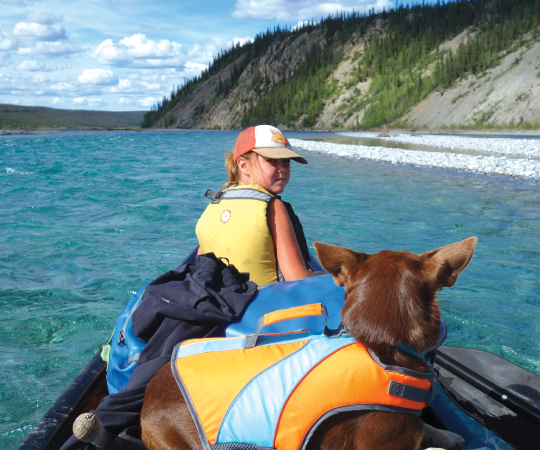
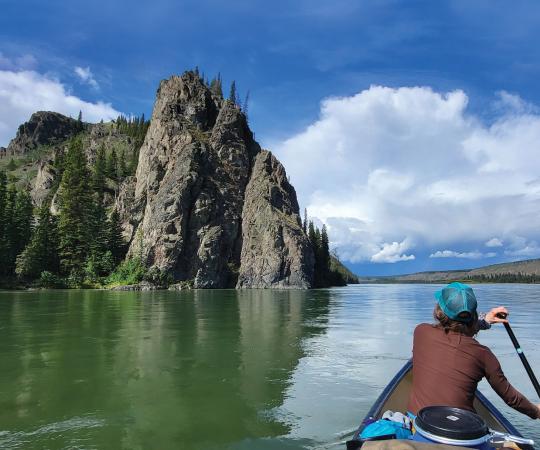
Teetl'it Gwich'in river guide Bobbi Rose Koe leads canoe trips on her traditional territory in the Northwest Territories.
Fishwheel Charters
Dawson City
Take a summer boat trip or a winter snowmobile ride with Tr’ondëk Hwëch’in First Nation citizen Tommy Taylor.
Igloo Tourism
Igloolik
Hosted by the Uttak family, spend the night in an iglu with caribou blankets and a burning qulliq.
Josie’s Old Crow Adventures
Old Crow
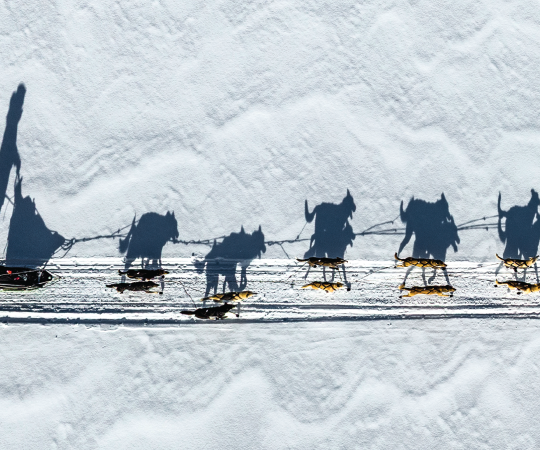
Travel to the Yukon’s northernmost community for dog sledding, ice fishing and aurora viewing with Paul Josie of the Vuntut Gwitchin First Nation.
K’iyeli Tourism Services
Fort Simpson
From campfire programs to visiting with elders, learn about Dene culture from the Cazon family.
Kwäday Dän Kenji (Long Ago Peoples Place)
Champagne
Since 1995, Meta Williams and Harold Johnson have shared Southern Tutchone culture through workshops and camps.
Lac La Martre Adventures
Clemy Island
Owned by Tłı̨chǫ Adventures, a subsidiary of the Tłı̨chǫ Government’s investment corporation, the business offers fly-in fishing trips on a remote lake.
The Land Heals
Whitehorse
Kluane First Nation citizen Amber Berard-Althouse offers interpretive walks and medicinal-plant workshops.
Narwal Northern Adventures
Yellowknife
Go hiking, see ice caves or watch the aurora from a voyageur canoe—while eating bannock—with this family-owned business.
Palituq Outfitters
Clyde River
Owner Levi Palituq takes guests skiing, mountain climbing, base jumping and dog sledding.
Peter’s Expediting and Outfitting
Pangnirtung
Visit beautiful sites including Cumberland Sound, Kekerten (Qikiqtan) Territorial Park and Auyuittuq National Park with owner Peter Kilabuk.
Tikippugut
Iqaluit
This company offers customizable trips and expeditions.
Tundra North Tours
Inuvik
Kylik Kisoun Taylor, who is Inuvialuit, Gwich’in and Scandinavian, takes visitors on adventure tours in the Beaufort Delta.
Tutchone Tours
Pelly Crossing
Selkirk First Nation citizen Teri-Lee Isaac takes guests to historic Fort Selkirk on the Yukon River.