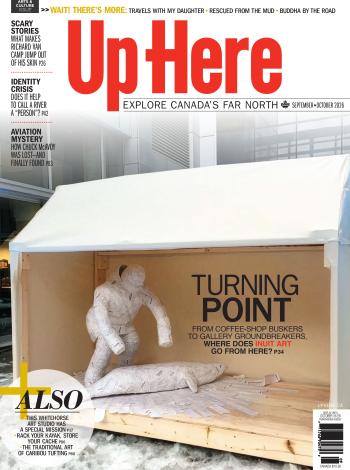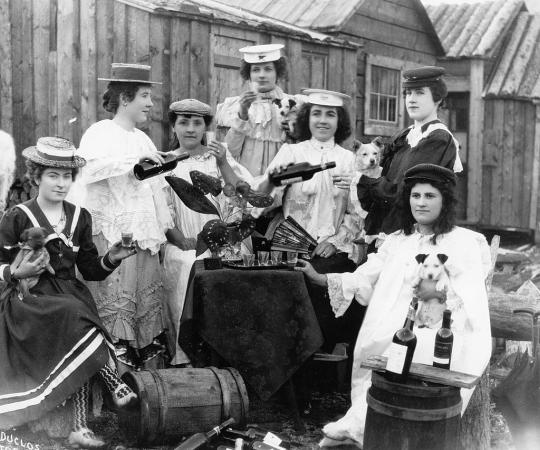
In the tipsy Yukon, prohibition was a buzzkill. Would bush planes full of liquor quench their thirst?
Written by Tristin Hopper
Long before the U.S. temperance movement put a cork in Klondike liquor, Yukoners loved their 'hooch.' Here, Dawson ladies hold a 'drinking bee' in 1900. Joseph Duclos/Dawson City Museum
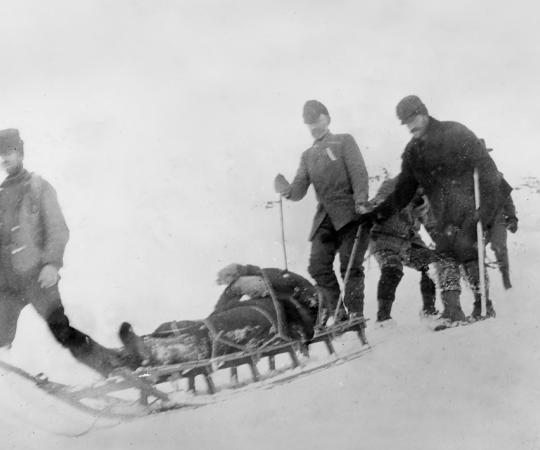
They'd already risked it all to get this far. The red flags of an avalanche wouldn't stop them.
Written by Eva Holland
Bringing out the dead: hauling bodies by sled from the summit of the pass, April 3, 1898. Yukon Archives, Anton Vogee Fonds, #71
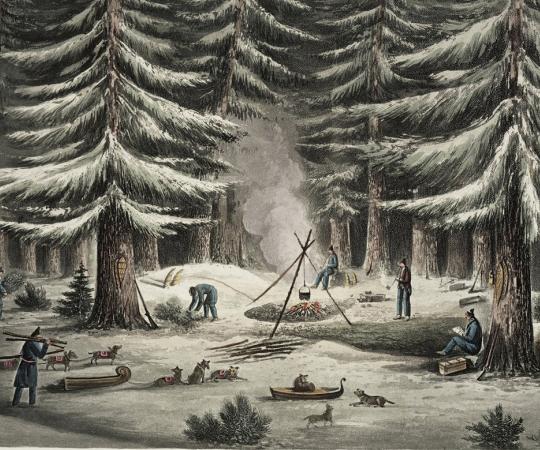
During a grim yuletide on Great Slave Lake, a team of starving explorers yearn for the gift of survival
Written by Jennifer Kingsley
In a drawing by explorer George Back, a band of British adventurers bunk down in the wintery north woods. Institute for Northern Studies Fonds, University of Saskatchewan Archives
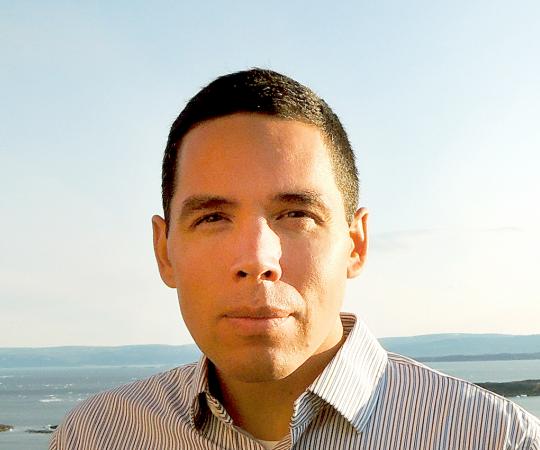
What does it mean to be Inuk in 2015?
Written by Samia Madwar
Natan Obed, 39, the president of Inuit Tapiriit Kanatami. Photo courtesy of ITK
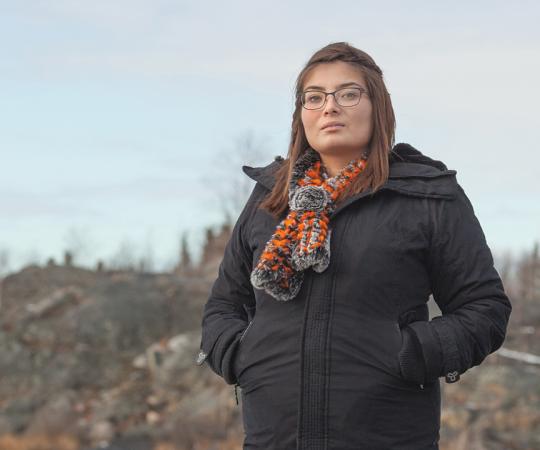
For helping promote the vulnerable Gwich’in language, Jacey Firth-Hagen has made our shortlist.
Written by Samia Madwar
Jacey Firth-Hagen's #SpeakGwichinToMe campaign has garnered social media attention and re-energized the preservation of Gwich’in. Photo by Hannah Eden/Up Here
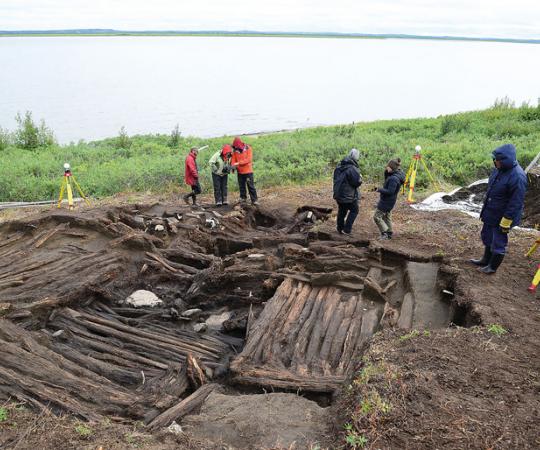
For four centuries, Kuukpak, located in the Western Arctic along the Mackenzie River, was the richest, busiest summer settlement around
Written by Tim Edwards
Archeologists excavate one of the houses at Kuukpak, located along the Mackenzie River, earlier this year. Photo courtesy of Max Friesen