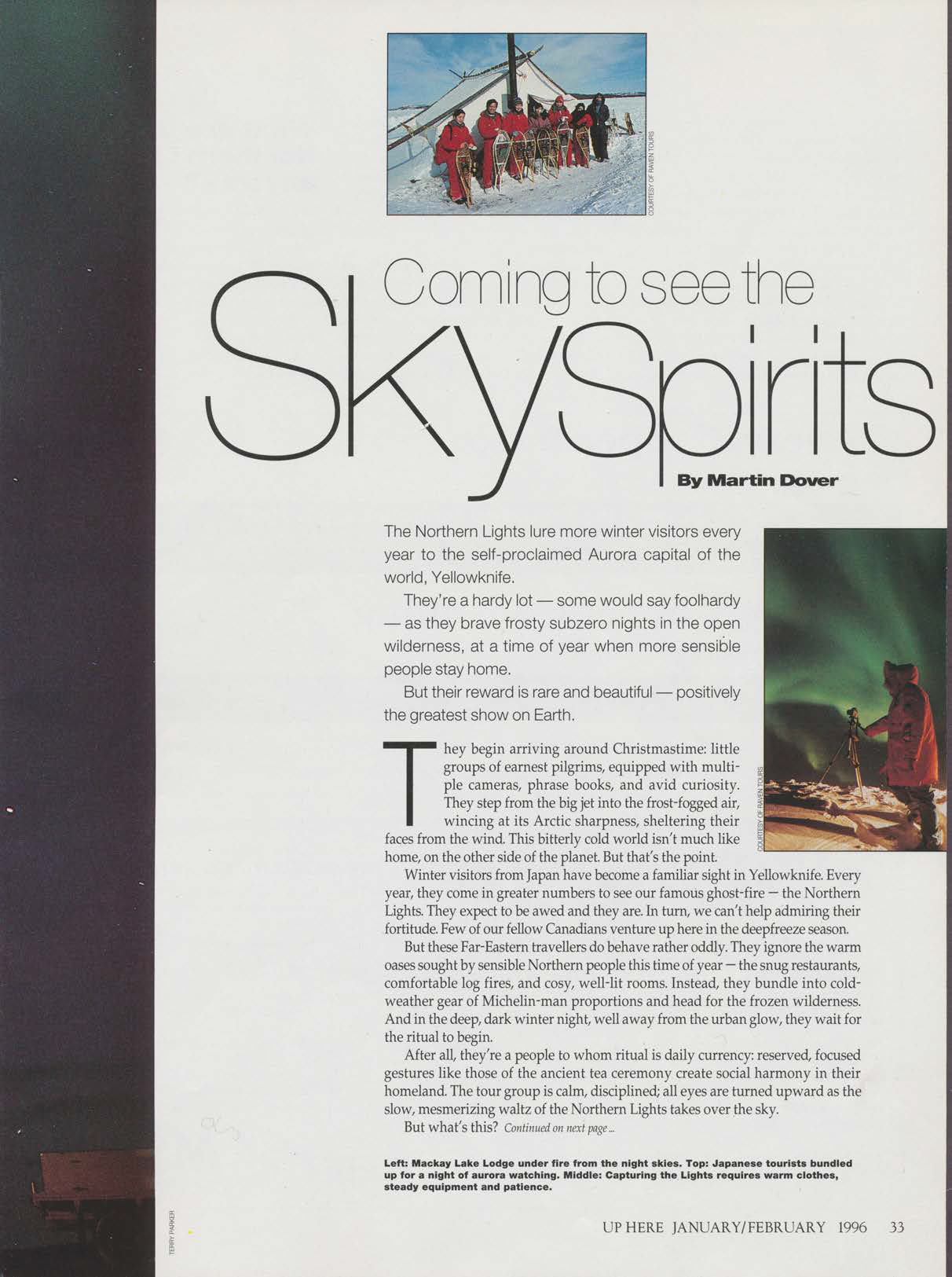
hey begin arriving around Christmastime: little groups of earnest pilgrims, equipped with multi-ple cameras, phrase books, and avid curiosity. They step from the big jet into the frost-fogged air, wincing at its Arctic sharpness, sheltering their faces from the wind. This bitterly cold world isn’t much like home, on the other side of the planet. But that’s the point.
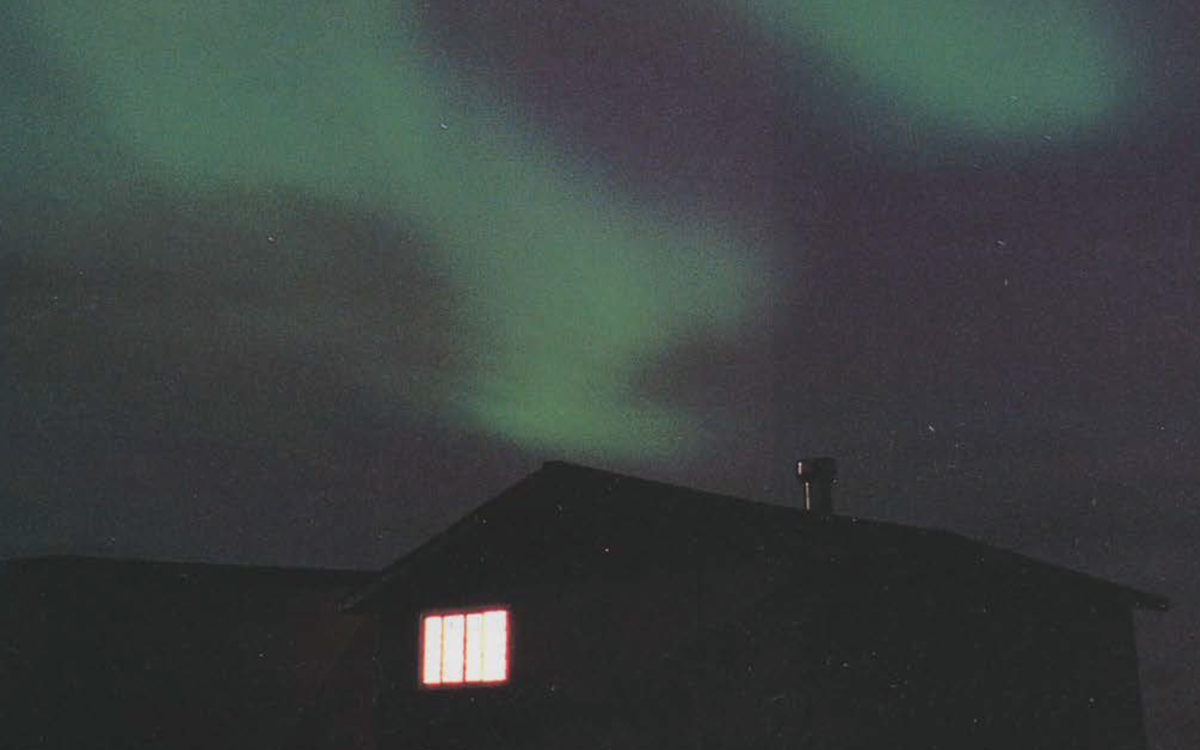
Winter visitors from Japan have become a familiar sight in Yellowknife. Every year, they come in greater numbers to see our famous ghost-fire — the Northern Lights. They expect to be awed and they are. In turn, we can’t help admiring their fortitude. Few of our fellow Canadians venture up here in the deepfreeze season.
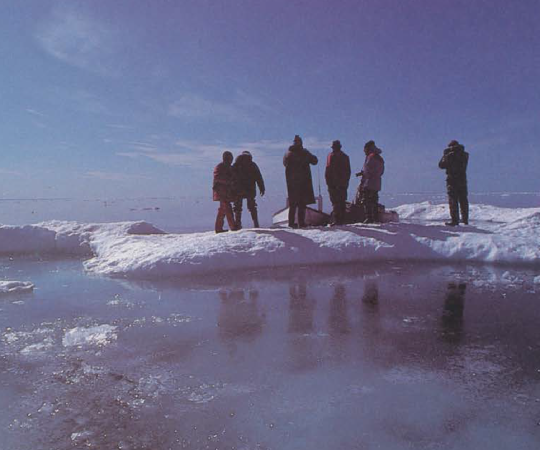
But these Far-Eastern travellers do behave rather oddly. They ignore the warm oases sought by sensible Northern people this time of year — the snug restaurants, comfortable log fires, and cosy, well-lit rooms. Instead, they bundle into cold- weather gear of Michelin-man proportions and head for the frozen wilderness. And in the deep, dark winter night, well away from the urban glow, they wait for the ritual to begin.
After all, they‘re a people to whom ritual is daily currency: reserved, focused gestures like those of the ancient tea ceremony create social harmony in their homeland. The tour group is calm, disciplined; all eyes are turned upward as the slow, mesmerizing waltz of the Northern Lights takes over the sky.
But what’s this?

Suddenly there’s weeping. And screaming. Tears flow unchecked. The Lights are greeted with a whole-hearted emotion blasé Northerners would never dare display.
“Their reaction is often very emotional,” admits Bill Tait of Raven Tours, one of the Yellowknife companies that caters to aurora-seekers. The reasons, he explains, are deeply woven into Japanese culture.
If you had lived in Northern Japan a cen- tury ago, you would frequently have seen the shimmering curtain of the aurora borealis on winter nights. But the North Magnetic Pole has been moving steadily farther north, and the aurora has followed. People living in Japan can no longer step outside their houses and see the Lights: they’re
lucky if there’s an aurora once every 30 years or so. So they come to Yellowknife, hoping to see magnificent auroras like the ones their ancestors saw. The trip is worth it, for the Northern Lights bring good fortune, especially to children conceived under their radiance.
On a typical three-day package tour, visi- tors travel by van to a spot 30 kilometres from the capital city. There, equipped with orange thermal coveralls and snowshoes, they wait in cabins for the aurora to appear, while guides make bannock and serve hot meals and drinks. Viewing time is about three hours per night.

Hemisphere, which radiates as the aurora australis, visible mostly over Antarctica.) Yuichi Takasaka, a guide with Raven Tours, explains that the Lights are always pre- sent, but can’t be seen during daylight or when it’s cloudy. Although some people insist they’ve heard the Northern Lights crackling and hiss- ing, Takasaka himself has
never heard a sound coming from them.
Scientists say the auroral noise, if it exists, is not in a frequency range audible to the human ear. Maybe so, but the oral traditions of Northern native people are clear on the matter: “(The dead) are constantly playing ball — laughing and singing — and the ball they play with is the skull of a walrus, It is this ball- game of the departed souls that appears as the aurora borealis, and is heard as a whistling, rustling, crackling sound. The noise is made by the souls as they run across the frost-hardened snow of the heavens. If one happens to be out alone at night when the aurora borealis is visible, and hears this whistling sound, one has only to whistle in return and the light will come nearer, out of curiosity.” Knud Rasmussen, from his 1932 book Intellectual Culture of the Thule Eskimo.
Other legends suggest it’s unwise to draw the aurora nearer; the spirits may well be in a bad mood.
How close is an aurora? When you’re standing there, staring up, it seems incredibly close, somehow. But it’s never less than about 60 kilometres above you. The aurora is huge: that curtain of light can be hundreds of kilometres long and hundreds high.
The Northwest Territories is one of three places in the world where Japanese regularly travel to experience the Northern Lights; the other two are Finland and Alaska. Most of the Japanese visitors represent two
demographic groups: young female office workers between 25 and 35 years old; and “silver age” tourists, often couples, who are closer to retirement age. Some have waited a lifetime for this experience, and that’s why so many of them break down when they see the Lights.
Yellowknife has modestly adopted the title “Aurora Capital of the World” because, in fact, the NWT capital is a darned good place to be if you want to see this natural spectacle. The suc- cess rate for sightings is 98%, Bill Tait says.
Tait likes working with Japanese tourists, because they’re well organized and extremely polite. He speculates that Japanese are more interested in natural phenomena than North Americans, since virtually nobody from this continent books with Raven Tours to watch the aurora borealis.
We bet our Japanese friends wonder why on earth not.