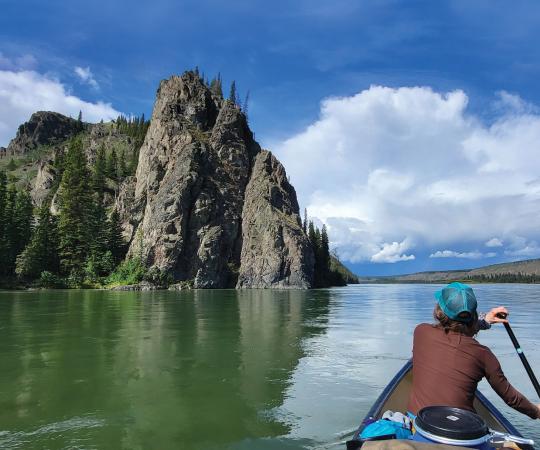
There is an eddy on the Wind River, under the shadow of lofty, bald mountains, where grayling hover in water so clear you can count the speckles on their rosy bellies. Standing there, watching those fish with Bobbi Rose Koe, I suddenly decided to tell her my secret. It was 10 years ago, and I was guiding a 14-day canoe trip for the Canadian Parks and Wilderness Society’s Yukon chapter during the fight to protect the Peel watershed from development. With Koe and other young people from the Peel First Nations, we hiked high above treeline, listened to wolves calling their pups and paddled bouncy whitewater, exploring traditional territory they’d never travelled.
I had been waiting to tell the group, getting to know them around the fire at night and during the day as we paddled the braided turquoise channels, searching for the best route through the rapids and past whirlpools in tight corners. I told Koe first, and she screeched with delight and surprise, ending with a drawn-out “Oh my God.” Up the bank at the campsite, another paddler heard her and yelled, “Either she’s getting married or she’s pregnant.”
I had just finished my first trimester. My shorts felt a little snugger, and I was even hungrier than usual, but, otherwise, I didn’t feel that different. I kept thinking, though, about that little life in my belly and how one day I hoped to come back with my child to marvel at this wild, untamed beauty together. I paddled another river that summer, too, the Fond Du Lac in northern Saskatchewan, and during that week-long trip I felt the baby kick for the first time. This was a child of whitewater before even being born.
Imogene was four months old when I first plopped her into a canoe on the Yukon River. She wailed at the start, likely because of the bulky lifejacket, but she soon became mesmerized by the shoreline sweeping past, the ripples in the water and the clouds. A month later, we paddled and camped on the Takhini River, though Imogene watched from shore when we shot the only class-two rapid, known locally as the Jaws of Death.
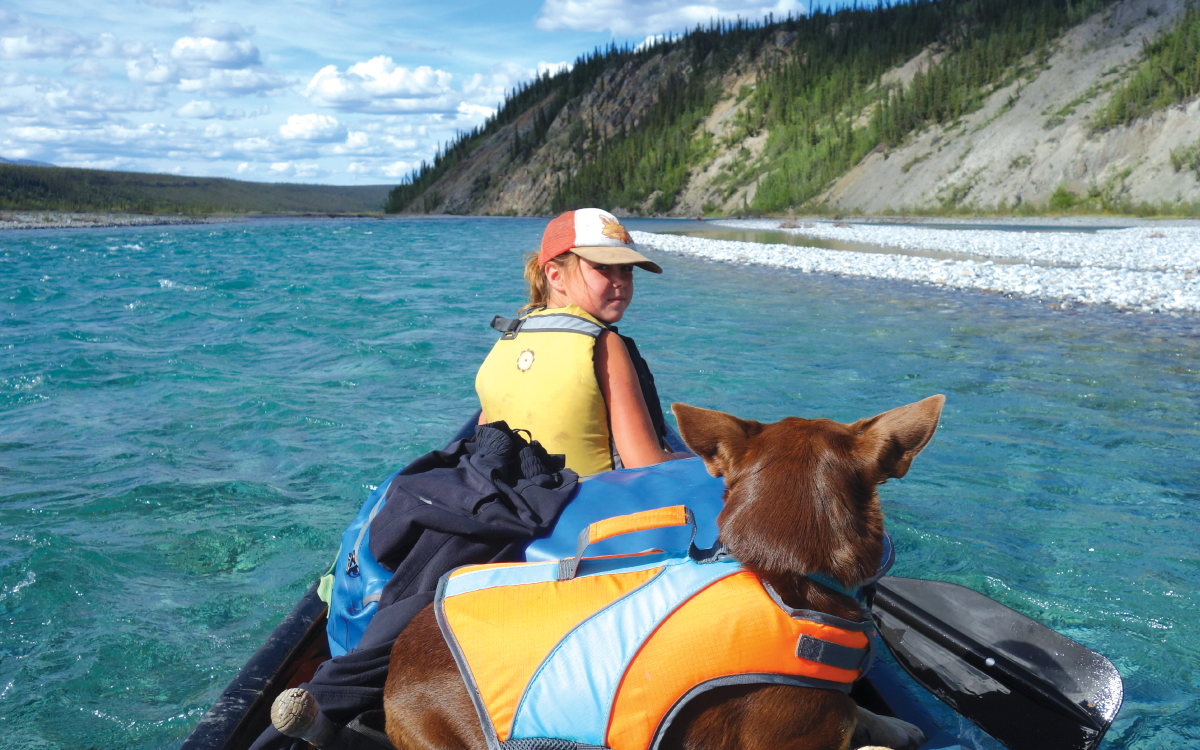
Nine years later, Imogene was sitting up front with the floatplane pilot when we touched down on McClusky Lake, the main put-in point for the Wind. The Peel watershed is far-flung backcountry: 16 million acres of roadless tundra populated by caribou, sheep, grizzlies and a dizzying number of migratory birds. Our canoe was strapped to the floats, and we balanced on the makeshift board dock, unloading barrels and gear. Imogene’s best friend was on this trip, too, with her family, making us a group of eight. In my canoe, though, we were only two—me in the stern and Imogene in my bow.
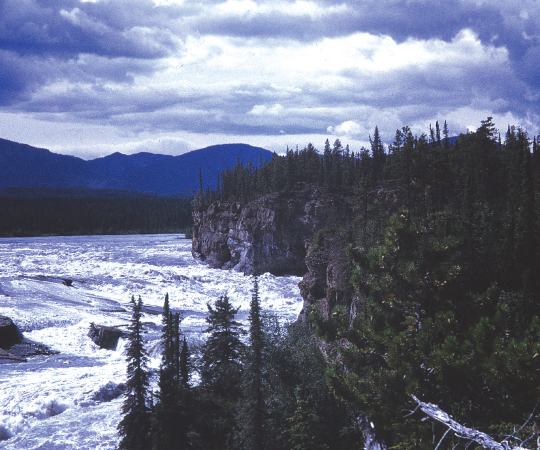
The Wind is not an easy river. It twists and winds through poplar and willow as it drops out of the Mackenzie Mountains. There are sweepers—trees that hang out from shore low over the water, ready to flip boats and pin paddlers. There are root balls to dodge and bends where the water sweeps high up on the bank like a spinning amusement park ride. One day of rain this high up in the mountains and the river can rise more than a metre in just a few hours, as all the streams running into the Wind turn into rushing torrents.
Imogene was nervous. Over the years, paddling whitewater together, we’ve had a running joke where we rate rapids based on how many times we pee while scouting them—the harder the rapid, the more nervous pees—a two-pee rapid, or a four-pee rapid. The Wind doesn’t let you scout. It’s a steady roller-coaster through some of the most incredible scenery on the planet. I was nervous, too, but not about Imogene’s capabilities. She is an exceptional paddler. I was worried about asking too much. It’s good to push people, and ourselves. That’s how we grow. But I didn’t want to push Imogene too much, too fast. I didn’t want her to follow that familiar trajectory where the child grows up to embrace a life completely disparate from her parents. I wanted her to love rivers, like I do.
There was a big headwind those first few days, so strong it would push us back upstream as we tried to find a route through the rapids. At camp in the evening, the kids were tired, but after dinner (homemade perogies, pan pizzas, rich miso ramen) and dessert, they would be back in the river, swimming, skipping rocks, building leaf boats and laughing. You fall into a rhythm on these trips, and food is an anchor—a familiar comfort that brings home into the wilds.
The canoe is like our living room, where we visit, sing and share stories in a cozy, confined space. Imogene had her bow set up with snacks, water, her sketchbook, her day pack. It was her space, and from up there she guided our boat, drawing and cross-drawing as she chose the best channels, watching for sweepers and rocks. Sometimes, the pressure exhausted her. Headwinds took a toll. There were times the river was pushy and Imogene had to push back. There were a few cold, wet days, when fingers went numb holding the paddle and wet feet got wrinkled and frigid.
But it was the right kind of hardship—the kind you can conquer with attitude and laughter and play. And we did. We found caves and fossils and hunted in melting permafrost for mammoth tusks. We swam and sang and hiked way up high, surprising a caribou mama and her new baby, rousing ptarmigan, collecting crystals and catching clouds in jars. At some point, we passed that bend in the river where the grayling hover in water as clear as glass. The spot where I told those youth of the Peel about the baby in my belly. We passed that place, with my baby now in the bow of my boat, and I didn’t even realize, because we were too busy looking ahead at where the river was taking us, toward the next bend.