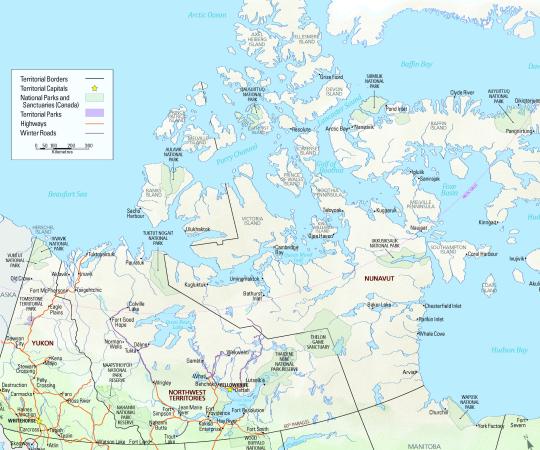
As Rita and Wilma Pigalak enter the Bata Shoe Museum in Toronto, they know they will cry. They are walking among ancient Egyptian sandals, Queen Victoria’s slippers and Elvis Presley’s loafers when the museum’s curator approaches the two sisters from Kugluktuk and leads them to the underground storage room. That’s where the Pigalaks see a pair of small white and red sealskin boots embroidered with purple flowers and a red zigzag near the top beside a photograph of a woman in a red T-shirt, big white glasses and a familiar smile. That’s when the sisters cry.
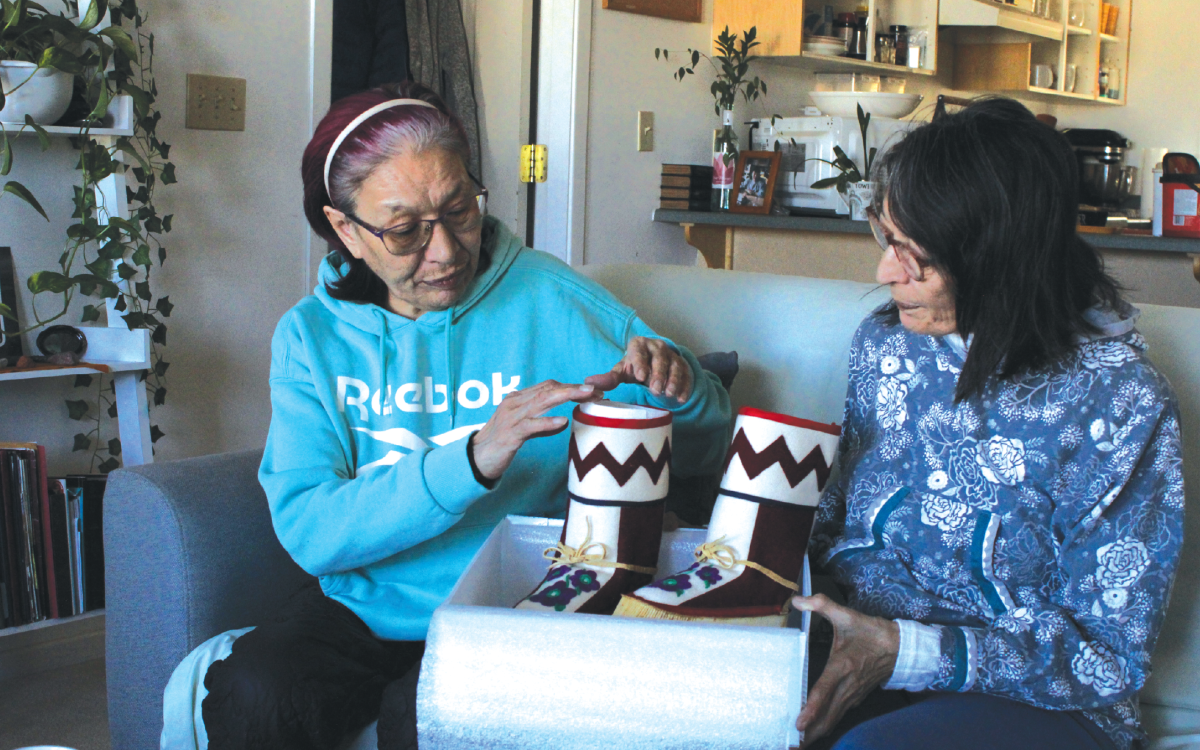
The woman in the photo is their late mother, Elva Pigalak, and the artist who made the boots, or kamiks, as Inuit call them, in 1986. The boots had been in the Bata collection for 37 years. But in May 2025, Kitikmeot Heritage Society executive director Emily Angulalik visited the museum and, just two months later, the sisters boarded a plane to Toronto. Now, at home, with the kamiks sitting on her lap, Rita says, “I never thought I would see them again.”
Like many Canadian museums, Bata has developed a formal process for returning Indigenous belongings. These repatriation guidelines are a response to one of the 94 calls to actions in the 2015 Truth and Reconciliation Commission report. But the Pigalaks case is rare: Indigenous belongings usually go to communities rather than individuals, because the names of the original creators have been lost or were never recorded. And repatriations are never this quick, Angulalik says. She was involved in the return of a century-old loon dance hat from Calgary to Cambridge Bay in August that took nine years.
Fortunately, scientists Jill Oakes and Rick Riewe, who bought Elva’s boots in 1986 and delivered them to the Bata museum two years later, kept meticulous notes, which sped up the repatriation. “Here, look at this,” Rita says, pointing at a yellowing piece of paper with the price Oakes paid for the boots on it: $80, a big sum at the time. The file Bata gave the Pigalaks also included Elva’s name, community, measurements of the kamiks and that photo that Rita and Wilma saw at the museum.
Such attention to detail was uncharacteristic for Inuit art buyers at the time; most just bought items without bothering to ask artists’ names. In the ’80s, Oakes was travelling across the NWT as a PhD student doing research on the meaning and significance of Inuit clothing when she ended up in what was then called Coppermine. Many local seamstresses recommended she talk to Elva, who taught her the stitches needed to attach a sole to sealskin boots and the proper way to add embroidery to the material. She also showed Oakes her different designs. “She was truly like a leading designer, not just a seamstress making ancient ancestral clothing,” says Oakes, now professor emeritus at the University of Manitoba, who walked away with Elva’s most recent and proudest creation, which ended up at the Bata museum.
Now, the lightweight red and white boots are back. Each time Rita picks them up, she remembers the Christmas she returned from high school in Yellowknife and watched her mom carefully add the purple embroidery. She also thinks of the times Elva taught her how to make her own kamiks. Rita still has some of her mother’s other sealskin boots and has tweaked them so she can wear them today. But the boots that came from Bata will be on the shelf of Kugluktuk’s heritage centre. While the yellowish ulu-shaped building may not be as glamorous as Toronto’s world-famous shoe museum, Rita says, “At least my people will be able to see them.”