I WANT TO TELL the owner of the RV lot to stop congratulating me. I’m sure campers are an exciting purchase for customers who buy them to go camping. For me, its purpose is less thrilling: evacuating Whitehorse if a wildfire grows out of control.
My partner, Chris, and I already have a recreational camper, a squat little thing from the 1960s with a bed, a kitchen counter and a checkerboard’s worth of standing space. It’s fine for two people and two dogs on a weekend adventure; less so if a fire were to force us on the road for an indeterminate amount of time.
In 2023, a friend’s family evacuated Hay River twice—once for a month. That same summer, when the Ibex Valley burned north of Whitehorse, an acquaintance told me she’d lie in bed at night and watch the flames in the hills, wondering where she’d go with 12 dogs in tow if the evacuation alert became an order. The following year, another friend lost his house to the fire that chewed through Jasper.
I worry about this happening here. According to the 2025 review from Yukon Wildland Fire Management, 158 fires destroyed 169,138 hectares. There were seven evacuation alerts. None became orders, but that makes no difference to my anxiety. Los Angeles burned that same year. Why would Whitehorse be safe?
This scenario plays out in my head on hot summer nights: Chris and I and the dogs in our truck, driving the same stretch of highway as the rest of Whitehorse. With no vacancies at the handful of hotels on the route, we go to Edmonton or Vancouver to find a room. We pay thousands to live there for a month. When we finally go home, home is a handful of black tree trunks, like sticks of charcoal stuck in scorched soil.
Chris shares my anxiety, though his manifests differently. He shot video of everything we own for insurance purposes. He fells trees that would fuel a fire and, on rainy days, burns stray branches that can’t be used in the woodstove. Last summer, he installed a sprinkler system on our steel roof and, this year, he bought a generator and a backup power system that will keep the water pumping even if a fire knocks out utilities. He channels his stress into measures that may save the house we have. I obsess over building a backup.
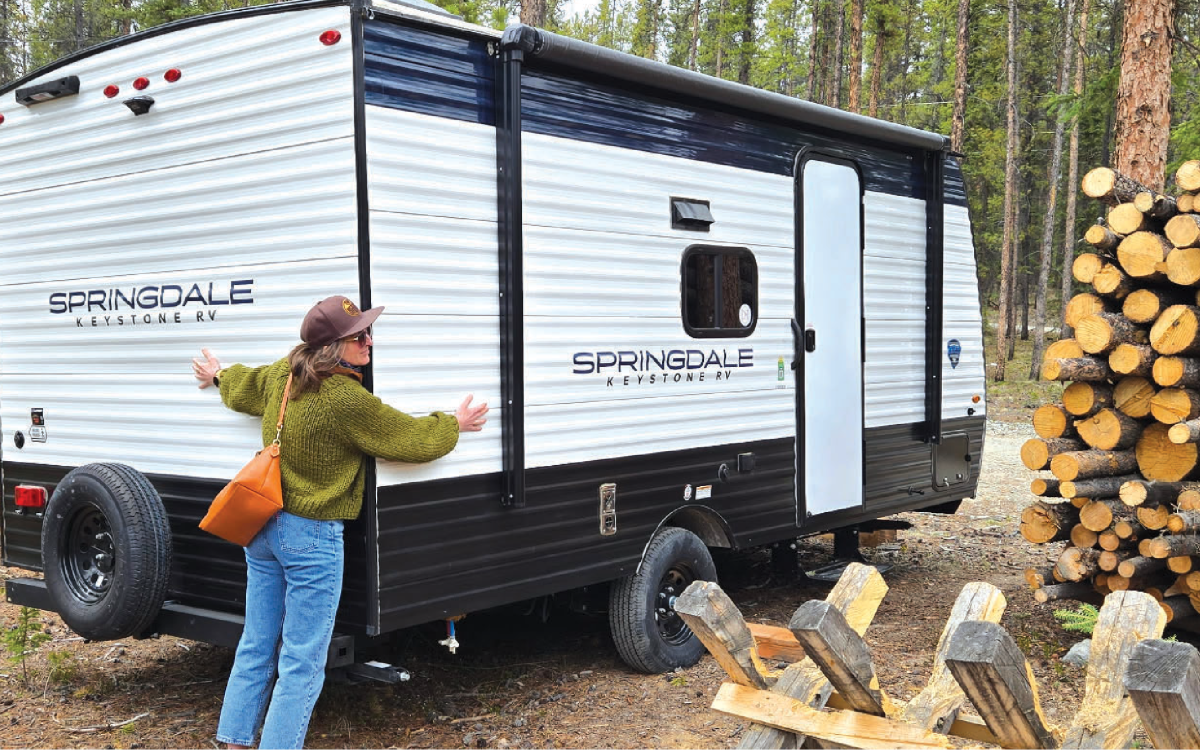
That’s how we landed in an RV lot last winter, signing the paperwork for an 18-foot camper with enough floor space for four to stand without tripping over each other, solar capacity to charge electronics so we can work, a shower and toilet, a fridge, heat and storage. The saleslady told us we weren’t the only ones who’d bought an RV as an escape pod. But her boss (the one who kept congratulating me) said we’re in the minority and most people still buy them for fun. Fire season hasn’t been bad enough to cause widespread panic yet—even if two of the last three years have been record-setting in Canada. I guess it’s just me.
Since buying the camper, I’ve read dozens of first-person accounts of people fleeing fire to find out what they took with them and what they wish they had. I’ve doubled the number of supplies on the City of Whitehorse’s 72-hour emergency kit list. A couple of people have called me a prepper, but I don’t consider that a negative. The Scouts’ motto is “Be prepared” for a reason and, while prepping isn’t as fun as scouting, it’s soothing in its own way. I label boxes—clothing, dehydrated food, charging cables—and slide them into the camper’s storage compartment, feeling reassured.
If we have to evacuate, it’ll be swift. Without thinking, we’ll leash the dogs, switch on the genny and go. I may not have any control over fires, but I have control over the camper. So I funnel all my fears into it.