Site Banner Ads

Site Search

Search

Home Up Here Publishing

Mobile Toggle

Social Links

Facebook Instagram

Search Toggle

Search

Main navigation

  • Magazines
    • Latest Issue
    • Past Issues
    • Up Here Business
    • Visitor Guides
    • Move Up Here
  • Sections
    • People & Places
    • Arts & Lifestyle
    • History & Culture
    • Travel & Tourism
    • Nature & Science
    • Northern Jobs
  • Newsletter
  • Community Map
  • Merch
  • Our Team
  • Support
  • Subscribe/Renew

Fence Narrows

February 2016

How an ingenious hunting practice let the Tłįchǫ survive in the harsh North

By Daniel Campbell

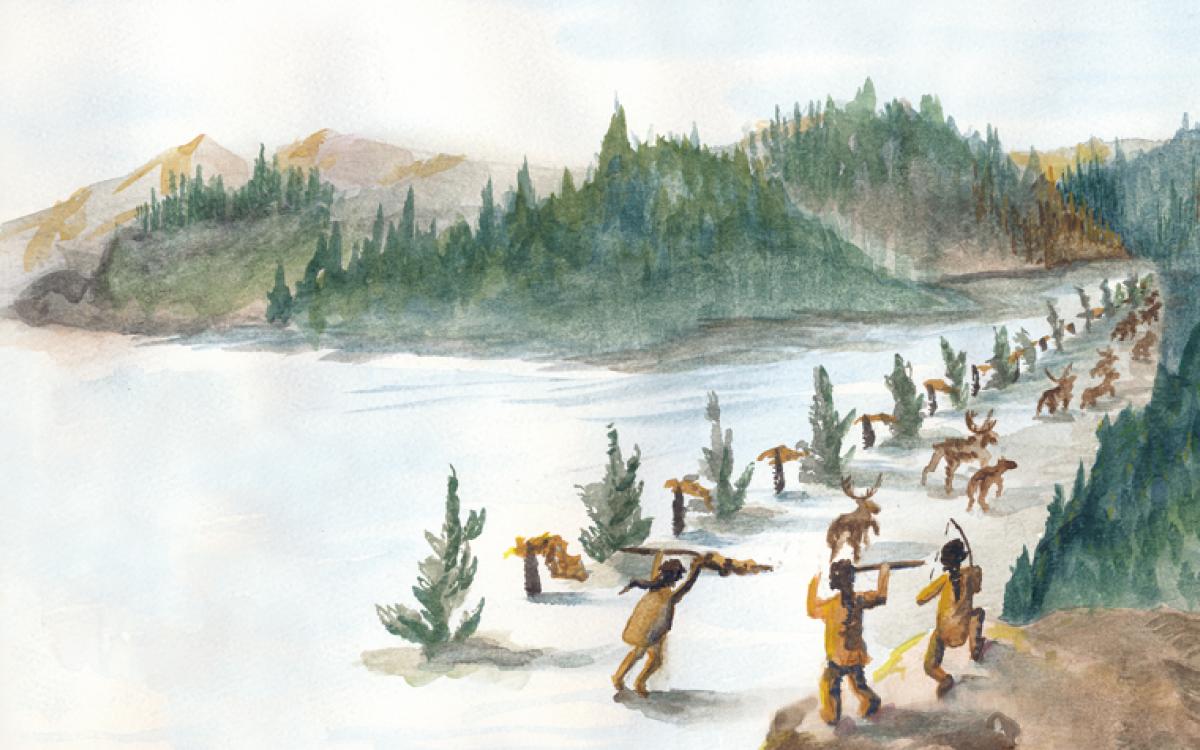
Once the herd was spotted, the men would make wolf sounds to scare the caribou into the corral. Women and children would line the fence to keep the caribou headed towards the ambush point, where a team of men would be ready with spears and arrows to slaughter them. Illustration by Beth Covvey

Once the herd was spotted, the men would make wolf sounds to scare the caribou into the corral. Women and children would line the fence to keep the caribou headed towards the ambush point, where a team of men would be ready with spears and arrows to slaughter them. Illustration by Beth Covvey

Breadcrumb

  1. Home
  2. Fence Narrows

To the Dene, caribou is life. Their flesh is food, bones are tools, hair is insulation and bedding. For clothing and shelter alone, pre-contact Dene needed dozens of caribou per year. Tracking and killing single caribou kept bellies full—but to replenish supplies, the Dene needed a massive, coordinated hunt.

The Tłįchǫ lived a nomadic lifestyle between Great Slave Lake and Great Bear Lake. In late winter, they would gather into multi-family groups—as many as 45 people—and intercept a caribou herd migrating north into its summer feeding grounds on the Barrenlands. At a place called Fence Narrows, just south of Great Bear Lake, they’d construct a fence on the frozen lake to corral the herd. In March of 1771, trekking north from Churchill, Manitoba with Chipewyan guides, fur trader Samuel Hearne came across a similar caribou fence near the Dubawnt River in what is now the southeastern NWT. He was impressed by the lifestyle of the people who lived off the caribou in this way, compared to some Cree and Chipewyan who had become dependent on trading furs at Prince of Wales Fort.

“It must be allowed that they are by far the greatest philosophers, as they never give themselves the trouble to acquire what they can do well enough without,” wrote Hearne. “The [caribou] they kill, furnishes them with food, and a variety of warm and comfortable clothing, either with or without the hair, according as the seasons require.”

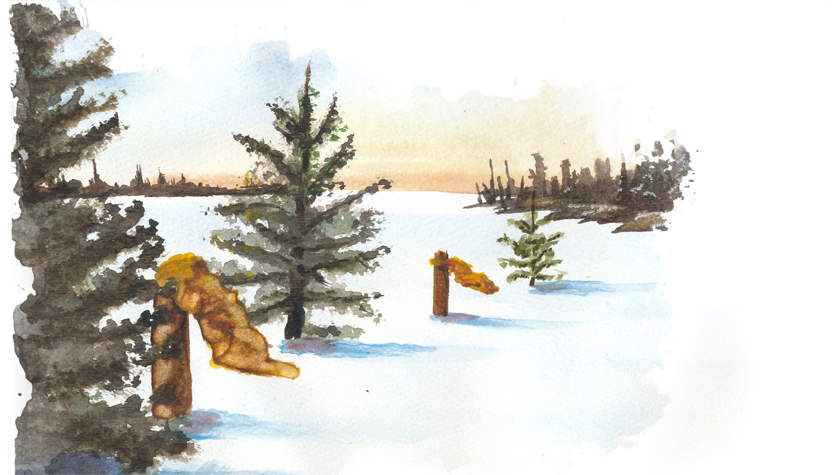
Sinew snares set up at openings in the caribou fence were strong enough to hold the caribou while it was speared. Illustration by Beth Covvey

 The tree fence was simple - felled spruce spaced 10-15 metres apart with pieces of cloth strung between them. The fence was large, sometimes kilometres long. Illustration by Beth Covvey

February 2016

THAT'S A LONG WAY BETWEEN TOWNS, PILGRIM. PHOTO COURTESY OF MARCO MARDER

What it’s like to hike (part of) the Dempster Highway

And some advice for anyone crazy enough to try it.

By Daniel Campbell

THAT'S A LONG WAY BETWEEN TOWNS, PILGRIM. PHOTO COURTESY OF MARCO MARDER

May 14th, 2026 May 14th, 2026

February 2016

Would you go all the way to the yukon just to see this? Photo by flickr.com/photos/clsresoff/ (creative commons)

Top Five Jack London-Related Things To Do in the Yukon

Free

What are the best ways to channel London in today’s Yukon? Here are our picks.

By Eva Holland

Would you go all the way to the yukon just to see this? Photo by flickr.com/photos/clsresoff/ (creative commons)

May 14th, 2026 May 14th, 2026

Related Articles

Tear Sheet

Illustration by Patrick Kane

iPods vs iGloos

The iPod revolution has taken root in the Arctic. Will it spend the end of traditional Inuit music? 

May 14th, 2026 May 14th, 2026

Tear Sheet

Photo by Gordon Greone

In the Wake of Ghost Ships

For hundreds of years, the search for a navigable passage through Arctic seas lured European explorers to their doom. 

May 14th, 2026 May 14th, 2026

UP HERE - MAR/APR 2026

----

What’s for Dinner?

The answer to that question could make the difference between life and death

May 14th, 2026 May 14th, 2026

Tear Sheet

Photo by Michael Sharpe

The Gift of Pure Water

Published in Up Here Magazine July/August 1989.

May 14th, 2026 May 14th, 2026

UP HERE - JAN/FEB 2026

Photo by Andrea Magee

They’re Still Standing

Just as the Klondike Gold Rush was ending, Thomas Fuller went on a building spree in Dawson. Have a look around

May 14th, 2026 May 14th, 2026

UP HERE - NOV/DEC 2025

-----

Come From Away

A Newfoundland tradition finds a home in Iqaluit

May 14th, 2026 May 14th, 2026
Newsletter sign-up promo image.

Stay in Touch.

Our weekly newsletter brings all the best circumpolar stories right to your inbox.

Up Here magazine cover

Subscribe Now

Our magazine showcases award-winning writing and spectacular northern photos.

Subscribe

Footer Navigation

  • Advertise With Us
  • Write for Us
  • Privacy Policy
  • Disclaimers & Legal

Contact Information

Up Here Publishing
P.O Box 1343
Yellowknife, NT
X1A 2N9  Canada
Email: info@uphere.ca

Social Links

Facebook Instagram
Funded by the Government of Canada