The Behchokǫ̀ Cultural Centre is abuzz. Roughly 200 people gather in the centre’s main hall, a circular room with a large drum-shaped light fixture, on this snow-dusted day in November 2024. Indigenous leaders and community members from throughout the Northwest Territories sit alongside government representatives from Ottawa and philanthropists from Washington. They listen to speeches, share a roast beef lunch and dance to Dene drummers and fiddle jigs. They’re celebrating NWT: Our Land for the Future, an agreement that commits $375 million to Indigenous-led conservation in the territory—one of the largest initiatives of its kind in the world.
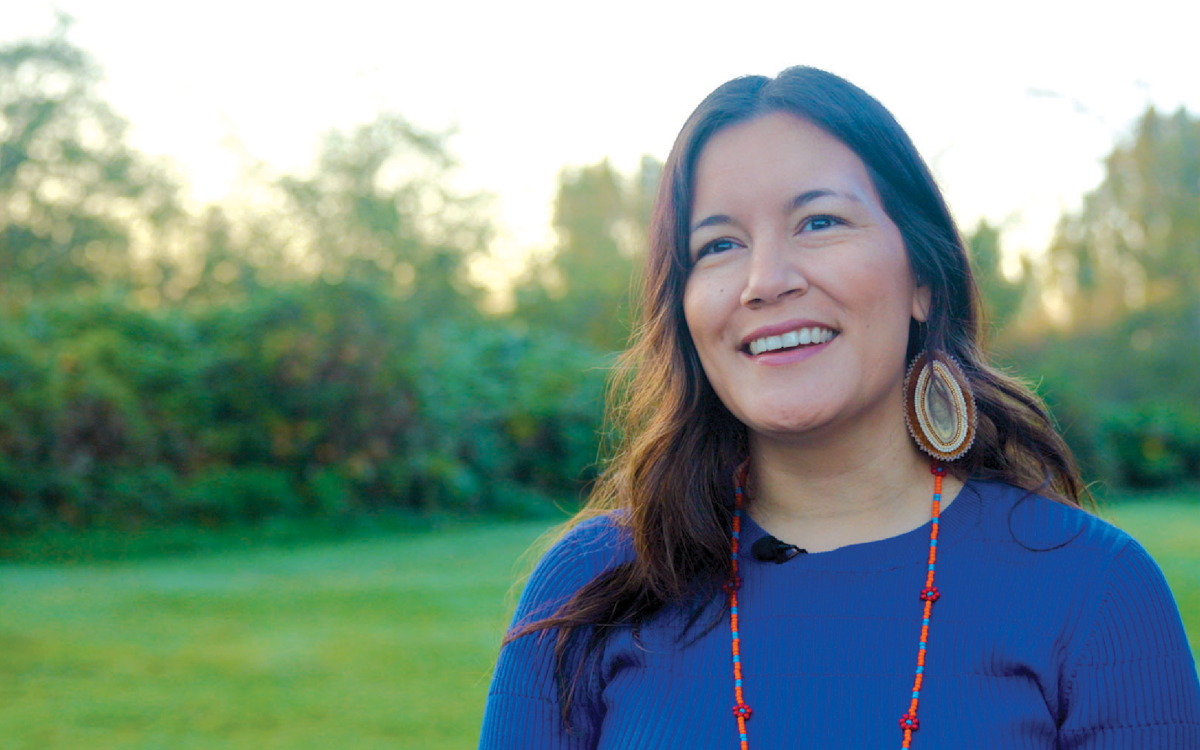
For two and a half years, Dahti Tsetso led the negotiations as the deputy director of the Indigenous Leadership Initiative, an organization that supports conservation and stewardship. Twenty-one Indigenous governments signed the deal, which is expected to protect about 380,000 square kilometres of land and water, an expanse about half the size of Alberta. When it’s her turn at the podium, she tells the crowd, “The scale of collaboration and the partnership that has brought this initiative to life has been both inspiring and deeply humbling.” Still, her sense of achievement is tempered. While the agreement cements commitments, she knows more work lies ahead. “I remember feeling like, until the dollars are in the trust,” she says, “I will not rest.”
To Tsetso, the dollars represent hope. She is Tłı̨chǫ Dene, but spent many years living and working in the Dehcho region, where she’s witnessed the transformative power of Indigenous-led conservation. The 41-year-old has come to view a thriving landscape as a byproduct of strong, healthy communities. “Being on the land in the Dene way protects the land,” she explains, referencing Elders’ teachings. So, taking care of the land starts by strengthening Dene ways of life. “In order to be good stewards of the land,” she says, “we need to take care of who we are as Dene people.”
This perspective stands in stark contrast to the typical western approach to conservation, which involves removing people from the landscape. Increasingly, though, Crown governments and the broader public recognize Indigenous stewardship as an effective way of preserving biodiversity and combatting climate change. But when Tsetso began her career in 2009, many of these ideas were still emerging.
Since then, she’s spearheaded stewardship and guardian programs, negotiated the establishment of Edéhzhíe, the first Indigenous Protected and Conserved Area in Canada, and is now the chief executive officer of Our Land for the Future trust. Much of Tsetso’s work centres on bridging different perspectives on conservation while building agreements that honour Indigenous ways. But first, she went through her own personal awakening as it took time to fully grasp the Dene view and put it into practice.
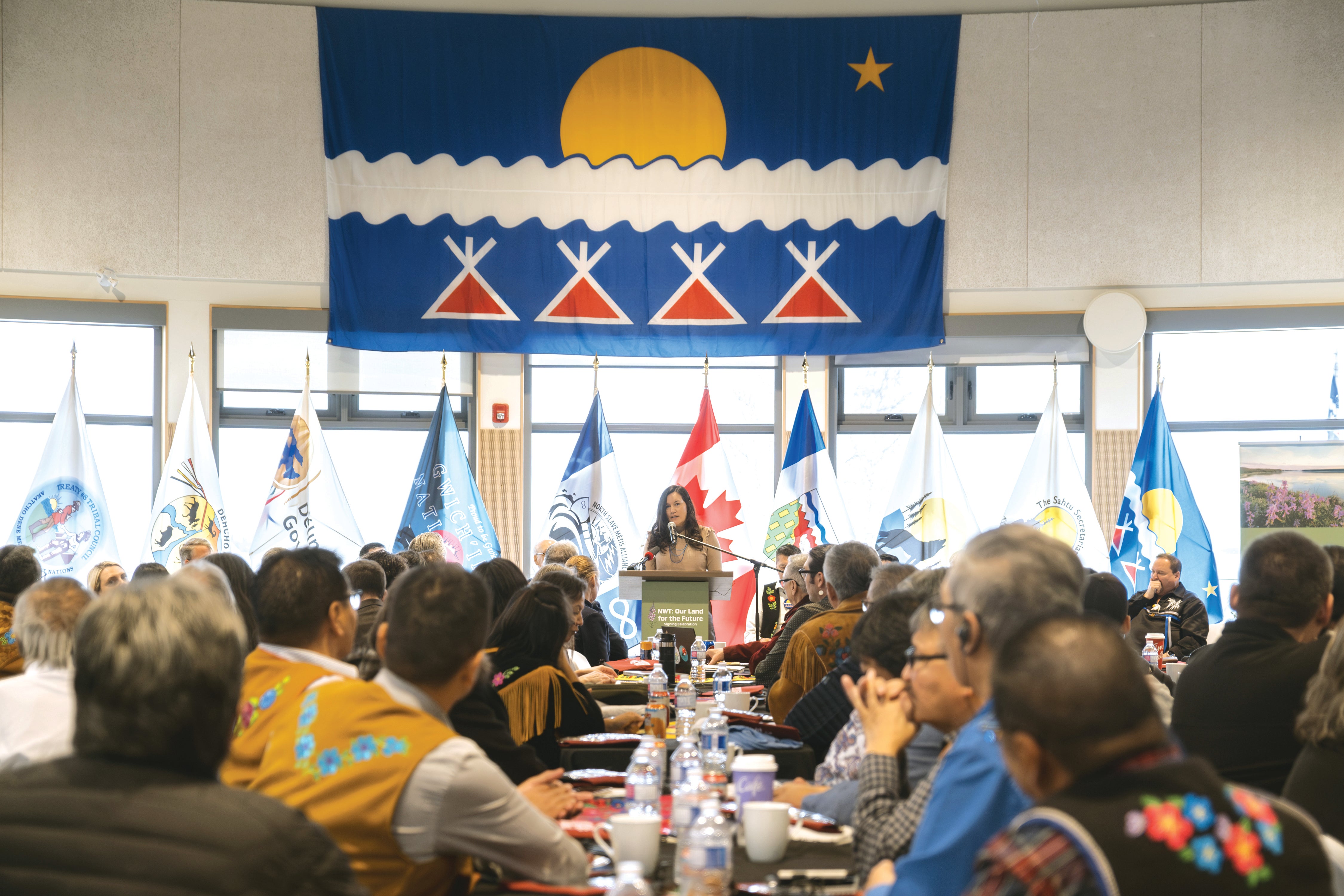 Photo by Pat Kane
TSETSO IS SITTING AROUND a campfire with about 20 Dehcho Elders, leaders and community members on a spring day in 2014. They’re spending three days at a camp on the shores of Trout Lake, near Sambaa K’e. The question under discussion: What does it mean to take leadership in conservation from a Dene perspective?
Before the workshop, a colleague asked what the question meant. Tsetso didn’t entirely know. But as Dehcho First Nations’ resource management co-ordinator, her job was to find ways communities could take charge of protecting their lands. She expected the conversations to revolve around maps and strategy; instead, the group talked about language and its importance in understanding ways of taking care of the land. The language comes from the land, they said, and the Dene world view is embedded in the language. That meant ideas about protecting the land could not be conveyed in English. For Tsetso, this notion was entirely new. Although she left the workshop understanding the intent of the message, as someone who didn’t speak the Dene language, she was perplexed. “It’s almost like they’re explaining something that you’ve never had access to.”
Growing up in Fort Simpson and Yellowknife, Tsetso never learned her own language, Tłı̨chǫ Yatıì. Unable to speak to her grandparents, she felt disconnected from her culture. With a Tłı̨chǫ mother and non-Dene father, she also struggled with her sense of identity. A year after the Trout Lake workshop, she enrolled in a language revitalization program, where she began to learn Dene Zhatıé—not her mother’s tongue but the language of the region she married into and was living in. She began to grasp the workshop’s message and now says, “Any language, it’s like having a different lens.”
Three core principles became the foundation of Tsetso’s work: strengthening the Dene language, honouring Dene laws and values and enabling youth-Elder mentorship. She and her colleagues started a stewardship program called Dehcho K’éhodi (“Taking Care of the Dehcho” in Dene Zhatié). They led land-based programs focused on youth and hosted annual gatherings where representatives from other Indigenous communities talked about stewardship. Inspired by other nations’ guardian programs, Tsetso and her colleagues rebranded community-based monitors as guardians and aligned their work with Dehcho K’éhodi principles.
The work allowed Tsetso to explore and connect to her Dene identity. She could feel herself change, developing a stronger voice on issues related to conservation and Indigenous leadership.
She could also see how the approach helped others. For every $1 invested, northern guardian programs deliver between $2.50 and $5.37 in social, economic, cultural and environmental benefits. She saw guardians honour their sobriety journeys, heard teenagers talk about how much land-based programs meant to them and had people say they wanted to get involved. When Ashley Menicoche, a Fort Simpson resident, heard Tsetso speak at a gathering, she was so inspired that she set her sights on a similar role within five years. Just three years later, Menicoche started working on guardian and conservation efforts alongside the woman who’d inspired her.
While Tsetso’s work was gaining momentum, funding was a constant struggle. Even though she wrote many proposals to cobble together enough money to keep programs running, most had to be seasonal because they were too costly to run in winter. Partnerships became a necessity. When Enbridge needed to replace its pipeline under the Mackenzie River in 2017, Tsetso advocated for Dehcho oversight, explaining the value of guardians and the funding needed. After several months of discussions, Enbridge agreed to fund communities to train and hire guardians to monitor the pipeline for three years.
One success led to another. In negotiations with the federal government for Edéhzhíe, Tsetso pointed to guardians’ work as an example of the approach Dehcho First Nations wanted for the area’s management. She also had to alleviate the concerns of the communities, and the lack of trust in the feds was a challenge. When Parks Canada established Wood Buffalo National Park in 1922, for instance, people were forcibly expelled and lost the ability to use the area. But in 2018, Dehcho First Nations and the federal government established Edéhzhíe as a joint Dehcho Protected Area and National Wildlife Area. The management strategy supports Dene Ahthít’e, the relationship between Dene and the land. It was a big win for the region, which had been working toward protection for decades. Although Tsetso became involved only at the tail end of the process, she came out with experience in building consensus—a skill she would soon need.
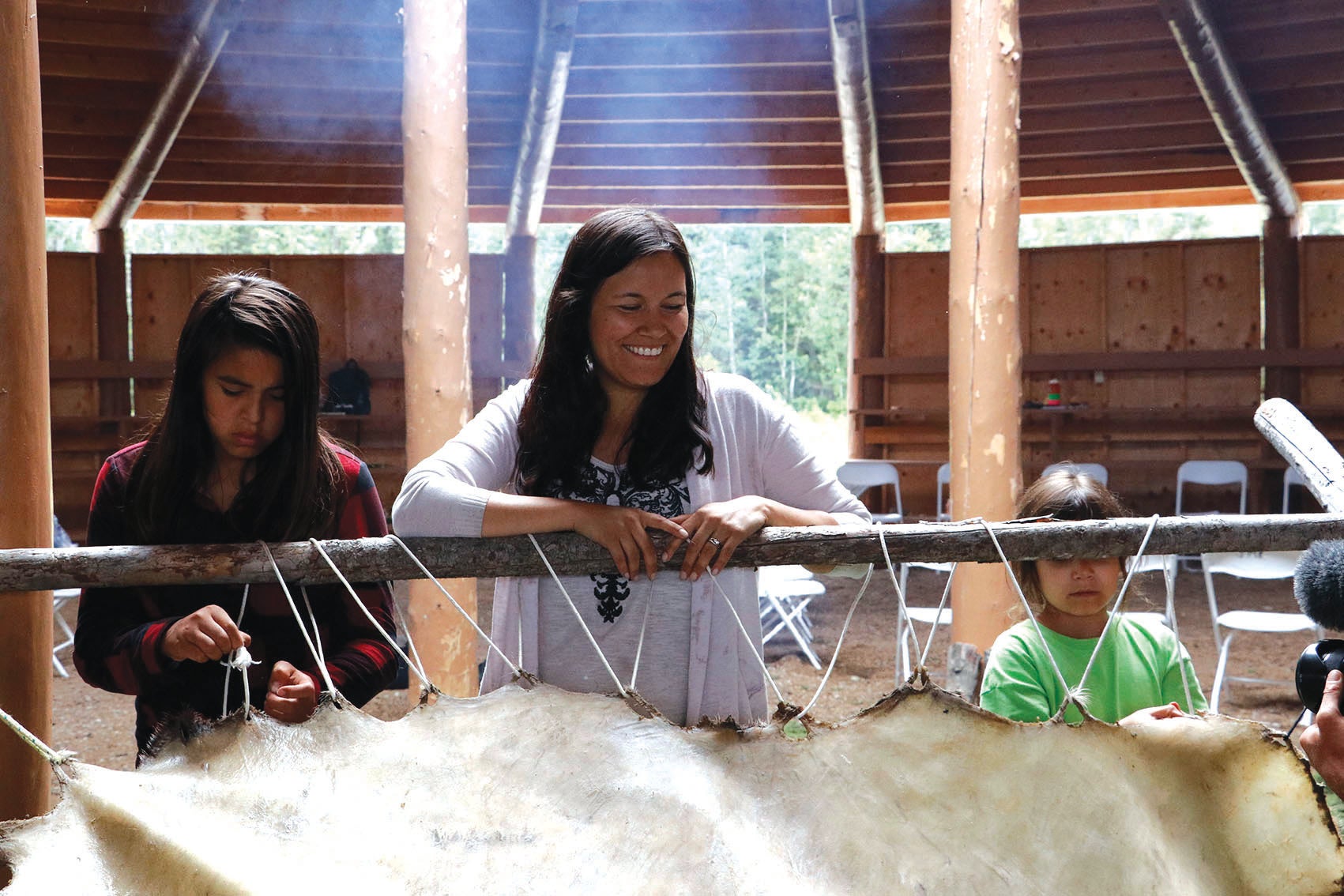
Photo by Kali Spitzer
TSETSO FIRST HEARS about “project finance for permanence” in a 2021 virtual meeting. She’s just joined the Indigenous Leadership Initiative, and the team is discussing a potential “PFP” in the territory. PF—what? She has no idea what it means. Later, she learns that it’s a method for financing conservation efforts that draws on Wall Street practices for backing large, complex projects such as dams and power plants.
Under the approach, partners unite around an ambitious conservation goal, negotiating the plans, funding and policy changes needed to sustain it. Typically, both public and private investors commit funds upfront when the deal is closed, providing all the resources for long-term success. The project finance for permanence model has worked elsewhere, including in Colombia, Mongolia and B.C.’s Great Bear Rainforest. Still, doing one in the Northwest Territories sounded impossible to Tsetso. But in the back of her mind, she wondered, what if?
Her work on the project, now known as NWT: Our Land for the Future, began
in earnest later that year. Early on, her focus was ensuring everyone involved understood the goal of the initiative. Like Tsetso, many partners had never heard of project finance for permanence. She and her colleagues met with Indigenous governments to talk about the idea and find out what they wanted funds for. Knowing the basic needs of Indigenous partners and funding agencies upfront, she hoped, would provide a foundation for consensus.
Initially, Tsetso proposed an iterative process with information and drafts regularly going to partners for feedback. That did not sit well with Indigenous leaders, who expected greater collaboration. The entire agreement, including public communications and advocacy efforts around it, ended up being co-drafted. That meant reviewing every line with all partners and their advisors in virtual meetings—sometimes with more than 50 people—that lasted hours two to three times a week for two years. Tsetso used a “stoplight method”: For each element, she asked partners to vote green, yellow or red—green indicated full support, yellow meant more work required and red signified objection.
Meanwhile, another challenge was getting the federal bureaucracy moving. During the negotiations, many partners travelled to Ottawa several times to nudge the government. NWT: Our Land for the Future is one of the few Indigenous-led project finance for permanence agreements in the world. Elsewhere, they tend to be guided by federal governments.
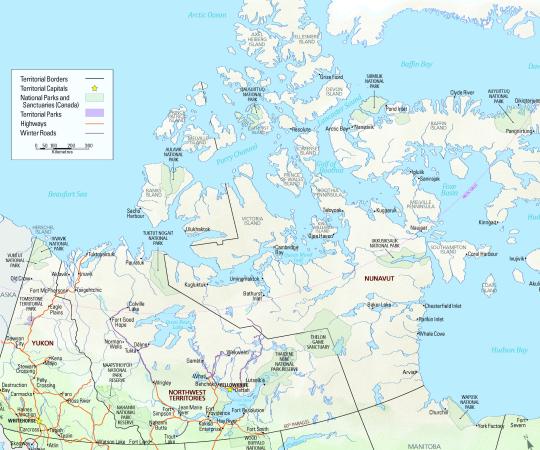
The final deal combines $300 million from the feds with $75 million from private donors. The money can go to managing existing Indigenous Protected and Conserved Areas, including Edéhzhíe, Thaıdene Nëné near Łutsël K’é and Ts’udé Nilįné Tuyeta near Fort Good Hope. Or it can create new protected areas, such as those proposed by Ka’a’gee Tu and Sambaa K’e First Nations.
Notably, the agreement funds Indigenous governments to establish protected areas under their own laws and lets them push Ottawa to support the development of these areas in the same way as efforts to set up federal or territorial parks. The money will also create jobs, enhance Indigenous governments’ capacity to engage with regulators and promote community well-being.
Tsetso is humble about her role, pointing out that the agreement was the result of communal efforts. But she was particularly well suited to the job. “She showed that she’s a really good listener,” says Tom Dillon, senior vice president at the Pew Charitable Trusts. He represented private donors including the Metcalf Foundation, Ducks Unlimited and the Bezos Earth Fund and was impressed by her knack for understanding alternate points of view, which, for most people, is difficult. Her success may also have had to do with her calm, easy presence, which induces trust. Tsetso speaks gently but is unshakably grounded, with a warmth that draws people in. Dehcho Grand Chief Herb Norwegian says Tsetso brings a “halo” of good energy into a room, and Valérie Courtois, executive director of the Indigenous Leadership Initiative, says, “She just kind of embodies this idea of what calm leadership looks like.”
To Tsetso, the work often felt like a burden. “It became such a focus of my life,” the mother of three says. “It almost became like my fourth child.” But whenever she considers leaving the job to someone else, she reaches a milestone and finds she’s not quite ready to let go.
After the celebration in Behchokǫ̀, Tsetso keeps working to set up the Our Land for the Future trust with bank accounts, staff and directors. Almost a year later, on a quiet summer’s day in 2025, she’s working alone in her Yellowknife home office that also serves as a guest bedroom. She opens an email and sees instructions for completing a fund transfer request. It’s a mundane administrative task—aside from the sum: $300 million.
Tsetso can hardly believe the moment has arrived. The public funds will unleash the private dollars. Quickly, she completes the steps and texts her colleagues. “That was like, ‘OK, we did the thing,’” she says. “‘The money is coming.’” For a moment, she admires the sun streaming through her window, feeling awe and gratitude. Then, she gets back to work.