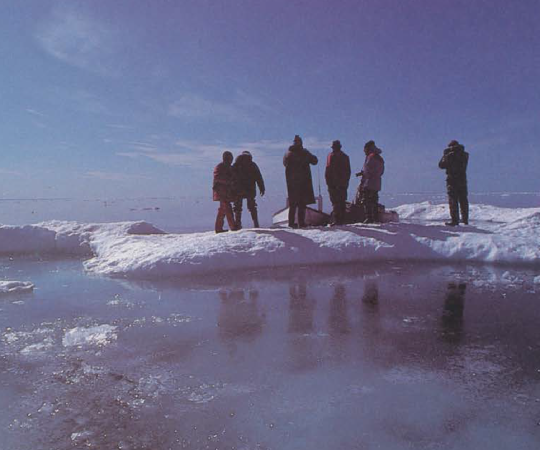
IN 1974, my mother was a 21-year-old fine arts student living in Montreal. She joined a woman-led team heading to the Northwest Territories to shoot a documentary film about Nahanni National Park. Over six weeks, she flew in a de Havilland Beaver from place to place, stopping at Kraus Hot Springs, Deadman Valley, Hole in the Wall Lake and Virginia Falls. As the audio recordist, she trekked around, recording everything from Arctic loons to soil defrosting on the tundra. She returned from the wilderness filled with stories she’d tell for decades, her memories sticking with her well beyond when I came into the world 20 years later.
As a child hearing those stories, I imagined Nahanni as a mythical place, filled with towering mountains, lush forests and wild animals. I hoped to see it for myself one day. In late 2024, after my mother died, I revisited a memoir she’d written. She’d returned from Nahanni with notebooks bursting with observations and recollections, and she incorporated these into a manuscript, Earth Nation. I decided to adapt it for the screen. That 1974 expedition inspired her to dedicate herself to environmental advocacy. I wanted to see the place that influenced how she raised me—to find joy in the outdoors and care about its protection for future generations.
Though my mother had grown up in urban Montreal, she felt at home in the outdoors and couldn’t wait to share it with me. When I was a toddler, we went camping in southern British Columbia’s Elaho Valley. Our family participated in the Uts’am Witness Project, a non-confrontational protest against logging in Squamish Nation territory. My mother took a photo of me playing in the mud on the riverbank that she titled, “I’m Only Three, Save Some for Me.” The Uts’am project ran for a decade, a staple of our summertime plans, and led to the area’s protection through the Squamish Nation Sacred Land Use Plan.
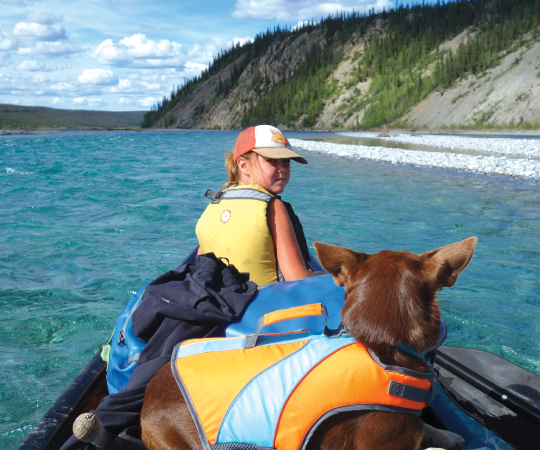
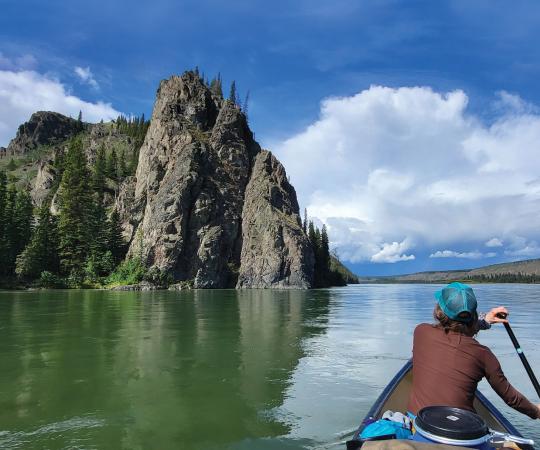
My mother was a lifelong visual artist who worked in many mediums, and I ended up following in her footsteps. She always readily accommodated my requests for dance and theatre classes. Later, I became a photographer and then a filmmaker, moving from Vancouver to Los Angeles. Last summer, I travelled to Nahanni with a crew to create a proof-of-concept short film about my mother’s expedition. Although I tried to familiarize myself with the area through her writing, nothing could have fully prepared me for visiting for the first time.
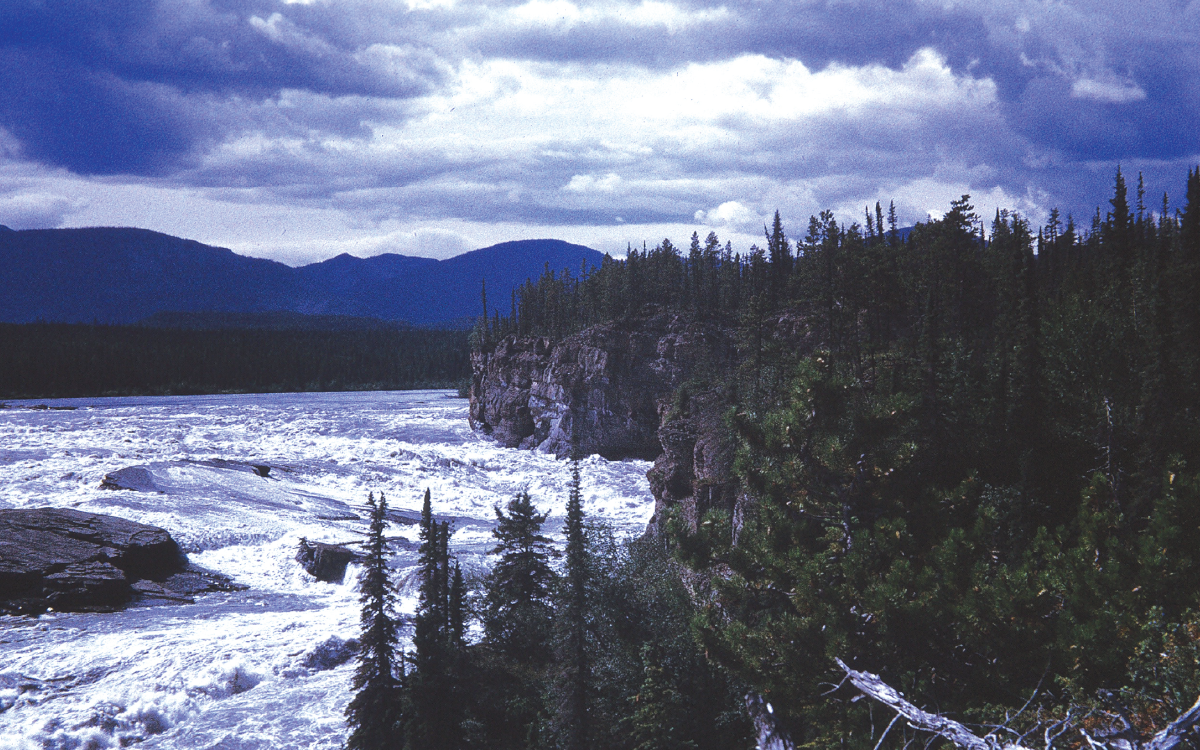
With a guide from Nahanni River Adventures, we started in Łı́ı́dlı̨ı̨ Kų́ę́ (Fort Simpson), where we participated in a traditional water ceremony led by Gilbert Cazon, offering tobacco to the river. We then flew in a Twin Otter to Náįlįcho (Virginia Falls), in the heart of the park. Just as my mother’s pilot had, ours circled the falls twice before we landed upstream.
Rather than shooting digitally, I’d opted to use 35-millimetre film to best reflect the 1970s era. That came with logistical hurdles: We had 18 pieces of camera gear, including many canisters of film, a changing tent and lenses. On our set, everyone carried pieces of equipment as we walked along the boardwalk. Our camera team brought all the gear inside their tents at the end of the day to keep it safe and dry.
There were some obvious differences between my mother’s trip and mine. Our guide carried a satellite phone for emergencies and co-ordinating travel plans. My mother had looked up at a full moon to figure out the time. We had easy access to fresh water, adding iodine tablets to our supply. My mother’s group had to canoe up to Marengo Creek to track down water without sediment, since drinking river water unfiltered was causing too many trips to the latrine. At Náįlįcho, we had freshly cooked meals, modern outdoor equipment and good weather, while they battled the elements. My mother recalled water falling from the sky as if a bucket had been overturned; her photos show storm clouds around the falls. While my mother spent six weeks in the park, I was there for just three jam-packed days. We filmed daily until midnight and walked back to the (now much more developed) campsite in the glow of sunset.
During her expedition, my mother worried about the park’s future. She saw garbage on shore, toilet paper in the woods and empty oil drums lying at campsites. “Imagine if the Dene people had spoiled this place for us like the settlers did after we arrived,” she wrote. “We would have never been able to appreciate unspoiled nature.”
My mother’s concern was warranted. In the late 1960s, a proposed hydroelectric development would have harnessed the power of the falls. But the Canadian Parks and Wilderness Society led the fight to protect the area. Today, there is much to feel optimistic about. Two years after her trip, the federal government established Nahanni National Park Reserve, then expanded its size in 2009, with the support of the Dehcho First Nations. It’s the third largest national park in Canada.
Despite the differences between her trip and mine, 50 years on, much was the same. The park’s landscapes and life-affirming spirit remained unchanged. I’m not sure if my mother ever thought I’d get to the Nahanni River. I do know she intended to share it with a larger audience in hopes of inspiring people to protect our natural world. Seeing where her love of the outdoors began led me to reflect on the places with which we each feel our own kinship, and how this connection is necessary to motivate us to advocate for environmental protection. We all have our own stories and experiences that tie us to our special places, and visiting my mother’s place pushed me to think about what my Nahanni might be.
My film is a coming-of-age story about how the wilderness changed a life. I hope that what we captured will prompt others to think about how the wild has changed them for the better, wherever that place might be for them.